
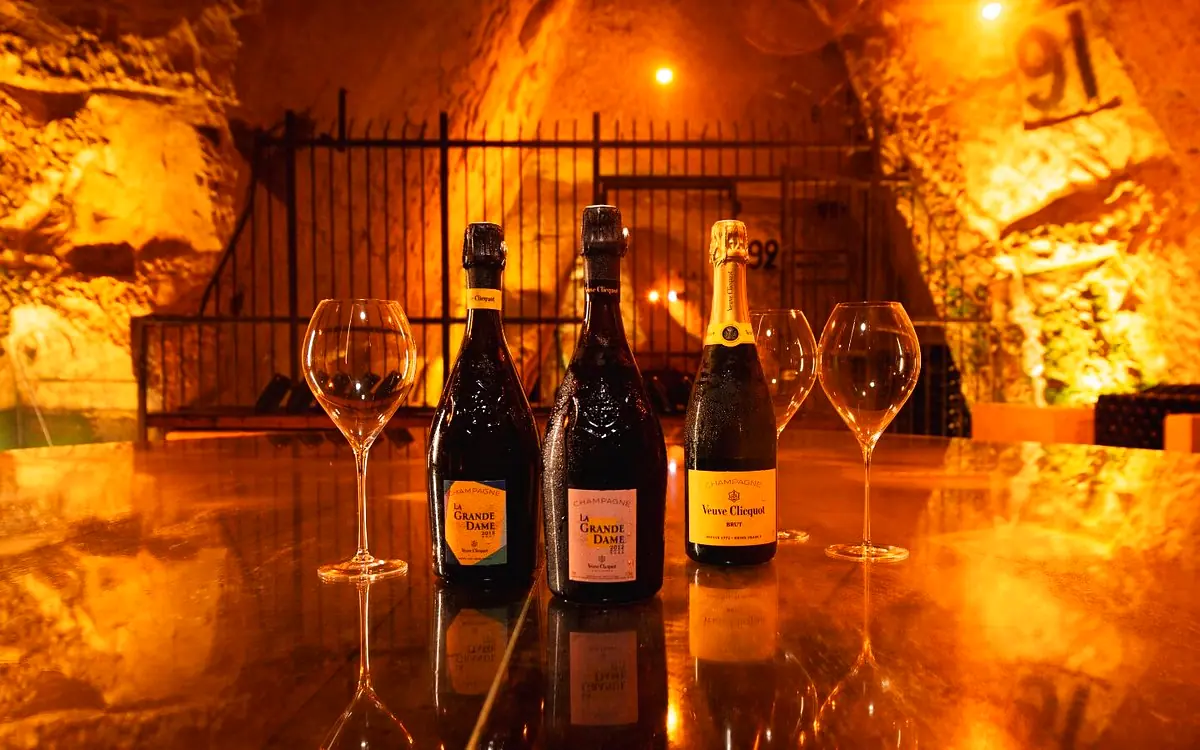
Extract is what remains after a wine has been evaporated: sugar, non-volatile acids, tannin and minerals. It shapes the impression of a wine's body.
Put simply, extract is everything that remains once a wine has been evaporated
A litre of wine consists mainly of roughly 800-900 g of water, 50-100 g of ethyl alcohol, 20-30 g of glucose/fructose (sugar), 5-10 g of glycerol and about 6-12 g of various acids.
After evaporation, what is left looks like very little: a small, unremarkable residue made up of sugar, non-volatile acids, tannin, minerals, vitamins, pigments and various nitrogen compounds. Certain higher alcohols are often counted in as well. In analysis, the sugar is sometimes subtracted too, giving what is called sugar-free extract.
Red wines generally have more extract than white wines. This 'small remainder' has been taken very seriously for centuries, because it too plays a decisive part in a wine's taste.
The reason is that several components of the extract have an enormous influence on the impression of 'body' a wine gives. A wine low in extract is sometimes described by connoisseurs, not kindly, as 'thin'. A good winemaker will therefore try to influence the extract in a natural way, so that the grape variety can show its body at its best.
Tiny changes in the quantities of certain components of the extract can bring wonderful benefits or ruinous drawbacks. Some over-eager winemakers in California, for example, who recently set about ageing their wines in oak barrels in the traditional way, hoping to enrich them with the wonderful aromas that result, discovered to their horror that barriques can also load a wine with harsh, biting tannin. 'A lot of extract' is therefore not always a synonym for 'high quality'.
Pictures

 0 %