
- Département
- Marne (Grand Est region)
- Site
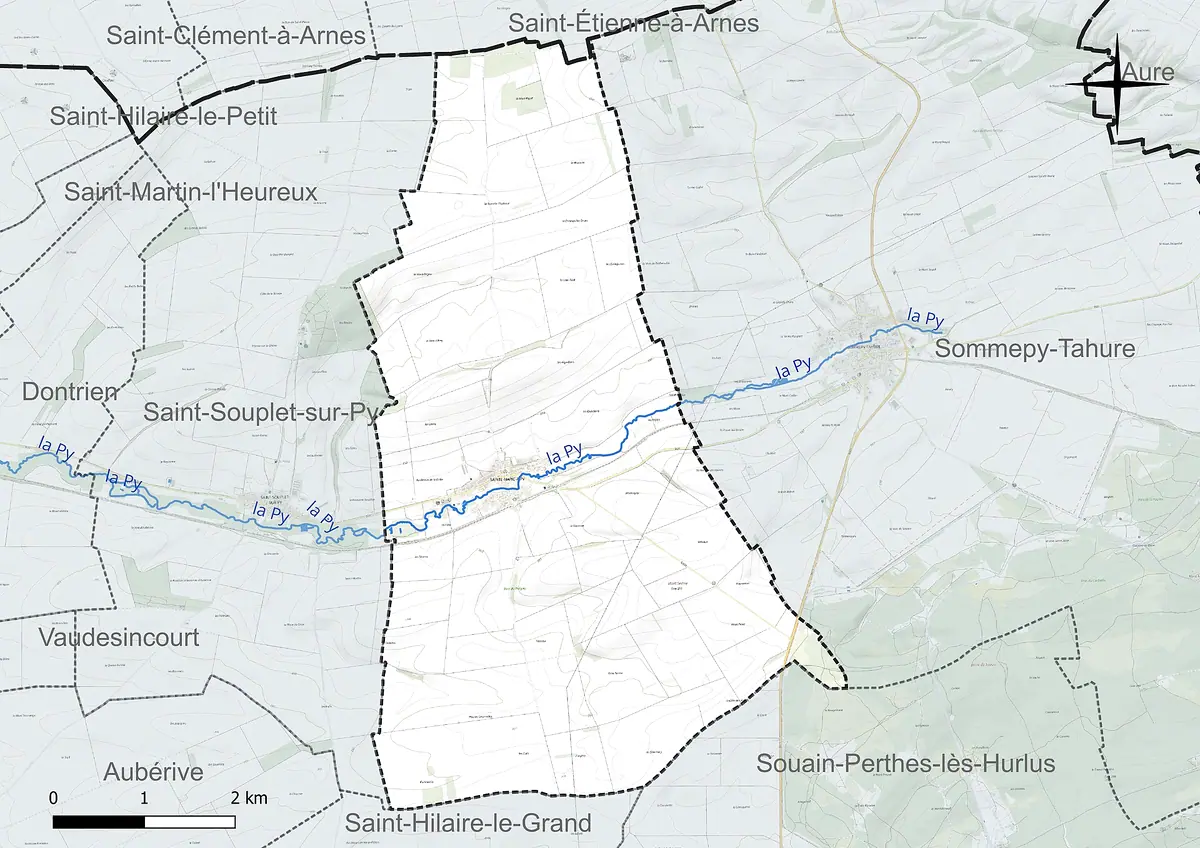
- Champagne sèche, north of the Marne, about 34 km east of Reims
- Inhabitants
- 194 (2023)
- Fläche
- 2.658 ha
- Source
- Wikipedia, eigene Zusammenfassung
A small village in the Champagne sèche in the north of the Marne, right on the border with the Ardennes. Not a wine-growing village, but farmland and a place of remembrance for the First World War.
Location
Sainte-Marie-à-Py lies in the north of the Marne département, right on the border with the Ardennes and about 34 kilometres east of Reims. The commune belongs to the Champagne sèche, the dry Champagne, and so not to the famous vine slopes of the Montagne de Reims or the Marne valley. The Py, a 15-kilometre tributary of the Suippe, flows through the commune's 2,658 hectares. In 2023 the village had 194 inhabitants. They are known as the Copiots.
Farmland instead of vines
A word up front for champagne lovers: Sainte-Marie-à-Py is neither grand cru nor premier cru, and the source mentions neither vineyards nor champagne houses. The land use speaks for itself: 95.3 per cent of the area is farmed, exclusively as arable land. Woodland accounts for 2.4 per cent, built-up land for just 1.6 per cent. The climate is temperate with cool summers. At the nearest weather station in Cauroy, twelve kilometres away, the annual mean for 1991 to 2020 is 10.8 °C, and average rainfall is around 750 millimetres.
Name and history
The village is already recorded in 1219 as Sancta Maria Api, later as Sancta Maria ad Pinum. During the Revolution it was briefly called Montagne-à-Py and Valaumont. It has borne its present name again since 1804. According to tradition, the inhabitants' nickname goes back to a custom: on feast days, young people would float a board with a burning candle down the Py. From the cry about the "couperon à l'iau" came, in the end, "Copiots".
The Py, a 15-kilometre tributary of the Suippe, flows through the commune's 2,658 hectares.
The First World War left its mark. The village lay in the combat zone of the Western Front and was heavily destroyed. German troops occupied it for a long time, using it as a supply base and setting up a field hospital. French troops only returned at the beginning of October 1918, after heavy fighting for the positions around the village.
Sights
Visitors to the area come above all for the places of remembrance. Here, Champagne is less about enjoyment than about history.
- Ossuaire de Navarin: The memorial to the fallen soldiers of the Armées de Champagne lies partly within the commune's boundaries. It was built in 1923/24 to the east of the village.
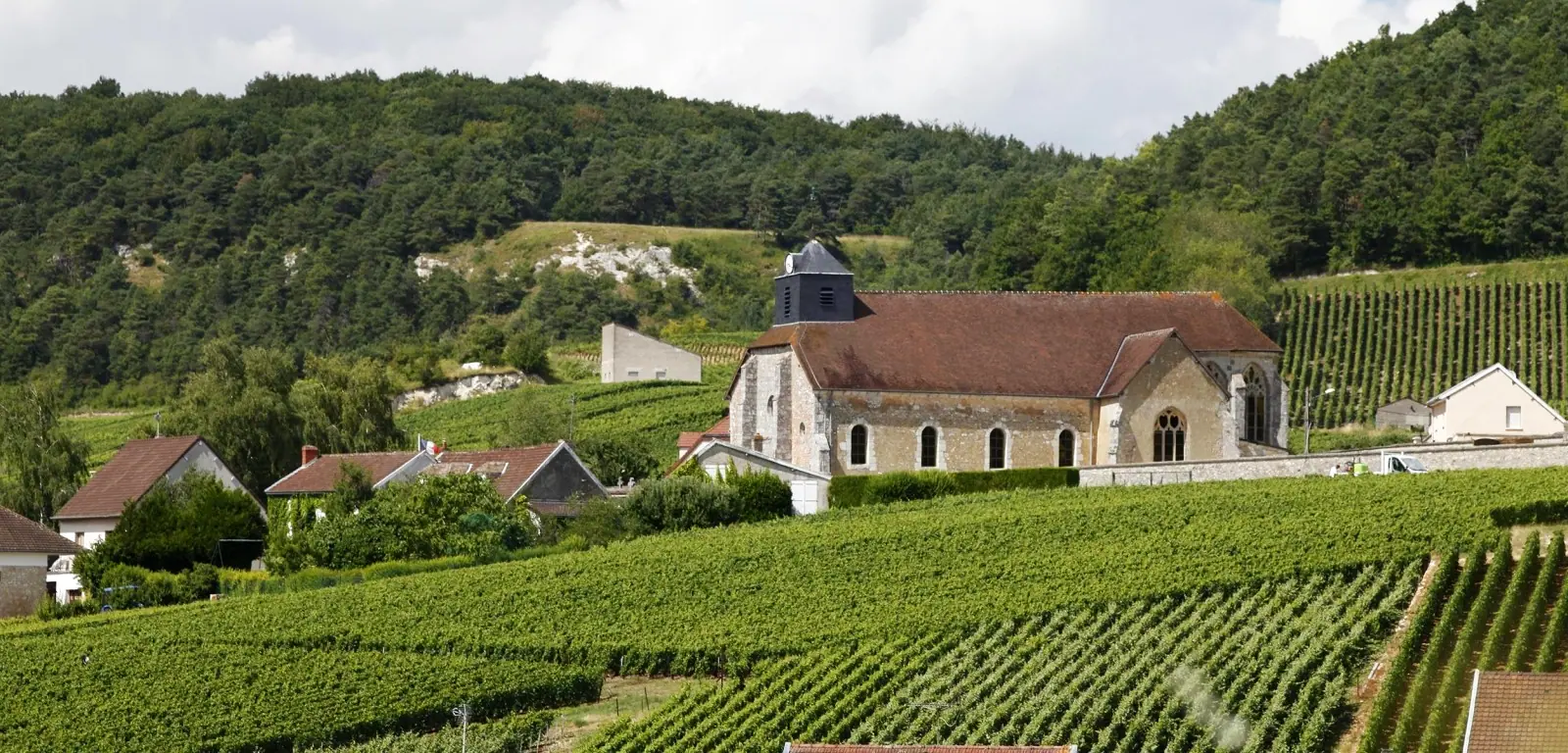
- Notre-Dame church: Destroyed in the war, the church was rebuilt in 1927.
- Monument aux Morts: A plain stone cenotaph bearing the inscription "La Commune reconnaissante à ses Morts pour la Patrie".
- Mairie-École: The building on the Place Jean-Louis-Deville was inaugurated on 12 August 1927 and renovated in 2010/11.
The square is named after Jean-Louis Deville (1757 to 1834), who died in Sainte-Marie-à-Py and sat as a deputy in the National Convention. If you visit the village, it is best combined with a tour of the wine-growing areas further west and south.
Pictures
 0 %
