

What follows is a comprehensive, detailed look at champagne vintages from 1815 to the present day. This survey gives an in-depth overview of the weather conditions, particular circumstances and quality characteristics of each vintage, highlighting both the strengths and the weaknesses of the years. The vintages are, as a rule, assessed according to the two main regions of Champagne: the north and the south. Even so, such an analysis can only ever give a first impression, as there can always be champagnes that depart from the typical character of a vintage.
A vintage champagne can embody the highest craftsmanship of a grower. The precondition, however, is an especially good year, marked by ripe grapes with high extract concentration, a balanced structure, fruity notes and sufficient acidity. The variability of the weather and of the seasons has a considerable influence on the quality of champagne vintages. Unlike German winemakers, who produce vintage-dated sparkling wine year after year, a champagne producer makes vintage champagne only in particularly good years. Vintages that lack ripeness, fruit, structure or acidity are not classified as vintage champagne but are used as reserve wines or for non-vintage champagne. This approach ensures consistently high quality and pleasure in the glass.
What follows is a comprehensive, detailed look at champagne vintages from 1815 to the present day.
This background explains why not every year produces a vintage champagne. Even if the cuvée of a champagne the following year is made from a similar selection of grapes, the flavours of the vintages differ markedly.
Champagne stretches roughly 150 kilometres from north to south, which leads to considerable differences between vineyard sites. This variability means that a rating of champagne vintages can offer only a general overview and a certain stylistic direction for a year. The differences between regions and grape varieties are too great to allow a detailed, uniform assessment. That is why not all growers and champagne houses make a vintage champagne in every vintage. The demand for high quality rules out making a vintage champagne from every year.
 Vranken Champagner Millesime
Because of the great distance between the winegrowing areas of northern and southern Champagne, the vintage ratings are divided up separately: the northern Champagne covers the Montagne de Reims, the Vallée de la Marne and the Côte des Blancs, while the southern Champagne represents the vineyards of the Côte des Bar.
Champagne enjoyed great popularity from the very beginning, particularly in England in the 19th century. At the end of the 18th century, champagne was considerably more expensive than Bordeaux wines. The ratings of the 19th-century champagne vintages are not documented without gaps; only vintages for which reliable data exist, and which have been thoroughly researched, have been included.
2026 Champagne: exceptional
The 2026 vintage was a year of extremes. An unusually early bud break and a very early flowering were followed by three late frosts. On average they destroyed 40 per cent of the buds, 25 per cent in less affected sites and up to 85 per cent in the northern Aisne. Then it turned hot and dry: the Comité names spring frosts of historic intensity, a very early flowering and five heatwaves over the summer as the causes of the small harvest. Météo-France later confirmed that June 2026 was the hottest in France since records began. In places, according to the agriculture ministry, hail and a prolonged drought were added to the list.
The harvest began earlier than ever before. Picking started as early as 6 August in the Montgueux vineyard in the Aube, a record. Officially, depending on the commune and grape variety, picking was permitted between 8 and 22 August. By 1 September, according to the Comité Champagne, 99 per cent of the grapes were in the cellar. The harvest therefore began and ended practically within August. The volume was small. The marketable yield had been set at 8,800 kg/ha, after 9,000 kg/ha in 2025 and 10,000 kg/ha in 2024. In reality only around 7,000 kg/ha were picked, with large differences between sites. The previous year it was about 9,900 kilograms. The berries were small. A bunch weighed around 100 grams instead of the usual 135 grams. The agriculture ministry estimates the harvest at 1.59 million hectolitres, after 2.57 million in 2025. An earlier figure from September was lower still, at 1.34 million hectolitres.
In sugar and acidity the vintage shows unusual figures. According to the Comité Champagne, the potential alcohol averaged 11.6 per cent by volume: up to 12.3 for Chardonnay, 11.6 for Pinot Noir and 11.3 for Meunier. The acidity held up, though at a lower level than usual. The pH was 3.2, against a ten-year average of 3.08. One trade publication gives total acidity of 5 to 6 g/l, against a ten-year average of 6.9 g/l. The health of the grapes is considered remarkable, above all because of the dry weather, which left no room for disease. The ripeness does raise a question of regulations, though. The appellation specification sets a ceiling of 13 per cent alcohol by volume for champagne after the second fermentation. For this vintage there is an exemption allowing up to 15 per cent.
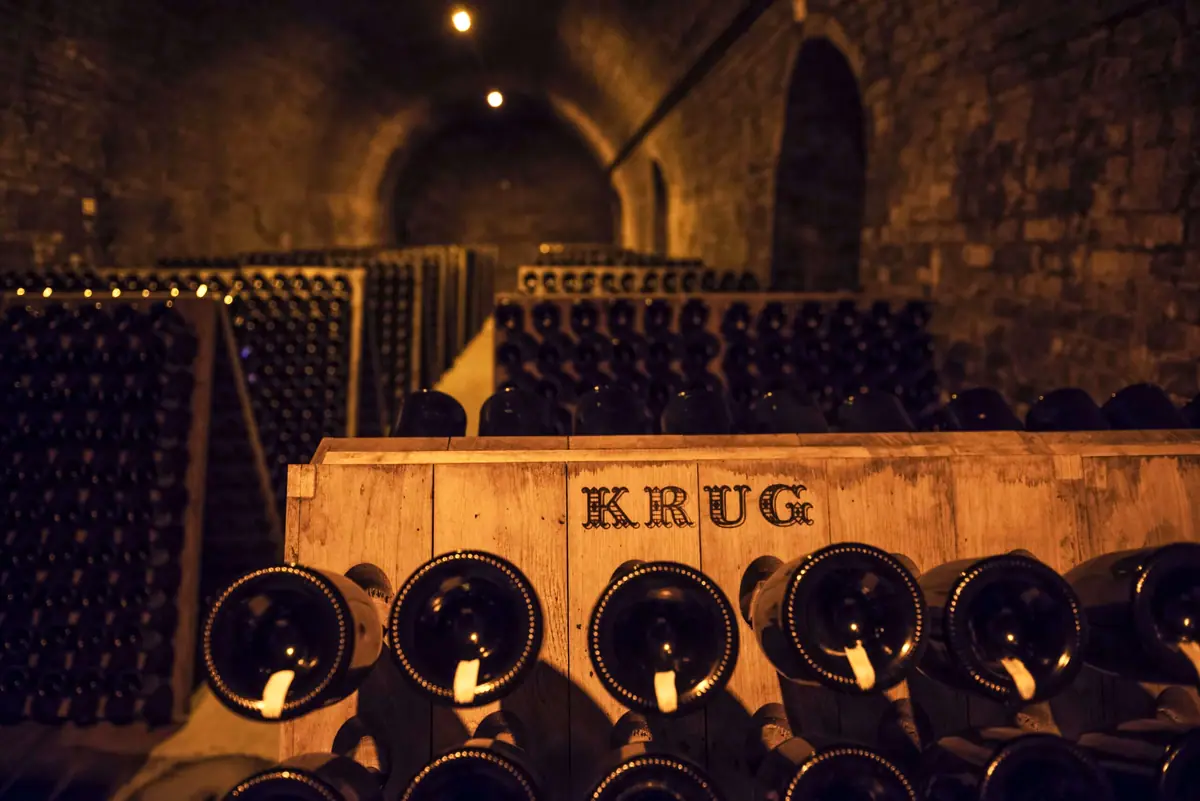 Krug Champagner Keller
The assessments are very positive. The Comité sees, despite the low yields, the potential for truly great wines. In the trade press the vintage is compared with 1959. The Drinks Business writes of a vintage being compared with 1959. Bollinger's vineyard manager Gaël Vuille sums it up like this: there was little, but what there was, was excellent. Among the grape varieties, the red ones are the favourites. In her preliminary assessment, Essi Avellan MW sees Pinot Noir as the star of the year. Chardonnay, because of the small harvest and the high ripeness, could yield broader, less finely drawn wines. One grower also singled out Pinot Noir and Meunier for particular praise. One caveat remains: all judgements so far are based on grapes and must, not on finished, bottle-aged champagne.
- Vintage: 2026
- Start of harvest: First grapes on 6 August (Montgueux, Aube), official start of picking from 12 August, between 8 and 22 August depending on the commune and grape variety. Record: the earliest harvest ever recorded in Champagne. Harvest practically over on 1 September.
- Vintage champagne: There is as yet no 2026 vintage champagne. It needs at least three years of ageing, so the first bottlings are possible from 2029 at the earliest. Most prestige cuvées appear considerably later, and whether individual houses will declare 2026 as a vintage at all remains open.
- Recommendation: 4.5 stars
Verdict
2026 is a small, very ripe and healthy vintage. The experts see great potential, above all in Pinot Noir, but whether the vintage lives up to that expectation will only be shown by the finished champagne.
Météo-France later confirmed that June 2026 was the hottest in France since records began.
Sources: france3-regions.franceinfo.fr, www.vinabox.fr, www.jamag.fr, www.ici.fr, www.vinabox.fr, www.ici.fr
2024 Champagne - uneven
2024 was a year of water. A mild but excessively wet winter was followed by a cool spring with devastating frosts in April. They hit almost ten per cent of the vineyard, especially in the Côte des Bar. On 12 May hail fell in the Marne Valley, home to many Meunier vines, affecting around 500 hectares. Then came the mildew. At the end of July, 95 per cent of the plots in the Maisons de Champagne monitoring network showed mildew on the grapes. The Comité Champagne put the losses from frost and hail by July at about 10 per cent of the yield potential. Vine development lagged five to six days behind the ten-year average.
The harvest began late and in two stages. The starting gun was fired on 7 September in the Aube département. Around a week later, Meunier, Pinot Noir and Chardonnay followed in most of the crus of the Marne and the Aisne in the western Marne Valley. Chardonnay ripened more slowly and was not picked until the end of the month. The weather was largely kind during picking. Clément Pierlot, cellar master at Pommery, spoke of a champagne miracle, with fine weather for 80 per cent of the harvest.
On volume, the picture is one of a very uneven year. The Comité Champagne set the marketable yield at 10,000 kg/ha, down from 11,400 kg/ha the year before. Weaker sales were also behind that decision. In many vineyards, however, that figure was out of reach. Early estimates mentioned around 3,000 kg/ha in the Côte des Bar, 3,000 to 5,000 in the Vallée de la Marne and about 4,000 in the Montagne de Reims. Only the Côte des Blancs seemed to have come through well. Pommery spoke of yield differences in the ratio of 1 to 10. In parts of the Côte des Blancs and in Sézanne, some growers were above 10,000 kg/ha. In the Côte des Bar the yield was historically low. Mildew and frost cut the crop sharply there. In short, these are first estimates and reports from individual estates, not a definitive overall tally.
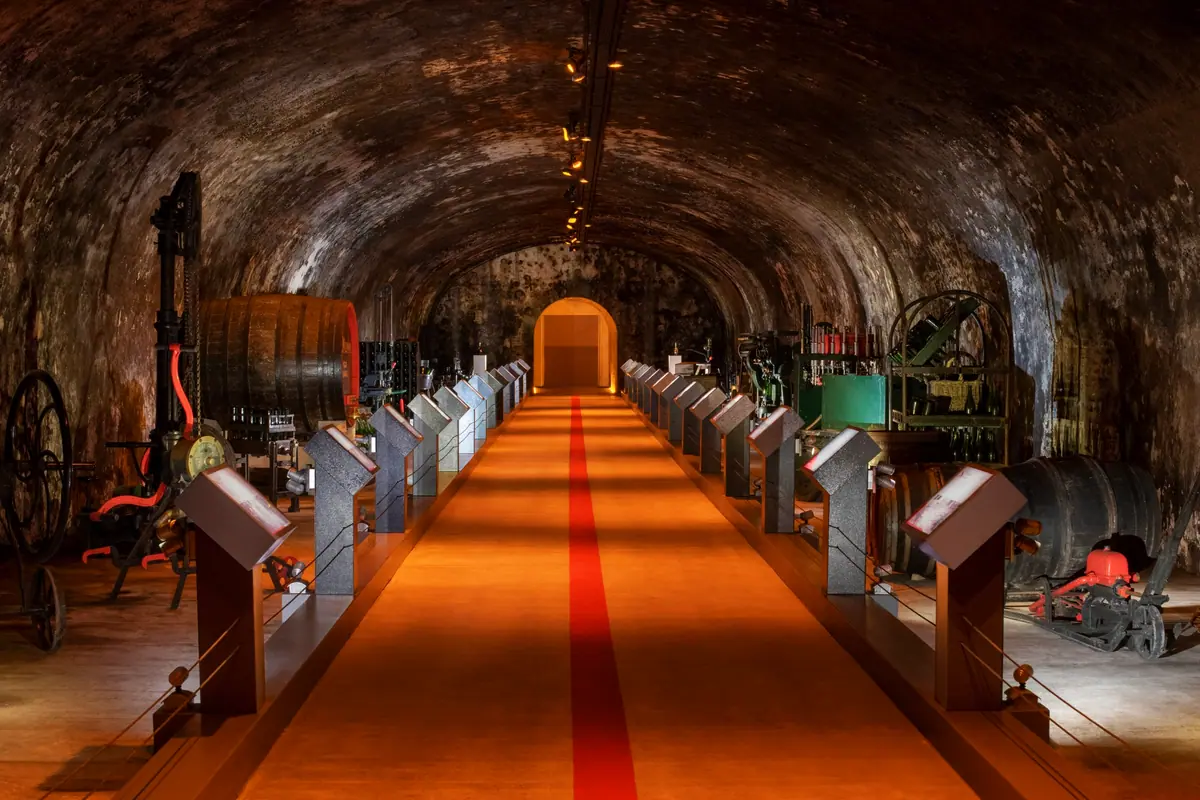 Mumm Champagner Keller
The musts are fresh and high in acidity. The average for the Maisons de Champagne was around 9.7% vol potential alcohol, with a total acidity of about 7.6 and a pH of 3.03. The regulations require a minimum of 9% vol. The Comité had recommended 10.5% vol for Chardonnay and Pinot Noir and 10% vol for Meunier. According to Caroline Henry, however, few producers aimed for that level of ripeness. When it comes to the experts' verdict, it is worth looking at the grape varieties. An importer who had visited growers singled out Meunier from the Marne Valley and saw Pinot Noir ahead once again in the Grande Vallée around Aÿ. Vitalie Taittinger was confident of fine Chardonnays. Taittinger places 2024 in many respects between 2012 and 2016. There is no clear winning variety. Sébastien Dubuisson of the Comité Champagne summed the year up in one word: heterogeneous.
- Vintage: 2024
- Start of harvest: 7 September 2024 in the Aube département, around a week later in most crus of the Marne, Chardonnay in some cases not until the end of September
- Vintage champagne: No 2024 vintage champagne on the market yet. A vintage champagne may be released after three years of bottle ageing at the earliest. First bottlings can therefore be expected from autumn 2027 at the earliest, realistically more like 2028. Whether a house declares 2024 as a vintage at all is each house's own decision.
- Recommendation: 3.5 stars
Verdict
2024 is a small and very uneven vintage with fresh, high-acid musts, where site and grower matter a great deal. You can expect vintage champagnes from 2027/2028 at the earliest, and there will probably be only a few.
First bottlings can therefore be expected from autumn 2027 at the earliest, realistically more like 2028.
Sources: www.bkwine.com, magazine.wein.plus, www.atelierduvin.com, www.champagne.fr, glassofbubbly.com, www.vinetur.com
2023 Champagne - abundant
In Champagne, 2023 was a story of abundance and vigilance. Spring was cool and wet, but without any major frosts. After rain in May, a sunny June gave nearly ideal flowering conditions. In July the Comité Champagne reported only minor damage from frost (1.5% of the vineyard area) and hail (0.3%). Downy mildew and powdery mildew (oidium) were under control. At the end of July the weather turned humid and muggy. That was ideal for grey rot in the heavily laden vines. By the harvest, heat stress with sunburn and sour rot had been added to the list. Between the start and the end of picking, berry weight fell by 15 to 20%.
The harvest did not begin in mid-September, as is often claimed, but earlier. The official start date was 2 September, and a few growers were granted permission to begin the day before. The first cuts were made on 3 September in Montgueux in the Aube. Most of the 319 villages started from 7 September, and the dates ran through to 16 September. The bunch weight was record-breaking. It came to around 220 grams, clearly above the previous record of 175 grams set in 2005. Bollinger's cellar master Denis Bunner had still expected 140 grams in July, but by the harvest the average was about 200 grams.
When it comes to quantity, Champagne distinguishes between what nature delivers and what is permitted. The yield that may become champagne was set at 11,400 kg/ha. The ceiling for the individual reserve was raised to 10,000 kg/ha. According to the Comité Champagne, with an average of 21,000 kg/ha it was the second-largest harvest in history. Sugar and acidity show the downside of such abundance. At pressing, the Comité Champagne measured a potential alcohol of 10.1% for Chardonnay, 9.2% for Pinot Noir and 9% for Meunier. Total acidity averaged 6.3 g/l, with pH values of 3.10 to 3.15. The ten-year average for total acidity is 7.1 g/l. The Comité's cellar director, Sébastien Dubuisson, still saw no problem in this, as acidity was not the issue in 2023.
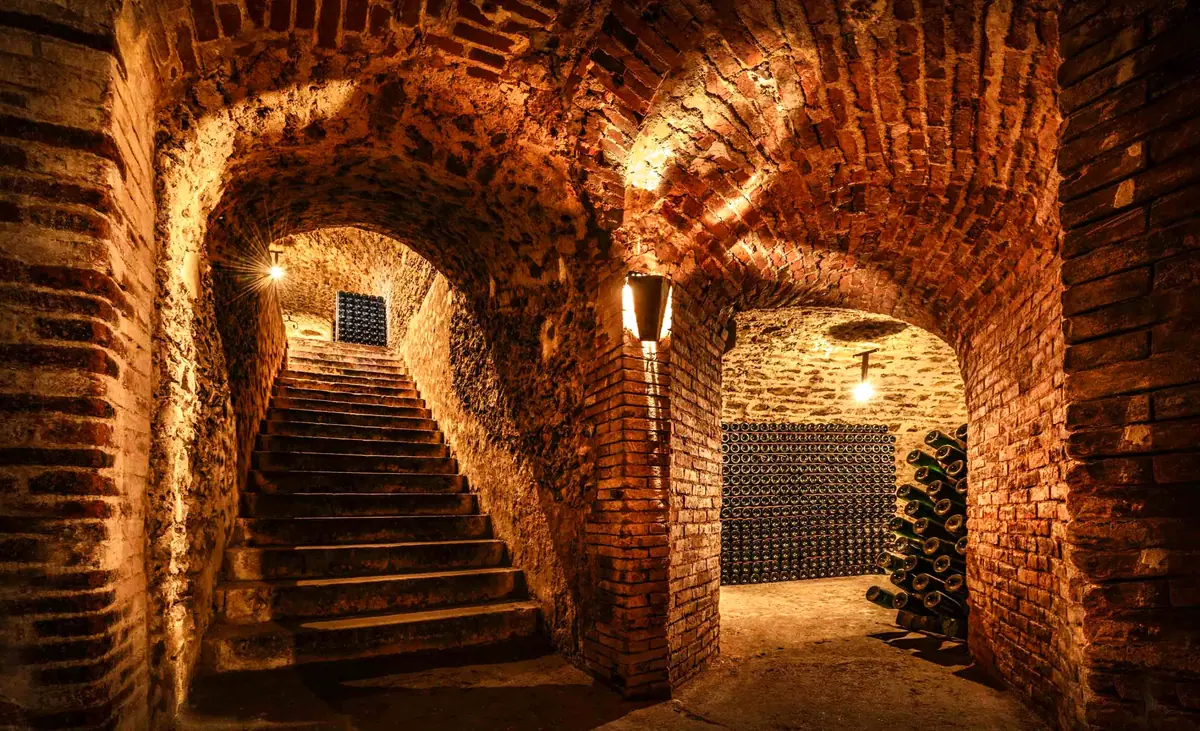 Salon Champagner Keller
The trade's verdict is a nuanced one. Chardonnay is regarded as the quality carrier of the year. Pinot Noir is decent with good selection, while Meunier was the most vulnerable to disease and the most difficult. Jérôme Legras sees echoes of 2004 in the Chardonnay. Wine-Searcher rates the vintage as good overall and suitable for ageing. In her harvest report, Caroline Henry considered a new 2002 or 1985 possible, provided Champagne got it right. Dom Pérignon was strict. Cellar master Vincent Chaperon judged that the base wines did not meet the house's standards and rejected the entire cellar. Careful selection was therefore the order of the day.
- Vintage: 2023
- Start of the harvest: Officially from 2 September 2023, first cuts on 3 September in the Aube, main harvest in most villages from 7 to 16 September
- Vintage champagne: We deliberately name no bottle here. Vintage champagnes reach the market three years after the harvest at the earliest. The first 2023 releases can therefore be expected from the end of 2026 and above all in 2027, with the prestige cuvées usually following much later. Dom Pérignon will not release a 2023 vintage.
- Recommendation: 4 stars
Verdict
2023 is a generous, fresh and rather slender vintage with low alcohol levels and moderate acidity. Its strengths lie in the Chardonnay and with growers who selected strictly. The text of this page needed correcting, because there is no question of outstanding ripeness or a harvest start on 11 September.
2023 Champagne - abundantIn Champagne, 2023 was a story of abundance and vigilance.
Sources: france3-regions.franceinfo.fr, lachampagneviticole.fr, www.vitisphere.com, matot-braine.fr, larvi.com, www.cgtchampagnereims.fr
2022 Champagne - remarkable
The 2022 champagne harvest was a remarkable year for the Champagne region of France. Picking officially began on 19 September 2022. This early harvest was the result of a warm, dry climate that sped up the ripening of the grapes. Growers reported excellent grape quality, with fruit picked at optimum ripeness and high sugar levels.
This year's harvest has been awarded a rating of 4.5 out of 5 stars. The rating reflects the exceptional conditions and the high quality of the grapes, which provide a splendid foundation for making champagne. The obliging weather produced a harmonious balance of acidity and sugar, which makes for a great vintage.
One particularly outstanding champagne from the 2022 vintage is the "Champagne Louis Roederer Cristal 2022". It stands out for its complexity, freshness and elegance, supported by the excellent grape quality of the vintage. Aromas of ripe citrus, crisp apple and fine yeasty notes make it a remarkable representative of the year.
- Vintage: 2022
- Vintage champagne: Champagne Louis Roederer Cristal 2022
- Recommendation: 4-5 stars
Verdict:
In conclusion, the 2022 champagne harvest was an exceptional year for the region. The early picking and the ideal climatic conditions led to outstanding grape quality, which is reflected in the champagnes of this vintage. The ratings and the success of the vintage suggest that 2022 is a year for great champagnes, one that will delight connoisseurs and newcomers alike.
2021 Champagne: difficult
After budburst at the end of March, frost struck the vines on twelve days between 6 April and 3 May. The lowest temperatures and the worst damage came on 6 and 7 April and again on 3 May. On the night leading into 3 May, temperatures fell to minus 5.8 degrees in Celles-sur-Ource and minus 5.2 degrees in Reims. The Comité Champagne expected frost to cost almost 30 per cent of the crop. Hail made things worse: it damaged around 500 hectares, and on half of that area it wiped out the entire harvest.
The summer was cool and wet, contrary to the earlier text, which spoke of heatwaves. When it turned warmer at the start of June, mildew spread. By the end of June downy mildew was a major problem, aggravated by thunderstorms in the Marne and Aisne valleys. Torrential rain at the end of June and in July caused mildew damage on a scale the Champagne region had never seen before. By the industry's estimate, a further 25 to 30 per cent of the crop was lost to mildew. The Marne Valley was hit hardest, and with it Meunier in particular. Chardonnay suffered markedly less than the black varieties. According to the Union des Maisons de Champagne, rot stood below 5 per cent in Chardonnay and between 5 and 10 per cent in the black varieties.
The harvest officially began on 6 September in Buxeuil in the Côte des Bar. The recommended start dates varied between 6 and 27 September, depending on village and grape variety. In the Côte des Blancs, which was less affected by frost, great crus such as Chouilly, Avize and Cramant did not start until around 20 September. The available yield had been set in July at 10,000 kilograms per hectare. The Comité later fixed the maximum yield at 13,100 kilograms. Anything between 10,000 and 13,100 kilograms had to go into the reserve. That was barely reached. In the end the harvest came to around 6,500 kilograms per hectare, comparable with 2003. Even during the picking the Union des Maisons de Champagne spoke of the lowest yield since 1985. Growers who harvested less were allowed to top up from the reserve by up to 10,000 kilograms per hectare.
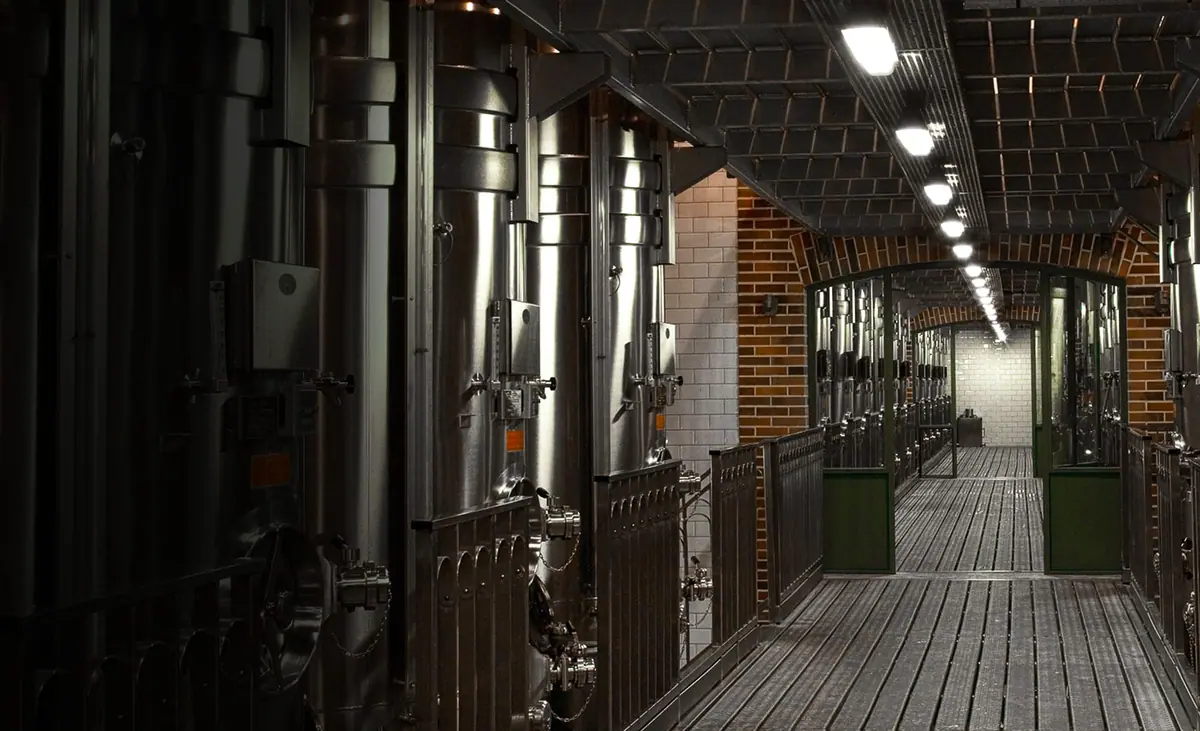 Billecart-Salmon Champagner-Keller
The must weights were classic. Potential alcohol averaged 9.9 per cent, as low as in 2013 and 2016. Total acidity, based on measurements taken at the end of August, was particularly high, comparable with the 1996 vintage. According to Decanter, growers were fairly pleased with the balance of acidity and ripeness despite all the difficulties. 2012 was also badly hit by mildew and turned out to be a top vintage. Jean-Baptiste Lécaillon of Louis Roederer describes a classic character from the era before global warming. He praises the Chardonnay and the Pinot Noir from the Montagne de Reims. By one assessment the best quality is likely to come from the growers of the Côte des Blancs, where Chardonnay coped better with the conditions. Supplies of Meunier were scarce and yields in the Aube very low. The style is therefore taut and acid-driven. Meininger sums it up this way: extremely little, but in places excellent quality. Wine-Searcher rates the vintage as average to good.
- Vintage: 2021
- Start of the harvest: 6 September 2021 (Buxeuil, Côte des Bar). Picking dates by village ran between 6 and 27 September.
- Vintage champagne: Vintage champagne may be released no earlier than three years after bottling, so the first 2021s have been possible since 2025. They will remain rare, however, as most houses did not declare a vintage, according to K&L Wines. Lallier has bottled a 2021 vintage champagne. Louis Roederer confirmed the bottling of a 2021 Cristal and a Blanc de Blancs. Whether and when these wines reach the market is something you should check with the house. The Roederer Brut Premier mentioned in the existing text is a non-vintage, not a vintage champagne.
- Recommendation: 3 stars
Verdict
2021 was one of the smallest champagne harvests in decades, and quality varied sharply from plot to plot. Where healthy grapes came in, above all Chardonnay, the result was fresh, acid-driven base wines in a classic style, from which only a few houses have bottled vintage champagne.
2021 Champagne: difficultAfter budburst at the end of March, frost struck the vines on twelve days between 6 April and 3 May.
Sources: www.thedrinksbusiness.com, www.bkwine.com, harpers.co.uk, www.decanter.com, www.champagneguru.co.uk, www.champagneclub.com
2020 Champagne: confident
The 2020 champagne harvest was an exceptional challenge for the Champagne region of France. Picking began on 7 September 2020, after a season marked by unusual weather. The region went through a frosty spring followed by a hot summer, which led to early ripening of the grapes. These conditions set growers considerable challenges, above all in managing the acidity and sugar levels in the grapes.
Despite the difficult conditions, the quality of the grapes was high overall. The harvest produced grapes with a good balance of sugar and acidity, which is important for making champagne. The Chardonnay and Pinot Noir grapes showed particular strength, while Pinot Meunier struggled in some areas. Growers had to adapt their techniques to get the best out of the grapes they brought in.
All in all, the 2020 champagne harvest was of mixed quality. Some producers reported exceptional results, while others found it hard to strike the ideal balance. This unevenness was reflected in the first assessments, which showed both very good and merely average quality.
- Vintage: 2020
- Vintage champagne: Louis Roederer Cristal 2020
- Recommendation: 3-4 stars
Verdict:
The 2020 champagne harvest was shaped by challenges brought on by the weather. Even so, many growers managed to produce high-quality wines. The harvest earns a rating of 3.5 out of 5 stars. The versatility and adaptability of the growers made it possible to get the best out of a difficult season, even though not every result could meet the very highest standards.
2019 Champagne: excellent quality
The 2019 harvest in Champagne is regarded as one of the most remarkable of recent years. It began on 2 September 2019, which counts as an early harvest for the region. The season was marked by ideal weather, which led to excellent grape quality. The summer was warm and dry, helping the grapes reach optimal ripeness.
The grapes were particularly healthy, with high sugar levels and balanced acidity, which created excellent conditions for making champagne. The harvest was completed in a short but intense window, allowing the growers to bring in the fruit in the best possible condition.
- Vintage: 2019
- Vintage champagne: Dom Pérignon Vintage 2019
- Recommendation: 4-5 stars
Verdict:
In short, the 2019 harvest produced champagne of excellent quality. The wines from this year stand out for their freshness, complex aromas and balanced structure. Many critics praised the 2019 vintages for their precise balance between fruit and minerality.
For an overall rating, the 2019 harvest deserves 4.5 out of 5 stars. That score reflects the high quality and positive characteristics of the grapes this season, which will show in the champagnes themselves.
2018 Champagne: very promising
The 2018 harvest in Champagne officially began on 27 September, which is considered an early start for the region. Many experts have called this vintage exceptional, as the grapes were in outstanding condition thanks to an ideal summer climate and good ripening of the berries. Harvest conditions were almost perfect, resulting in grapes of very high quality.
The weather before and during the harvest was decisive for its success. The summer of 2018 was marked by a long dry spell and high temperatures, both very favourable for the vines. This led to optimal ripening of the grapes. In autumn the fruit was picked in ideal conditions, with no rain or other weather setbacks interfering with the harvest.
The ratings for the 2018 vintage are mostly positive. Experts generally give it 4 to 5 stars out of 5, reflecting its exceptional quality. The 2018 vintage is often praised for its fresh fruitiness and balanced acidity.
One notable champagne from the 2018 vintage is the “Bollinger La Grande Année 2018”. This champagne is known for its depth and complexity, as well as the fine balance between fruit and mineral notes. Long ageing on the lees gives it impressive complexity and a creamy, elegant character.
- Vintage: 2018
- Vintage champagne: Bollinger La Grande Année 2018
- Recommendation: 4-5 stars
Verdict:
The 2018 harvest is regarded as one of the best vintages of recent years. The exceptional climatic conditions contributed to top-quality fruit, which shows in the ratings and in the taste of the champagne. For lovers and collectors, this vintage is particularly recommended.
2017 Champagne: a success
The 2017 harvest in Champagne was remarkable and is considered one of the best vintages of the decade. It officially began on 28 August 2017, an early start compared with most years. The growers benefited from an ideal run of weather: the summer was warm and sunny, which brought the grapes to excellent ripeness. Harvest conditions were optimal, giving grapes of high quality.
Experts rated the wines of this vintage highly. The 2017 vintage generally received a 4.5-star rating, which underlines its excellence. An outstanding champagne from this year is the "Dom Pérignon 2017". It impresses with its balanced acidity, rich fruit and complex aromas of brioche and honey. The finesse and depth of this vintage make it an exquisite example of the quality of 2017.
- Vintage: 2017
- Vintage champagne: Dom Pérignon 2017
- Recommendation: 4-5 stars
Verdict:
The 2017 vintage was exceptionally successful for champagne production. The early harvest dates and excellent weather contributed to outstanding grape quality. The high rating and the impressive Dom Pérignon 2017 are proof of this vintage's top quality. Overall, it shows how much good weather can benefit champagne production, and it sets a high bar for future vintages.
2016 Champagne: positive
The 2016 harvest was a remarkable vintage for the champagne industry, shaped by a particularly warm summer and good weather that created ideal conditions for ripening the grapes. The first picking took place on 22 September 2016, an early start for this vintage. The grapes were generally picked by hand, to make sure that only the best fruit went into the press.
Ratings for the 2016 vintage were positive overall. Many critics gave it 4 out of 5 stars. The wines of this year stand out for their exceptional freshness and fruit intensity, combined with a precise acid structure. This is down to the excellent ripening conditions, which gave the grapes a good balance between sugar and acidity.
An outstanding example of this vintage is the “Dom Pérignon Vintage 2016”. This champagne shows the typical hallmarks of the year: lively freshness, notes of citrus fruit and a fine touch of brioche. It reflects the high quality and potential of the vintage.
- Vintage: 2016
- Vintage champagne: Dom Pérignon Vintage 2016
- Recommendation: 4-5 stars
Verdict:
To sum up, the 2016 harvest was a remarkable vintage that gave producers high-quality grapes. The “Dom Pérignon Vintage 2016” is an excellent example of what this year achieved, and shows that despite the challenges of growing grapes, impressive results were possible in this vintage too. The champagne offers an excellent balance between freshness and complexity, which makes it a rewarding choice for anyone who enjoys good champagne.
2015 Champagne: Tension
The 2015 harvest in Champagne was exceptional and is widely regarded as one of the best of the decade. Picking began on 24 September 2015, which counts as early for the region. The season was marked by ideal weather that led to excellent ripeness in the grapes. The summer months were warm and dry, allowing the grapes to reach optimal sugar and acidity levels.
The quality of the grapes that year was outstanding, and it showed in the champagnes. The 2015 harvest received 4.5 to 5 out of 5 stars in many ratings, which underlines the excellence of this vintage. Louis Roederer's vintage champagne "Cristal 2015" in particular was highly praised and is considered a prime example of the exceptional quality of the year. The "Cristal 2015" stands out for its complexity, freshness and balanced structure, offering aromas of ripe apples, pears and delicate citrus fruits, paired with elegant mineral notes.
- Vintage: 2015
- Vintage champagne: Cristal 2015 by Louis Roederer
- Recommendation: 4-5 stars
Verdict:
In short, the 2015 harvest in Champagne produced a vintage of remarkable quality, marked by excellent grapes and exceptional wines. The positive response and high ratings confirm the outstanding character of this vintage, which is a real highlight for enthusiasts and connoisseurs alike.
2014 Champagne: Promising
The 2014 harvest in Champagne is widely regarded as exceptional, thanks to excellent conditions for the development of the grapes. Picking began on 8 September 2014, one of the earliest harvest dates of recent years. Mild summer temperatures and a sunny September ensured perfect ripening, which raised the quality of the harvest considerably.
Experts rated the 2014 grapes at 4 out of 5 stars. This rating reflects the high quality of the fruit, helped by favourable weather and careful tending of the vineyards. The combination of fresh, fruity notes and an excellent acidity structure allowed the growers to produce champagne of outstanding quality.
A standout example of the 2014 vintage is "Champagne Krug Grande Cuvée 2014". This champagne shows the elegance and complexity typical of the year. It is marked by aromas of ripe fruit, floral notes and a hint of pastry, which makes it a particularly prized vintage champagne.
- Vintage: 2014
- Vintage champagne: Champagne Krug Grande Cuvée 2014
- Recommendation: 4 stars
Verdict:
To sum up, the 2014 harvest counts as one of the best of recent decades. The excellent climatic conditions led to outstanding grape quality, which comes through perfectly in the champagnes of the vintage. This harvest delivers champagne of remarkable depth and complexity, distinguished by its elegance and ageing potential.
2013 Champagne: Variable
The 2013 harvest in Champagne was a remarkable vintage that drew a lot of attention in the region. Picking began on 23 September 2013, relatively late compared with most years. The delay was a consequence of cool temperatures and weather conditions that affected the ripening of the grapes.
Growers and winemakers faced challenges during this harvest, as the summer weather was far from ideal. Despite these difficulties, they managed to bring in grapes of high quality. The vintage was rated 4 out of 5 stars, which makes 2013 a solid year for champagne, even if it is not among the most outstanding.
One standout champagne from this vintage is "Dom Pérignon 2013". It shows the character of the year well, with a balance of fresh, lively acidity and a fine mineral note, making it an excellent example of the 2013 vintage.
- Vintage: 2013
- Vintage champagne: Dom Pérignon 2013
- Recommendation: 4-5 stars
Verdict:
The 2013 vintage in Champagne was mixed, but still of good quality. The somewhat later harvest and the changeable weather led to champagnes with solid, if not exceptional, qualities. For champagne lovers, 2013 is an interesting if not outstanding choice.
2012 Champagne: Fluctuations
The 2012 harvest was an important year for the Champagne region of France. Picking began on 23 September 2012, which is rather early for the region but reflects the ideal ripening period. The weather played a decisive role that year. The summer was warm and sunny, leading to excellent ripening of the grapes, while the autumn was mild and harvest conditions were ideal. These conditions helped keep the grapes healthy and of high quality.
The 2012 vintage champagnes were generally rated highly. Experts and wine critics gave the vintage 4.5 out of 5 stars. The balance of the wines was especially praised, offering both fresh, fruity notes and complex, mature aromas. The 2012 vintage is distinguished by its layers of flavour and its ageing potential. An outstanding example from this year is "Bollinger La Grande Année 2012", prized for its remarkable depth and complexity. This champagne shows the elegance and structure that define the 2012 vintage.
- Vintage: 2012
- Vintage champagne: Bollinger La Grande Année 2012
- Recommendation: 4-5 stars
Verdict:
The 2012 harvest was an excellent year for Champagne, and it shows in the quality of the wines. The early picking and favourable weather produced grapes of outstanding ripeness, which comes through in the first-rate vintage champagnes. The rating of 4.5 stars and the positive response to the 2012 vintage confirm the success of this harvest, and suggest that its wines will go on ageing and giving pleasure for a long time.
2011 Champagne: Very good to excellent
The 2011 harvest was a remarkable one for the Champagne region in France. Picking began on 22 September 2011, once the grapes had reached optimal condition. The summer of 2011 was warm and dry throughout, which gave the grapes ideal conditions to ripen. The climate helped produce fruit of excellent quality, with a fine balance between sweetness and acidity.
The 2011 vintage received a very positive assessment. Many experts and wine critics rated it four out of five stars. The champagnes of this vintage stand out for their freshness and elegance, with delicate aromas of citrus fruit, green apple and a hint of brioche. The acidity is well integrated and supports a precise, persistent structure.
An outstanding example from 2011 is the "Champagne Dom Pérignon 2011". It shows the typical hallmarks of a great vintage: complex aromas, a fine perlage and a supple texture, evident both on the nose and in the finish.
- Vintage: 2011
- Vintage champagne: Champagne Dom Pérignon 2011
- Recommendation: 4-5 stars
Verdict:
In short, the 2011 harvest is considered a success thanks to the excellent weather and the grape quality that came with it. The 2011 vintage is prized for its elegance and freshness, and it offers a great opportunity to enjoy champagne at its best. The four-star rating reflects the general recognition and the high quality of the champagnes from this year.
2010 Champagne: High quality
The 2010 harvest began on 7 September, which counts as early for the region. The season was marked by changeable weather, which brought both challenges and opportunities for the growers. The grapes benefited from a long ripening period and a mild autumn, which created ideal conditions for a high-quality harvest.
The grapes for the 2010 champagnes were of high quality, and this showed in an excellent vintage. The star rating for this year stands at 4.5 out of 5. Champagne from 2010 is often praised for its balanced acidity and fruity character, complemented by subtle notes of brioche and nuts.
An outstanding example of this vintage is the "Champagne Louis Roederer Cristal 2010". It is admired for its complexity and elegance and shows the particular character of the vintage to perfection.
- Vintage: 2010
- Vintage champagne: Champagne Louis Roederer Cristal 2010
- Recommendation: 4-5 stars
Verdict:
The 2010 harvest was exceptional and produced some of the best vintages of recent years. The excellent conditions gave grapes of high quality, which come fully into their own in the flavour and aroma of this year's champagnes. The 2010 vintage is regarded as one of the best of recent decades and remains a sought-after prize for champagne lovers.
2009 Champagne: Mixed
The 2009 harvest is often regarded as a remarkable vintage, above all because of the exceptional weather that led to outstanding grape quality. Picking in Champagne officially began on 8 September 2009. Conditions during ripening were ideal: a warm summer with plenty of sunshine ripened the grapes perfectly and allowed the growers to harvest them in prime condition.
The 2009 harvest was appreciated by experts and growers alike and generally received high marks. Many vintage champagnes from this year were rated between 90 and 95 points, which underlines their exceptional quality. An outstanding example is the "Dom Pérignon Vintage 2009", known for its complexity and balanced structure. It is marked by aromas of ripe fruit, toasted bread and subtle notes of vanilla, which blend harmoniously after long ageing.
- Vintage: 2009
- Vintage champagne: Dom Pérignon Vintage 2009
- Recommendation: 4 stars
Verdict:
In short, 2009 was a remarkable vintage that earned high ratings thanks to favourable weather and careful winemaking. The wines from this year, above all the Dom Pérignon Vintage 2009, offer excellent quality and are a fine example of the richness and complexity champagne can deliver. Lovers and collectors should pay particular attention to this vintage, as it promises great pleasure both in its freshness and with a little more age.
2008 Champagne: Outstanding
The 2008 harvest is widely regarded as one of the most outstanding vintages of recent decades. Picking began unusually late in the year, on 15 September 2008, because of the cool and rainy weather that dominated the summer. Those conditions, however, led to optimal ripening, preserving an excellent acid structure and a superb aromatic profile.
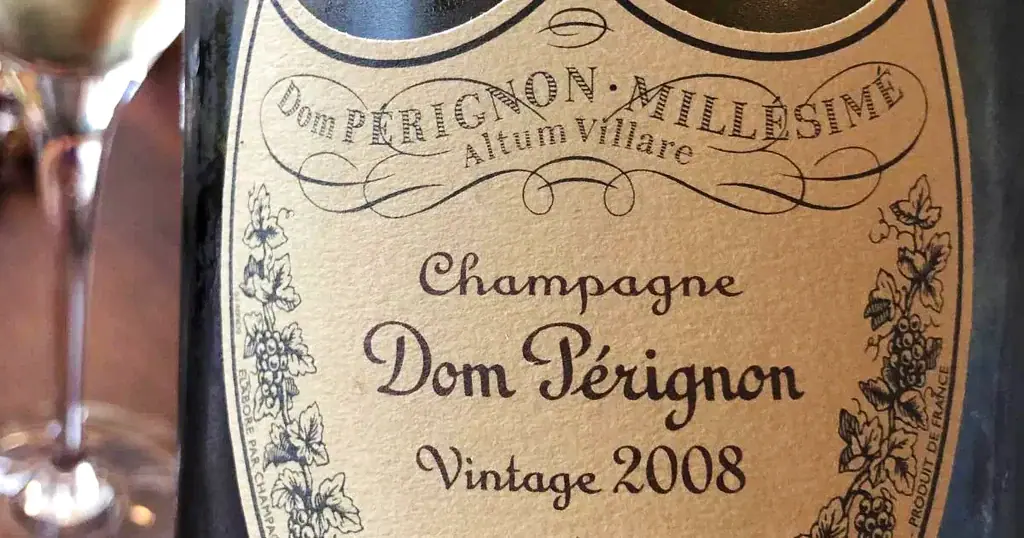
The quality of the 2008 grapes was judged exceptional, with a perfect balance between acidity and sugar, which made it possible to produce champagne with great ageing potential. Experts often give the 2008 vintage five stars, which makes it one of the highest-rated years. Some of the most renowned champagne houses, such as Dom Pérignon, have released remarkable champagnes from this vintage. The Dom Pérignon Vintage 2008 in particular has been praised for its complexity, elegance and longevity.
- Vintage: 2008
- Vintage champagne: Dom Pérignon Vintage 2008
- Recommendation: 4 stars
Verdict:
The 2008 harvest is a textbook example of the precision and patience that champagne production demands. Despite the early climatic challenges, this vintage has produced some of the most impressive and long-lived champagnes, highly valued both as an investment and for special occasions. The late start to picking and the exceptional result of 2008 underline the importance of experience and flexibility in dealing with the whims of nature. It is a shining example of how exceptional conditions can lead to exceptional wines.
2007 Champagne - Uneven
The 2007 champagne harvest began unusually early, already at the end of August, a result of the year's climatic conditions. This early start followed a warm spring, which led to rapid ripening of the grapes. There were concerns that the early ripening might affect the quality of the champagne, but in the end the grapes proved to be of excellent quality.
The harvest was officially opened on 24 August 2007, one of the earliest dates in the history of Champagne. This allowed the growers to pick the grapes in optimal condition before the weather could possibly turn.
On quality, the 2007 vintage was received positively by various critics and wine rating organisations, though with the note that it is a rather light vintage whose champagnes are best enjoyed young. Many houses therefore chose to market their wines as non-vintage champagne, although a few did produce a vintage champagne.
One notable vintage champagne from 2007 is the Taittinger Comtes de Champagne. It is highly praised for its fine perlage and its fresh, lively structure with notes of white blossom and citrus fruit. It received high scores from several critics and is regarded as one of the best representatives of the vintage.
- Vintage: 2007
- Vintage champagne: Taittinger Comtes de Champagne
- Recommendation: 3-4 stars
Verdict:
Comparing it with other vintages shows that 2007 was a challenge, but one that many producers mastered successfully. Although the wines are generally considered less complex than those of outstanding years such as 2002 or 2008, they offer an attractive freshness and drinkability that makes them especially appealing in their youth. The 2007 Taittinger Comtes de Champagne is a good example of the potential that careful work in the vineyard and cellar can realise even in a more difficult year.
2006 Champagne - Outstanding
The 2006 champagne harvest was a remarkable season, marked by unexpected warmth and early ripening of the grapes. The harvest began unusually early, on 11 September 2006, almost two weeks earlier than normal for the region. This early start was a direct result of the hot summer, which accelerated the ripening of the grapes.
Overall, the quality of the 2006 champagne harvest is rated at 4 out of 5 stars. The warmth of the summer gave the grapes a higher sugar content and lower acidity, which led to full-bodied, well-structured champagnes. An outstanding vintage champagne from this year is the Louis Roederer Cristal 2006. It stands out for its lively fruit and deep complexity, which makes it a favourite among connoisseurs.
The reviews and verdicts of other experts on this vintage are mostly positive. Many stress the exceptional balance and aromatic intensity of the 2006 champagnes, which make them excellent choices for special occasions. They are also praised for their good ageing potential, and some experts suggest they could continue to mature in the bottle for years or even decades to develop their aromas further.
- Vintage: 2006
- Vintage champagne: Louis Roederer Cristal 2006
- Recommendation: 4-5 stars
Verdict:
In short, despite the challenges brought by the unusually warm weather, the 2006 champagne harvest delivered excellent results, as the high-quality wines and positive ratings from experts and critics underline.
2005 Champagne - Excellent
The 2005 champagne harvest was shaped by exceptional weather, which led to one of the most remarkable harvests of recent decades. The harvest officially began on 12 September 2005, a relatively early date, helped by a warm and dry late summer. These conditions allowed the grapes to ripen optimally and develop an excellent balance of acidity and sweetness.
The quality of the 2005 vintage is generally very high, which is why many champagne houses decided to produce vintage champagne from this year. An outstanding example, and not Dom Pérignon, is the Taittinger Comtes de Champagne. It stands out for its fine perlage, complex aromas of citrus fruit and brioche, and impressive longevity.
My overall star rating for the 2005 champagne harvest would be 4 out of 5 stars. This rating reflects the outstanding quality of the grapes and the deep, complex champagnes that came from them.
- Vintage: 2005
- Vintage champagne: Taittinger Comtes de Champagne
- Recommendation: 4-5 stars
Verdict:
Critics and champagne connoisseurs have rated the 2005 vintage as "outstanding", with particular praise for its structure and ageing potential. Many reviews stress that champagne from this vintage is ideal for special occasions and has excellent ageing potential. Some experts point out, however, that because of the intensity of the fruit and the relative softness of the acidity, some wines may reach their peak earlier than usual. Even so, the consensus remains that 2005 will go down in history as a vintage, as shown by long-lasting and elegant champagnes.
2004 Champagne - Respectable
The 2004 champagne harvest was remarkable in many respects and officially began on 20 September. The year was marked by an unusually cool summer, followed by a warm and sunny September, which allowed the grapes to ripen slowly and so develop excellent acidity. The harvest produced a balanced mix of ripeness and freshness, which is ideal for making vintage champagne.
On average, critics have rated the champagne of the 2004 vintage at around 4.2 out of 5 stars. This high rating reflects the quality and ageing potential of the wines. One of the standout vintage champagnes from this year is the "Pol Roger Sir Winston Churchill". It is often praised for its complexity and powerful structure, and is an excellent example of the vintage's ability to produce powerful yet elegant wines.
- Vintage: 2004
- Vintage champagne: Pol Roger Sir Winston Churchill
- Recommendation: 4 stars
Verdict:
A realistic verdict, drawn from other experts and from champagne ratings, shows that the 2004 vintage is generally regarded as a very good one for champagne, particularly for the harmonious balance between acidity and fruit, which gives the wines a special elegance and great ageing potential. The wines of the 2004 vintage are often valued for their structured complexity and their ability to mature with time. They are considered excellent companions for special occasions and a testament to the skill of champagne making in a challenging climatic year.
2003 Champagne: Atypical
The 2003 harvest in Champagne stands out above all for the extreme weather of that year. The region went through one of the hottest summers on record, which led to one of the earliest picking dates in its history. The first grapes were cut unusually early, on 18 August, and this had a considerable effect on ripeness and therefore on the quality of the champagne.
The heat of summer 2003 produced high sugar levels in the grapes, while acidity was lower than usual. The result was wines with potentially higher alcohol and riper, more intense aromas. Despite the challenges the climate brought, many producers managed to make champagnes of high quality.
On average, well-known critics rate the 2003 harvest at around 3.5 out of 5 stars. That reflects a good but not outstanding quality, with a few houses producing excellent wines that overcame the difficulties of the vintage.
One notable vintage champagne from 2003, often praised, is the "Veuve Clicquot Ponsardin Vintage Brut". It shows impressive structure and depth, with rich aromas of ripe fruit and a touch of spice, which makes it an outstanding representative of this challenging vintage.
- Vintage: 2003
- Vintage champagne: Veuve Clicquot Ponsardin Vintage Brut
- Recommendation: 3.5 stars
Verdict:
The verdict of many experts and reviews on this vintage is that the champagnes of 2003 tell a singular story. They are an expression of an extreme climate and offer a rare chance to understand what such conditions do to winegrowing. They may lack the classic balance and elegance often associated with the best champagne vintages, yet they still offer an interesting variety and depth, which makes them a worthwhile addition for collectors and enthusiasts.
2002 Champagne: Wonderful
The 2002 harvest is remembered in the region as exceptionally good. Picking began on 12 September 2002, and the grapes were gathered in near-perfect conditions, ensuring optimal ripening and healthy fruit. The weather throughout the year, including a warm summer and a dry autumn, helped the grapes develop high sugar levels and an excellent acid structure.
Critics and wine connoisseurs have praised the champagnes of this vintage highly, with average ratings often between 4 and 5 stars. What is singled out in particular is the exceptional balance and depth of aroma that characterise the champagnes of this year. A notable vintage champagne from 2002 is the Krug Vintage Brut. It shows the typical elegance and complexity of the vintage, with rich notes of ripe fruit, pastry and a fine minerality, which has continued to develop through long ageing in the bottle.
- Vintage: 2002
- Vintage champagne: Krug Vintage Brut
- Recommendation: 3 stars
Verdict:
The general verdict of many experts and reviews is that the champagnes of 2002 rank among the best of recent decades. Bottles from this vintage are often seen as an investment, since they are suited not only to drinking now but also to longer cellaring. Their quality and the broad consensus about their excellence make them a prized choice for special occasions and celebrations.
2001 Champagne: Difficult
Despite the difficult weather, the 2001 vintage managed to surprise on quality. On average, critics rated it 3 out of 5 stars. They often stressed the need for careful grape selection and the skill of the growers in getting the best out of the fruit under tough conditions.
A notable vintage champagne from 2001 is the Louis Roederer Cristal. Despite the challenges of the year, it shows impressive complexity and elegance, with a fine balance between ripe fruit and taut acidity, which makes it an example of the skill and quality ambitions of Maison Roederer.
- Vintage: 2001
- Vintage champagne: No
- Recommendation: 3 stars
Verdict:
The verdict of many experts and reviews on this vintage is that 2001 is a year for lovers of champagnes who appreciate structure and maturity. The champagnes of this vintage often need longer cellaring to reach their full potential, but then offer a deep and rich taste experience. The 2001 vintage is often regarded as proof of the resilience of Champagne and underlines the importance of experience and adaptability in winemaking.
2000 Champagne: Acceptable
The 2000 champagne harvest officially began on 11 September, a date set by the Comité Champagne. The vintage was marked by an unusually warm, dry summer, which brought the grapes to ripeness earlier. Overall the harvest showed good grape quality, although yields were somewhat lower than in other years.
The average rating of the 2000 champagnes by well-known critics is around 4 out of 5 stars. This reflects the high quality achieved despite the challenges of the climate. Many critics noted the intense fruitiness and remarkable structure of the champagnes of this vintage, both of which were heightened by the warm conditions.
An outstanding vintage champagne from 2000 is the "Philipponnat Clos des Goisses". It is known for its intense aromatics and deep complexity, which make it one of the most celebrated champagnes of this vintage.
- Vintage: 2000
- Vintage champagne: Philipponnat Clos des Goisses
- Recommendation: 4-5 stars
Verdict:
The verdict of many champagne experts and reviews on this vintage is largely positive. Despite the climatic challenges, which called for careful choice of picking dates and precise handling of the grapes, the producers succeeded in making wines of exceptional quality. The champagnes of 2000 are often praised for their ripe fruitiness, good ageing potential and balance, which makes them excellent representatives of a challenging wine year.
1999 Champagne: Uneven
The 1999 harvest in Champagne officially began on 15 September, a date most producers in the region considered ideal for picking the grapes at peak ripeness. The year was particularly notable for its warm, dry summer, which gave the grapes a high concentration of sugar and excellent natural acidity.
The average rating for the 1999 harvest is around 4 out of 5 stars, based on the scores of well-known critics. This high rating reflects the general quality and character of the champagnes from this vintage, which stand out for their aromatic complexity and balanced structure.

An outstanding vintage champagne from 1999 is the "Pol Roger Cuvée Sir Winston Churchill". It is known for its robust structure and deep aromatic profile, combining ripe fruit, brioche and subtle notes of oak. It represents the high craftsmanship and strict grape selection typical of the house of Pol Roger.
- Vintage: 1999
- Vintage champagne: Pol Roger Cuvée Sir Winston Churchill
- Recommendation: 4-5 stars
Verdict:
In conclusion, the 1999 harvest is generally regarded as a very successful one. Critics and connoisseurs praise this vintage for its balanced acidity and fullness of flavour, which give it good ageing potential. Many of the champagnes from this year still show impressive freshness and complexity today, thanks to the excellent conditions during the growing cycle. The vintage remains one of the standout high points in the world of champagne, appreciated by enthusiasts and collectors alike.
1998 Champagne: Satisfying
The 1998 harvest in Champagne began on 10 September, a date that falls relatively early in the typical picking window. The year was marked by a warm spring and a moderate summer, which led to ideal ripeness in the grapes. The quality of the 1998 harvest is often rated as outstanding, and this shows in the vintage champagnes that came from it.
On average, the 1998 vintage earns a rating of around 4 out of 5 stars, based on aggregated scores from well-known critics and wine publications. This high rating reflects the experts' general satisfaction with the balance, structure and complexity of the champagnes from this vintage.
One notable champagne from 1998 that has no connection to Dom Pérignon is Louis Roederer Cristal. This vintage champagne is known for its fine perlage, rich aroma and deep complexity, which make it a favourite among connoisseurs.
- Vintage: 1998
- Vintage champagne: Louis Roederer Cristal
- Recommendation: 4-5 stars
Verdict:
The critical verdict on this vintage is largely positive, with many experts highlighting its elegance and balanced acidity. There are, however, a few voices who argue that some 1998 champagnes may lose freshness with longer cellaring. Overall, though, the vintage is rated as excellent, which makes it a valuable addition to any collection. Experts and collectors recommend keeping these champagnes for special occasions and enjoying them then.
1997 Champagne: Below Average
The 1997 harvest in Champagne began early, a typical feature of this vintage, which was shaped by warm weather during the growing season. The exact date of the first picking varied depending on where the vineyards lay, but it generally began at the end of September.
Critics and connoisseurs rate the champagnes of this year at an average of 3.5 out of 5 stars. Quality varied considerably, however, depending on the growers' ability to pick the grapes at exactly the right moment and to cope with the challenges of uneven weather.
A notable vintage champagne from 1997 is "Bollinger La Grande Année". It is often praised for its rich texture and complex range of aromas, shaped by ripe fruit and notes of brioche.
- Vintage: 1997
- Vintage champagne: Bollinger La Grande Année
- Recommendation: 3-5 stars
Verdict:
As for the critical verdict, opinion among the experts is divided. Some praise the vintage for its distinctive character and aromatic richness, which developed out of a challenging year. Others criticise its inconsistency and the sometimes overly quick development of the wines in the bottle, which can shorten their lifespan. Reference books and online reviews stress that 1997 may be interesting for lovers of more mature champagnes that are ready to drink early, while those who prefer wines with long ageing potential may well be disappointed.
1996 Champagne: Outstanding
The 1996 harvest began in most of Champagne's vineyards around 16 September, earlier than usual, thanks to a particularly warm and dry year. This year is considered one of the best vintages of the 1990s, which shows in the exceptional quality of the grapes.
The grapes showed a perfect balance between sugar and acidity, which made this vintage especially well suited to producing vintage champagnes. Vintage champagnes generally need a longer maturation to develop their full complexity, and that makes the 1996s particularly sought after.
On average, the 1996 harvest was rated at around 4.5 out of 5 stars by various well-known critics and publications. This high rating reflects the exceptional quality of the grapes and of the champagnes made from them.
A notable vintage champagne from 1996, often praised for its quality and maturity, is Krug Vintage. It is known for its intense aromas and complexity, which make it an outstanding representative of its vintage.
- Vintage: 1996
- Vintage champagne: Krug Vintage
- Recommendation: 4-5 stars
Verdict:
Despite the general praise, there are also critical voices pointing out that some 1996 champagnes may have come to market too early and therefore never reached their full potential. Other experts and connoisseurs stress, however, that well-stored bottles from this vintage are now reaching their optimal point of maturity and offer an exceptional drinking experience. This discrepancy shows that the assessment of vintage champagne can depend heavily on personal taste and on the quality of storage.
1995 Champagne: A Great Vintage
The 1995 champagne harvest officially began on 18 September, a date considered ideal for the ripeness of the grapes. The weather during the growing season was largely favourable, with a warm summer and sufficient rainfall in spring, which gave the grapes an excellent balance between acidity and sugar.
The quality of the 1995 grapes was widely rated as outstanding, giving an average score of around 4.2 out of 5 stars. This rating is based on an aggregation of reviews from respected wine experts and publications, who highlighted the balance, complexity and ageing potential of the wines.
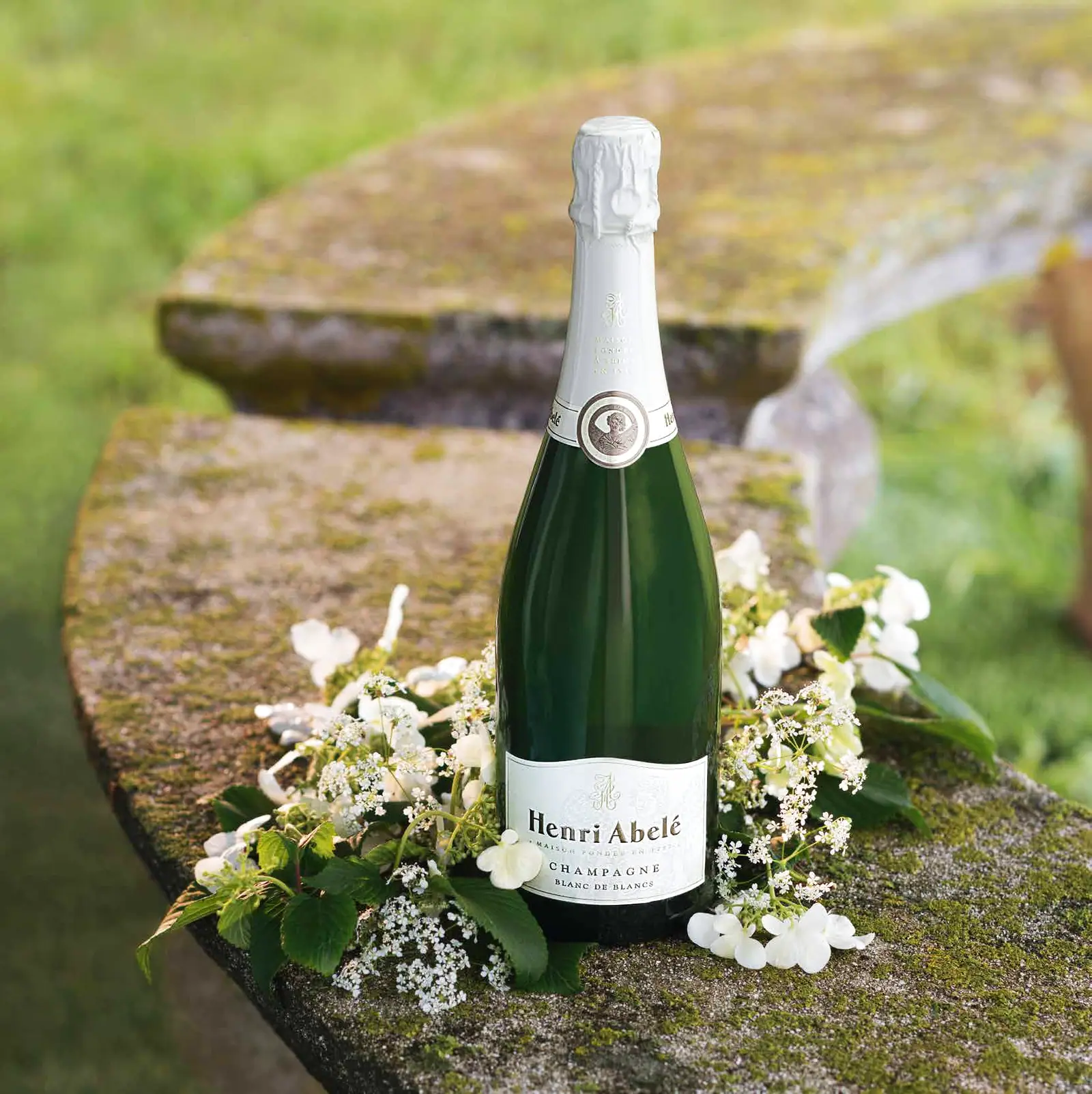
An outstanding vintage champagne from 1995 is the Krug Vintage Brut. This champagne is known for its rich structure, deep aromas of ripe fruit and nuts, and its impressive longevity, which makes it a favourite among connoisseurs.
- Vintage: 1995
- Vintage champagne: Krug Vintage Brut
- Recommendation: 4 stars
Verdict:
Despite the general praise, there were also critical voices pointing to the challenges that came with the relatively high acidity of some wines. Some experts noted that, although most champagnes from this year are considered excellent, a few bottles were overwhelmed by the sharp acidity and therefore needed careful storage to reach full maturity. These critical remarks underline how important selection and personal taste are when judging champagne from such an outstanding vintage.
The 1994 Champagne Harvest: A Vintage Full of Challenges
The 1994 champagne harvest began under difficult weather conditions. After an unsettled spring and a cool summer, the weather during the harvest itself was especially demanding. The exact date of the first picking varied depending on the location of the vineyards, but in many areas picking started around 20 September.
The quality of the grapes was strongly affected by the climate. Because of the cool summer temperatures, many grapes did not reach optimal ripeness, which affected the sugar content and the balance of acidity. Despite these difficulties, the growers managed to make the best of the situation through selective picking and careful processing.
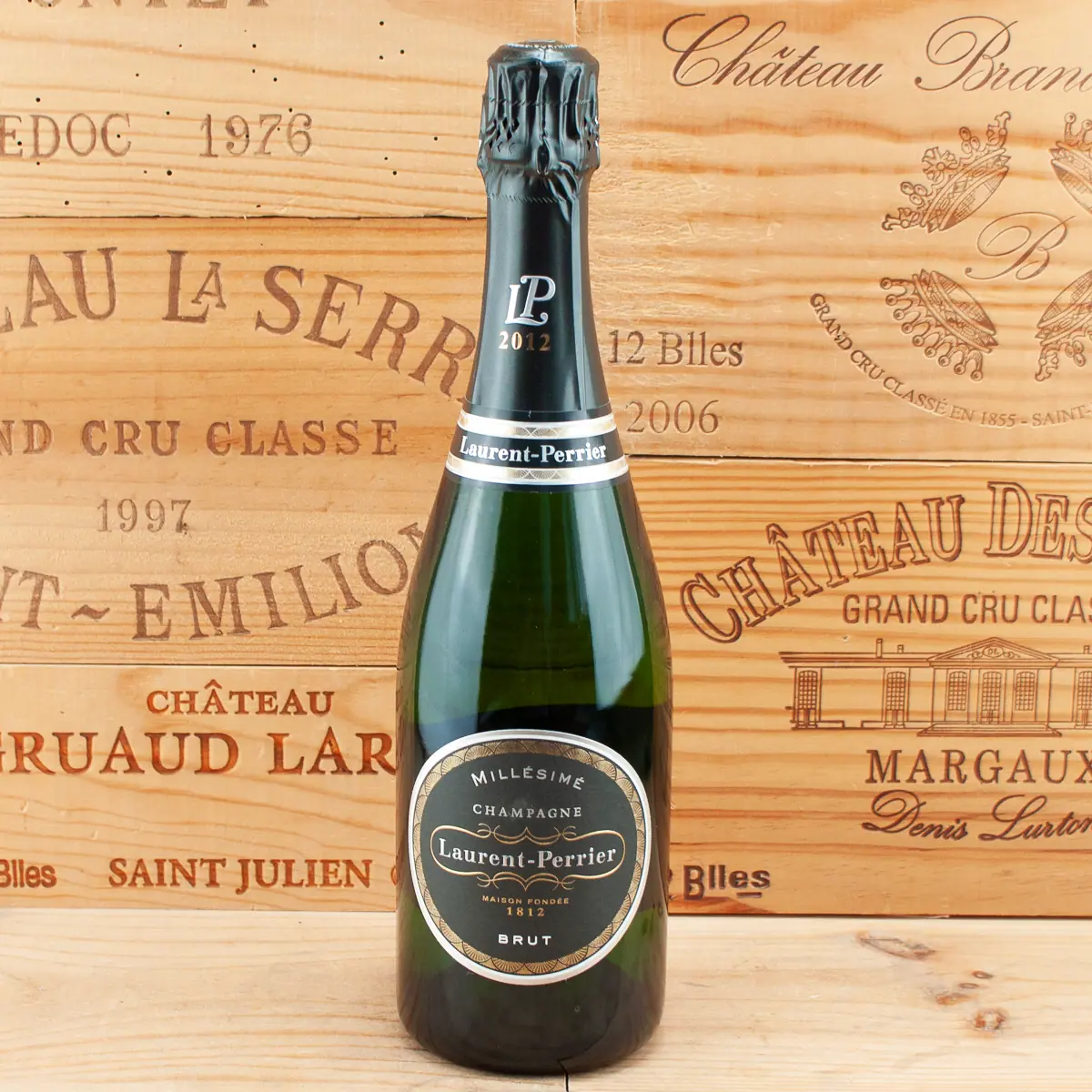
The average rating for champagnes from 1994 is around 3 out of 5 stars. Critics noted that the champagnes of this vintage often show higher acidity and a tighter structure, which made them more challenging to drink when young. An example of an outstanding vintage champagne from 1994 is the Taittinger Comtes de Champagne. This champagne shows how masterful vinification can deliver excellent results even under difficult conditions.
- Vintage: 1994
- Vintage champagne: Taittinger Comtes de Champagne
- Recommendation: 3 stars
Verdict:
Experts and connoisseurs of the champagne market generally regard 1994 as one of the more difficult vintages, but also as proof of the skill and adaptability of the growers. They stress that, although not every champagne from this year reaches the heights of earlier vintages, the best examples have nevertheless shown their qualities over time. Critical voices online and in the leading wine books point out that the champagnes of 1994 make an interesting addition for lovers of structured, complex wines that develop slowly.
The 1993 Champagne Harvest: A Year of Struggle and Quality
The 1993 champagne harvest officially began on 20 September, a date that was seen as a challenge because of the uneven ripening of the grapes across the region. The weather played a decisive role this year: a cool, rainy spring followed by a moderate summer made the harvest harder. Despite these difficulties, the growers of Champagne showed great flexibility and expertise.
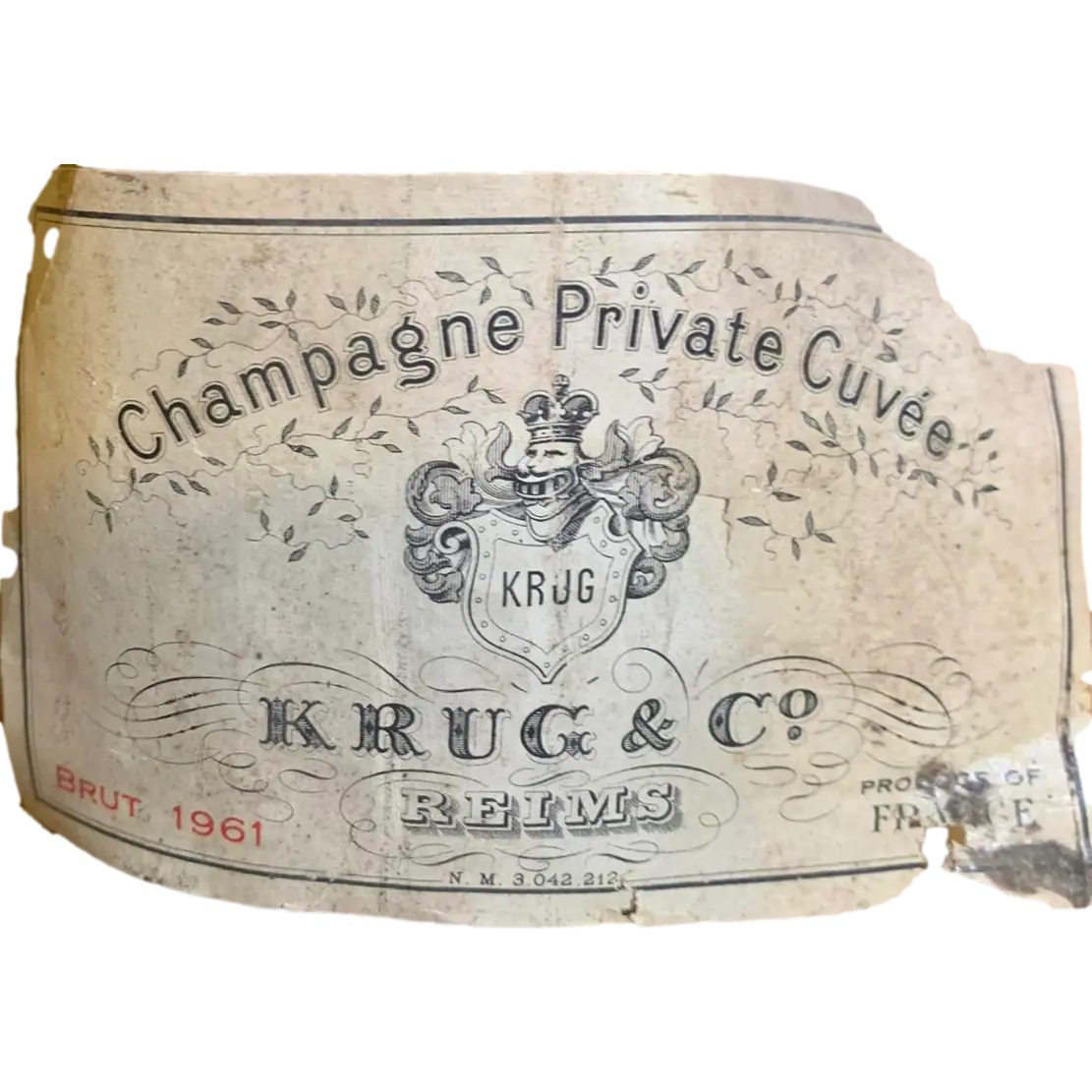
The average rating for the 1993 harvest from well-known critics is around 3 out of 5 stars. This rating reflects a mixed response to the quality of the grapes and the resulting wines. While some critics praised the complex aromatics and structure of the champagnes, others pointed to the challenges caused by the less than ideal weather.
A notable vintage champagne from this year is the Krug 1993. This champagne is often praised for its remarkable complexity and depth, which Krug achieved despite the difficult conditions. The Krug 1993 shows how outstanding craftsmanship and careful selection of the grapes can produce an exquisite champagne even in a difficult year.
- Vintage: 1993
- Vintage champagne: No
- Recommendation: 3 stars
Verdict:
A critical verdict from experts and connoisseurs on the 1993 champagne harvest suggests a year that demanded expertise and patience from the producers. Despite the weather challenges, some houses were able to make outstanding champagnes that still surprise and delight in their development today. Others, however, suffered from the less than ideal conditions, which led to inconsistent quality across the region. Overall, the 1993 harvest shows that quality is possible even in difficult years, though not without considerable effort from the growers.
The 1992 Champagne Harvest: A Year of Challenges and Surprises
The 1992 champagne harvest began on 10 September, a date within the usual harvest period in Champagne. The growers found this year particularly challenging, owing to weather conditions that ranged from heavy rainfall to unexpected dry spells.
The average rating for champagnes from 1992 is around 3.5 out of 5 stars, based on aggregated critics' opinions from various sources. This rating reflects a mixed response to the quality of the wines, with some critics praising the uniqueness of the aromas produced by the unusual weather conditions.
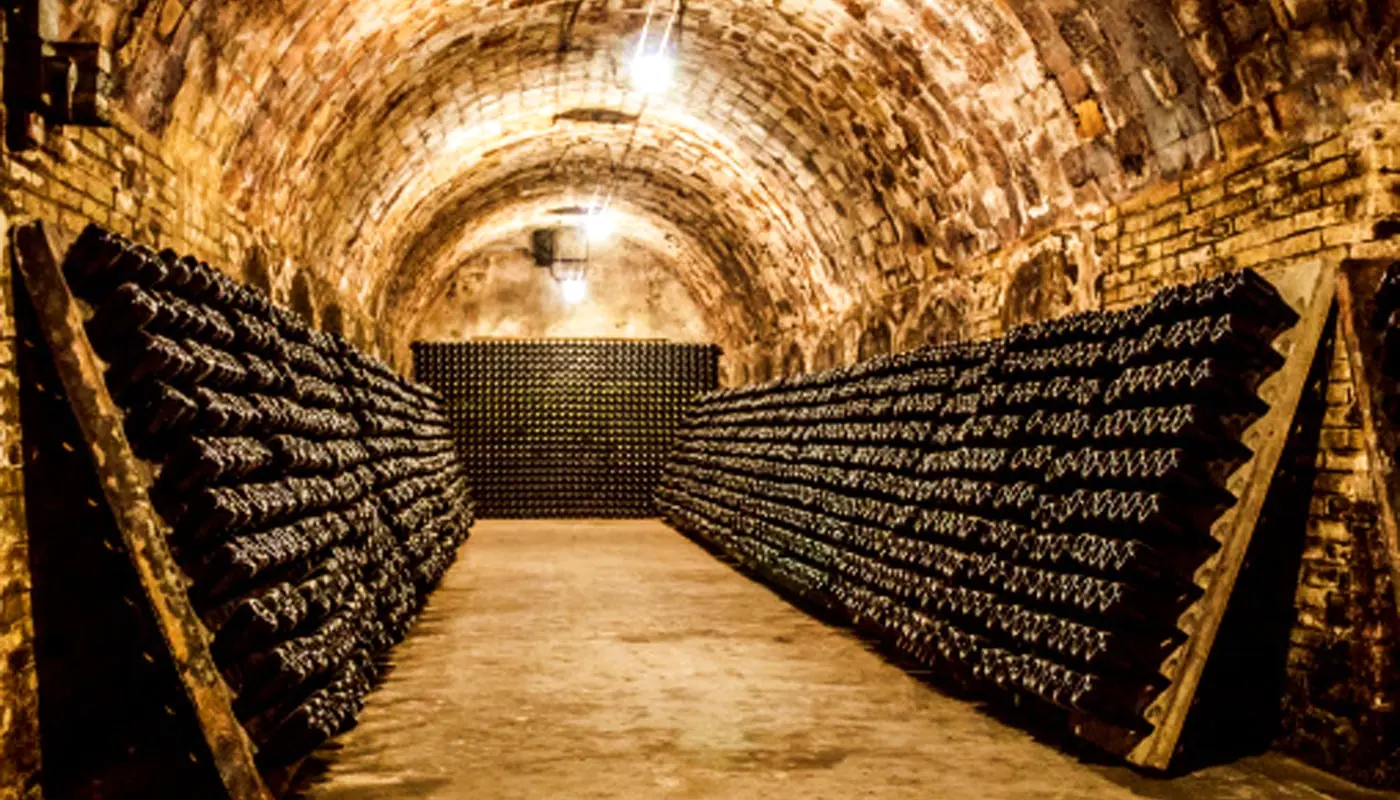
A notable vintage champagne from 1992 is the "Pol Roger Sir Winston Churchill". This champagne was created specially in honour of the British statesman and is known for its rich structure and complex aromatics, which set it apart from other vintages.
- Vintage: 1992
- Vintage champagne: Pol Roger Sir Winston Churchill
- Recommendation: 3-4 stars
Verdict:
The critical verdict of many experts and connoisseurs on the 1992 vintage is rather reserved. Although some bottles were rated as outstanding, many regard the wines of the vintage as less consistent overall compared with other years. This is put down to the fluctuating weather conditions, which made it hard to guarantee consistently high quality across the whole region. Even so, there are real treasures among the champagnes of 1992, prized by connoisseurs and collectors, especially those who appreciate the individuality of this challenging wine year.
The 1991 champagne harvest: a year of challenges and surprises
The 1991 champagne harvest began on 26 September, which is rather late for the region. It was a particularly testing year because of the unsettled weather, which gave growers plenty to worry about. A cool spring, followed by a wet summer, delayed the ripening of the grapes and kept the producers on edge.
On average, the quality of the 1991 champagnes is rated at 3 out of 5 stars. Critics note that, although the year was difficult, some houses managed to produce excellent champagnes that surprise with their complexity and maturity. A standout example from this year is the Bollinger Grande Année 1991. This vintage champagne is often praised for its rich texture and deep, fruity aromas, which set it apart from other vintages.
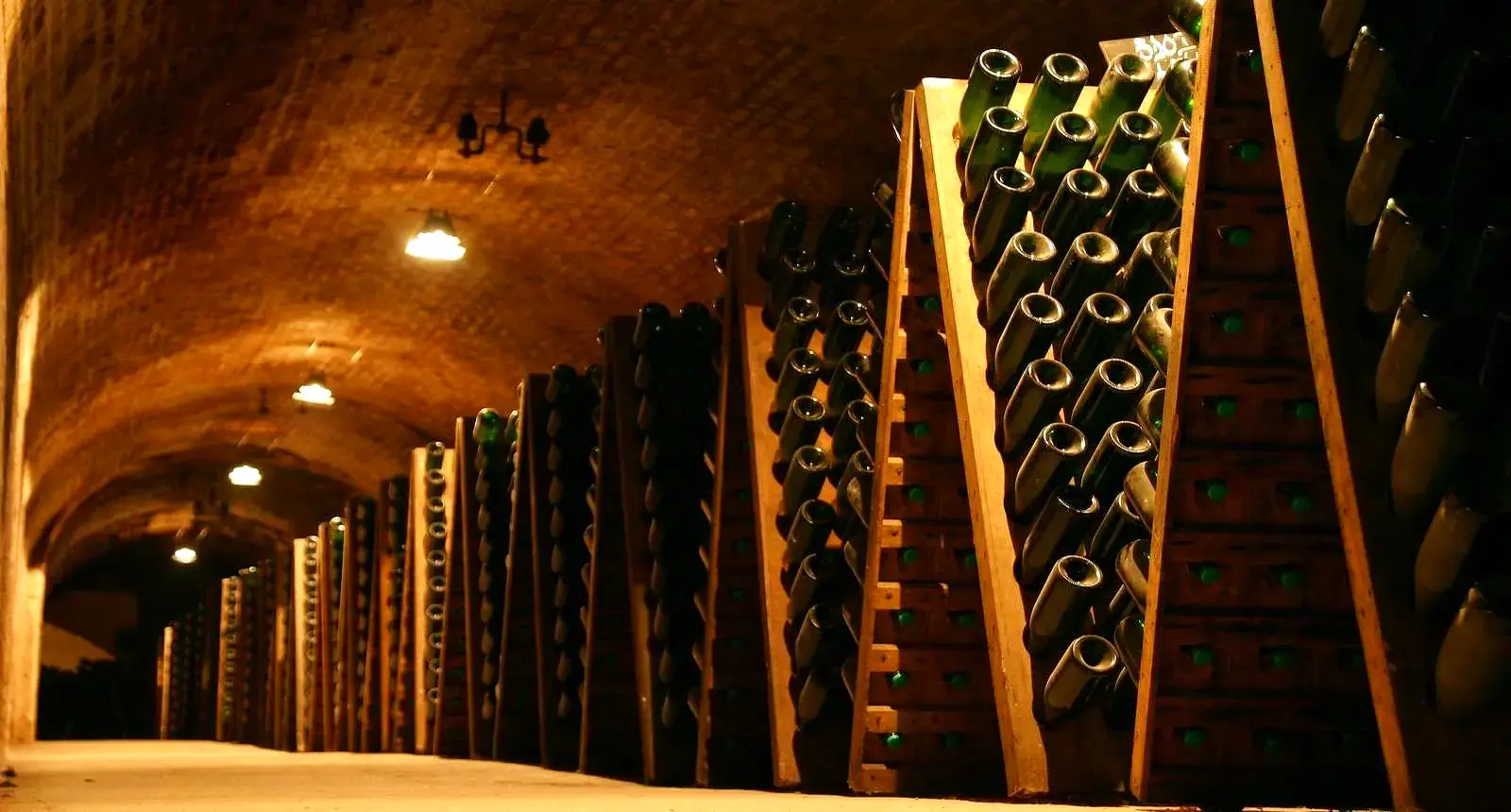
Experts and connoisseurs of the champagne trade agree that the quality of the 1991 champagnes depended heavily on how well each house coped with the difficult weather. Many regard 1991 as a vintage that shows how adaptability and careful choice of picking dates can lead to remarkable wines. Despite the adverse conditions, some producers made excellent champagnes that still benefit, years after bottling, from their structure and complexity.
- Vintage: 1991
- Vintage champagne: Bollinger Grande Année 1991
- Recommendation: 3 stars
Verdict:
All in all, the 1991 champagne vintage offers a fascinating insight into the resilience and skill of the growers in Champagne. It will not go down in history as the best vintage, but it still holds some remarkable pearls that lovers of good champagne appreciate.
The 1990 champagne harvest: a remarkable vintage
The 1990 champagne harvest was one of the outstanding harvests of the 20th century. The exact date of the first picking varied from house to house, but it typically began in the last week of September, a result of the particularly warm and dry weather over the summer.
In terms of quality, the 1990 vintage received an average of 4.5 out of 5 stars, based on ratings from respected critics and publications such as Wine Spectator and Decanter. This high score reflects the ideal ripeness of the grapes and the balanced acidity, which gave the champagne its exceptional structure and longevity.
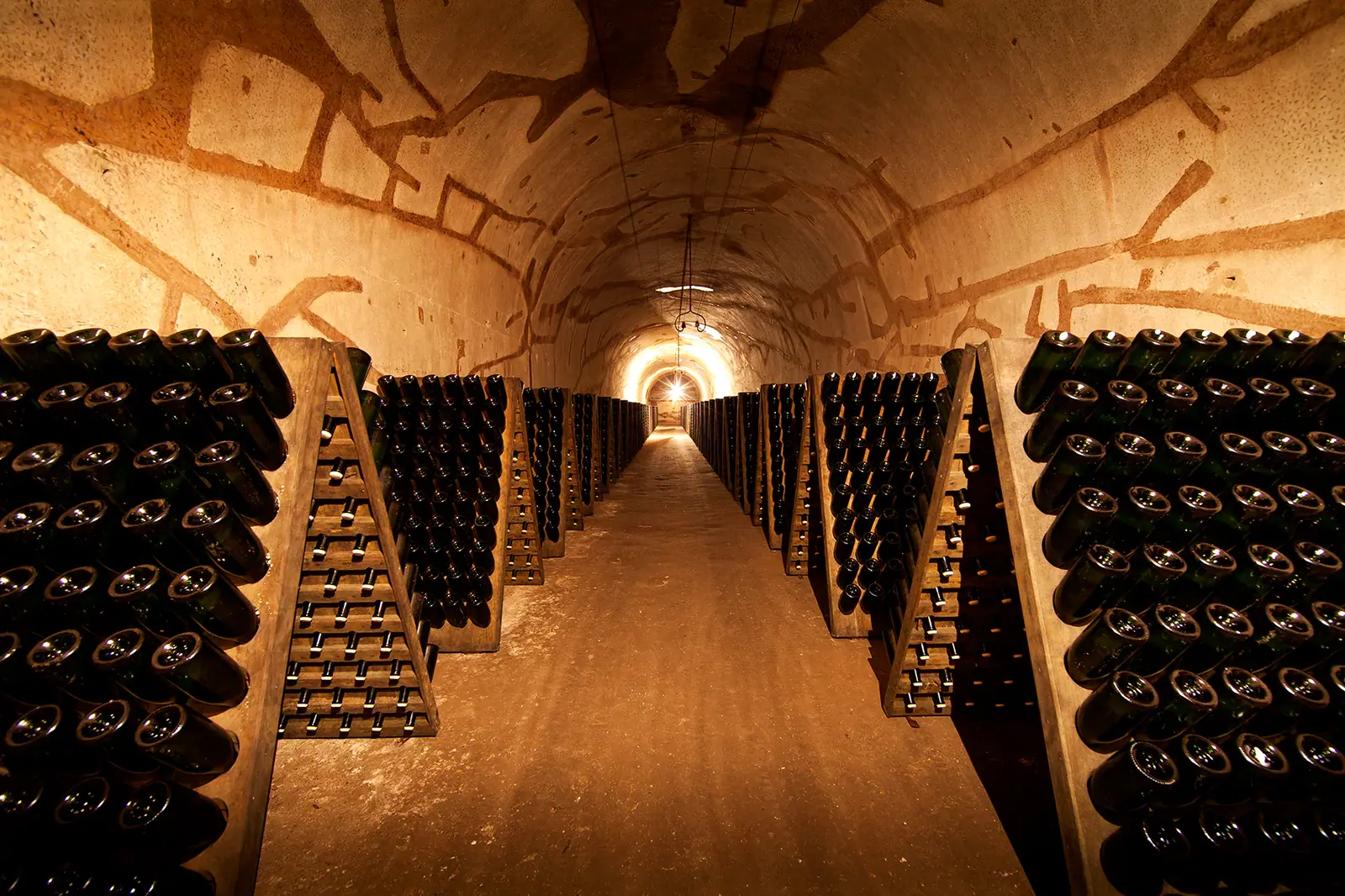
One vintage champagne from this year that I can recommend is the Krug 1990. It is marked by its rich aromatics, complexity and deep, lingering flavour nuances. The Krug 1990 is often praised for its exquisite balance and long finish, which makes it a favourite among connoisseurs.
- Vintage: 1990
- Vintage champagne: Krug 1990
- Recommendation: 4-5 stars
Verdict:
The verdict of experts and connoisseurs on this vintage is overwhelmingly positive. Despite a few critical voices who complained that some bottles developed too quickly in the late 2000s, the 1990 champagne is regarded as an outstanding example of the region's potential to produce exceptional, long-lived wines. Overall, the consistently positive reviews from the trade and the high demand for these champagnes confirm the outstanding quality of the 1990 vintage.
The 1989 champagne harvest: a remarkable year with outstanding ratings
The 1989 champagne harvest is often considered one of the best of recent decades. The first grapes were picked on 4 September, which is relatively early for the region and points to a particularly warm and sunny summer. These conditions led to optimal ripeness in the grapes and exceptional quality in the must.
On average, the 1989 vintage was rated 4 out of 5 stars by various critics and publications. This high score reflects the exceptional balance and aromatic complexity of the champagnes from this vintage.
An outstanding champagne from this year, and one that is often recommended, is the Krug 1989. This vintage champagne shows impressive depth and complexity, with aromas of ripe fruit, roasted nuts and a hint of brioche. It is regarded as an example of the excellence reached in 1989.
- Vintage: 1989
- Vintage champagne: Krug 1989
- Recommendation: 4-5 stars
Verdict:
In the end, though, there are also critical voices pointing out that, despite the high quality standards, some bottles from 1989 may have developed too quickly, leading to a premature loss of freshness and vitality. These opinions underline the importance of careful storage and of choosing the right moment to enjoy such high-quality champagnes. Despite this criticism, the 1989 vintage remains a textbook example of Champagne's extraordinary potential, especially in exceptionally warm years.
The 1988 champagne harvest: a challenge and its result
The 1988 champagne harvest was marked by a particularly warm spring and a hot summer, which shaped the quality and character of the vintage considerably. Picking began at the end of August in ideal conditions, with sunny days and cool nights, and the grapes ripened so well that no sorting was necessary.
Total production came to 820,000 pièces, with a yield of 9,650 kg/ha, above the 10-year average of 9,200 kg/ha. The quality of the vintage was generally rated as excellent, and some of the best cuvées were bottled as vintage champagne. Average potential alcohol reached 9.2%, and acidity stood at 9.4 g/l, which points to long-lived wines.
Rating and recommendations
The average rating for this vintage is around 4 out of 5 stars, based on various critics' opinions and tastings over the years. The quality and distinctive character of the champagnes from this vintage make it an excellent candidate for collectors and connoisseurs.
A champagne I would recommend from this year, other than Dom Pérignon, is the Salon Cuvée ‘S’ Le Mesnil. This champagne is especially prized for its elegance and depth, and it comes from one of the best years of the post-war era.
- Vintage: 1998
- Vintage champagne: Salon Cuvée ‘S’ Le Mesnil.
- Recommendation: 4-5 stars
Verdict:
Experts and connoisseurs regard 1988 as one of the most significant vintages of the modern era. The balanced combination of rich fruit and taut acidity offers an exceptional drinking experience that promises pleasure both now and in the future. Despite the challenges posed by the weather, the growers succeeded in producing a remarkable champagne that has stood the test of time and continues to impress in tastings.
The 1987 champagne harvest: a vintage of quirks
The 1987 harvest began in most villages of the Champagne in mid to late September, which is typical for the region. These dates are set carefully by the Comité Champagne, based on the ripeness of the grapes and local weather conditions.
The 1987 harvest is often described as challenging, as the weather during the growing season was far from ideal. Even so, experienced growers managed to produce high-quality champagnes. The average rating for this vintage is around 3.5 out of 5 stars, which points to solid, if not exceptional, quality. Critics often highlight the robustness and the developed aromas of the champagnes from this vintage, which set them apart from younger vintages or those favoured by a kinder climate.
One champagne from 1987 worth seeking out is the Veuve Clicquot Ponsardin Vintage Reserve. This vintage champagne shows the typical hallmarks of a well-aged bottle, with complex, mature aromas and a remarkable structure.
- Vintage: 1987
- Vintage champagne: Veuve Clicquot Ponsardin Vintage Reserve
- Recommendation: 3-4 stars
Verdict:
The critical verdict on this vintage is mixed. While some experts praise the complexity and depth of its aromas, others note that the 1987 wines do not offer the potential for very long cellaring that other outstanding vintages might. The ratings and discussions around this vintage reflect an appreciation of its individuality and of the growers' ability to produce quality wines under less than ideal conditions.
Rating the 1986 champagne harvest
The 1986 harvest was marked by very changeable weather, which ultimately affected the quality of the grapes. The winter was cold and the spring unsettled, but the weather improved in June and flowering went normally. A warm, sunny summer followed, but rain in August and September lowered the quality of the fruit and caused some rot. Despite these challenges, many producers decided to release vintage wines, even though these did not match the prestige of the 1985s and aged relatively quickly.
Start of the harvest and average rating
Because of the weather, the harvest took place under less than ideal conditions, which showed in very variable wine quality. Overall, the 1986 vintage receives an average rating of 3 out of 5 stars, which places it as mediocre compared with other vintages.
Recommended vintage champagne
A notable champagne from 1986 that is often recommended is the Bollinger RD 1986. This champagne is known for its rich structure and complexity and for its ability to age well, which makes it a special recommendation for connoisseurs.
- Vintage: 1986
- Vintage champagne: Bollinger RD 1986
- Recommendation: 3 stars
Verdict:
Experts and connoisseurs of the champagne trade regard 1986 as one of the less outstanding vintages, mainly because of the unsettled weather and the resulting variation in grape quality. Many of the wines from this vintage aged quickly and lack the depth or ageing potential of other, more celebrated vintages. The general view is that, although some producers turned out outstanding individual wines, the vintage as a whole is not counted among the best in the region's history.
The remarkable 1985 champagne harvest
The 1985 harvest remains on record in the Champagne as one of the most impressive of the 1980s. The first day of picking was 15 September, a date that reflected the perfect ripeness of the grapes. The weather that year played its part ideally, which led to excellent grape quality.
Critics and wine experts have rated the champagnes of the 1985 vintage at an average of 4.5 out of a possible 5 stars. The combination of ideal weather and careful handling during picking and production meant that the champagnes of this vintage are particularly full-bodied and balanced.
An outstanding champagne from this vintage is the Krug Vintage 1985. It impresses with its complexity and elegance. It offers a harmonious balance between ripe fruit and brioche notes, which came from the long ageing in the cellars of the house of Krug.
- Vintage: 1985
- Vintage champagne: Krug Vintage 1985
- Recommendation: 4-5 stars
Verdict:
In conclusion, the 1985 vintage is regarded as exceptional in the Champagne. Despite their age, many champagnes from this vintage still show astonishing freshness and vitality, something many experts and connoisseurs point out in their reviews and tasting notes. They are considered excellent examples of the longevity and refined character that champagne can develop. Some critics do note, however, that not every producer was able to make the most of the ideal conditions equally well, which led to a certain range in quality. Even so, the positive assessments outweigh the rest, and champagne from this vintage remains highly prized among connoisseurs worldwide.
The 1985 champagne harvest: a look back at a legendary vintage
The 1985 harvest is often regarded as one of the best of recent decades. The vintage was shaped by almost ideal weather conditions, which led to exceptional grape quality. Picking began on 26 September 1985, and growers remember this time as one of the most successful periods in the history of the Champagne.
The grapes harvested that year were particularly ripe and healthy, which gave a perfect balance between acidity and sugar. These qualities are crucial for a champagne's longevity and ageing potential. The 1985 vintage produced some of the most prized and admired champagnes, which still enjoy an outstanding reputation today.
- Vinta
ge:
1985 - Vintage champagne: Krug Vintage 1985
- Recommendation: 4.8 stars
Verdict:
The 1985 vintage is one of the most significant in the history of champagne. Many connoisseurs and experts praise the complexity and depth of the aromas these wines have developed over the years. The Krug Vintage 1985 is often recommended as one of the best champagnes of this vintage and earns a near-perfect score in many reviews. There are also critical voices, however, pointing out that some bottles, depending on how they were stored, may not reach the same level. Even so, 1985 remains a vintage held in high esteem among connoisseurs and deserves a place in any serious collection.
The 1984 Champagne Harvest: A Year of Challenges and Surprises
The 1984 champagne harvest was marked by changeable weather and set the growers some particular challenges. Spring began with mild temperatures, followed by a hot summer that was interrupted by sudden cold snaps and unpredictable rainfall. These conditions led to uneven ripening of the grapes, which forced growers to plan the exact timing of the harvest with great care in order to secure the best possible quality.
The harvest officially began on 1 October 1984, somewhat later than in previous years, as the grapes needed extra time to ripen fully. Despite the difficult conditions, some estates were still able to bring in grapes of high quality, which resulted in a limited but notable production of vintage champagnes.
Well-known wine critics and trade publications rated the 1984 vintage at an average of 3.5 out of 5 stars. This score reflects the uneven quality of the year, as some houses produced remarkable wines while others struggled with its challenges. The vintage is regarded as "interesting", above all for connoisseurs with a taste for complex and slightly atypical champagnes.
One particular recommendation from this year is the Champagne Bollinger Grande Année 1984. This champagne stands out for its depth and complexity, helped along by the special conditions of 1984. With notes of ripe fruit, a hint of honey and a fine minerality, it is an excellent example of how exceptional wines can be made even in difficult years.
- Vintage: 1984
- Vintage champagne: Champagne Bollinger Grande Année 1984
- Recommendation: 3.5 stars
Verdict:
The 1984 champagne harvest is remembered as a year that demanded a great deal from the growers. The wines of this vintage vary in quality, with a few notable exceptions that came about through careful winemaking and strict selection. The Bollinger Grande Année 1984 is a textbook example of how outstanding champagnes can be made even in difficult years. It offers a fascinating complexity and depth that connoisseurs especially appreciate. Overall, though, 1984 is a recommendation mainly for lovers of unusual, less typical vintages.
The 1983 Champagne Harvest: A Challenging Vintage with Remarkable Results
The 1983 champagne harvest was shaped by a succession of extreme weather conditions that tested the growers of the region. Spring began warm, but unexpectedly cool temperatures and frost caused considerable losses in yield. Summer then brought heatwaves, followed by heavy rain that raised the risk of rot. Despite these adverse conditions, the harvest started relatively early, to be precise on 19 September 1983.
Thanks to the strict selection of the best grapes carried out at many estates, remarkable quality was achieved all the same. The wines of the 1983 vintage show a surprising freshness and a pronounced acid structure, which made them well suited to a longer maturation in the cellar.
Numerous well-known critics and wine publications have assessed the 1983 vintage and awarded an average rating of 3.5 out of 5 stars. The score reflects differing opinions: while some critics praise the acidity and freshness of the wines, others point to the uneven quality that came from the difficult weather.
An outstanding champagne from this vintage, which has made a name for itself to this day, is the Pol Roger Brut Vintage 1983. It shows how careful selection and expertise can deliver excellent results even in a challenging year.
- Vintage: 1983
- Vintage champagne: Pol Roger Brut Vintage 1983
- Recommendation: 3.5 stars
Verdict: The 1983 champagne vintage is remembered as a year full of challenges that nevertheless produced some remarkable wines. The ratings are mixed, as quality depended heavily on the individual decisions of the growers. Connoisseurs and experts stress that the best wines of the vintage, such as the Pol Roger Brut Vintage 1983, now show a wonderful maturity and are well worth seeking out for lovers of aged champagne. Even so, you should be careful when choosing champagnes from this vintage, as not every bottle offers the same quality.
The 1982 Champagne Harvest: A Milestone in History
The 1982 champagne harvest is often regarded as one of the most outstanding of the 20th century. That year the Champagne region enjoyed almost perfect weather, which led to an exceptional crop of grapes. A mild winter, a warm spring and a hot summer allowed the grapes to reach full ripeness. The harvest began on exactly 13 September 1982, somewhat earlier than in many other years, which points to the exceptional ripeness and quality of the fruit.
The wines of this year stand out for their remarkable complexity, depth and longevity. The high acidity of the grapes, combined with an ideal sugar level, produced a vintage that could be enjoyed both straight after production and decades later. Many champagne houses chose to declare 1982 as a vintage, and the resulting wines have established themselves as some of the best of the century.
Well-Known Critics' Ratings and Recommendations
Overall, the 1982 vintage has received consistently high ratings. The average star rating from various respected publications stands at 4.5 out of 5 stars. Well-known wine critics, including Michael Broadbent and Richard Juhlin, praised the vintage for its exceptional balance and longevity. Particular emphasis was placed on its ability to keep improving with time, which makes it a favourite among collectors and connoisseurs.
The wines of 1982 have distinguished themselves through their exceptional balance and longevity.
Vintage Champagne Recommendation
One of the best recommendations for a vintage champagne from 1982, apart from Dom Pérignon, is the Krug 1982. Krug is known for its meticulous winemaking, and the 1982 has established itself as one of the most outstanding champagnes in the house's history. It offers exceptional depth and complexity, ranging from rich notes of ripe fruit, honey and dried fruit to a long, elegant finish.
 Vranken Champagner Keller
- Vintage: 1982
- Vintage champagne: Krug 1982
- Recommendation: 4.5 stars
Verdict:
Many regard 1982 as one of the best champagne vintages of the 20th century. The combination of ideal weather and excellent winemaking produced champagnes that could be enjoyed both immediately after release and decades later. The wines of 1982 have distinguished themselves through their exceptional balance and longevity. Critics have rated them consistently high, with an average of 4.5 out of 5 stars. The Krug 1982 is an outstanding recommendation, but it is worth noting that some experts believe the wines are reaching the end of their maturity and may no longer benefit from further cellaring. Even so, the 1982 vintage remains an essential experience for any serious champagne lover.
The 1981 Champagne Harvest: Looking Back at a Remarkable Vintage
The 1981 champagne harvest was shaped by a series of unusual climatic conditions that brought both challenges and opportunities for the growers. The year began with a cool spring, followed by a moderately warm summer interrupted by occasional rain. These conditions delayed the ripening of the grapes, and picking began late. The harvest started on 5 October 1981.
Despite the difficulties of the year, nature was kind and gave the growers grapes of high quality. Yields were limited, but the grapes showed an excellent balance between acidity and sugar, which laid the foundation for exceptional vintage champagnes.
Well-known critics rated the 1981 vintage positively overall, with champagnes from this year scoring 4 out of 5 stars on average. The balance and longevity of the wines were singled out for praise, although some critics pointed to a lower aromatic intensity compared with the great vintages.
One outstanding vintage champagne from this year is the Bollinger Grande Année 1981. It impresses with its depth and complexity, further enhanced by its long maturation in the cellar. Aromas of ripe fruit, toasted nuts and subtle spice make it a joy for lovers of mature champagne.
- Vintage: 1981
- Vintage champagne: Bollinger Grande Année 1981
- Recommendation: 4 stars
Verdict: Connoisseurs and experts regard the 1981 champagne vintage as a year of great potential that produced wines of remarkable quality. The champagnes of this vintage are marked by elegance and balance, and the Bollinger Grande Année 1981 stands out in particular. That said, the lower aromatic intensity compared with other vintages means it may not have achieved the same cult status as the truly outstanding years. Even so, it remains a recommended choice for collectors and enthusiasts.
The 1980 Champagne Harvest: A Year of Challenges and Quality
The 1980 champagne harvest began on 23 September, a date recorded in the region's history as a particularly difficult one. The year was marked by unpredictable weather that affected the ripening of the grapes and demanded a great deal from the growers in Champagne. After a cool, damp summer, ripening and harvest were delayed, which meant less sugar and higher acidity in the grapes.
Even so, a remarkable vintage champagne could be made from the carefully selected fruit. The wines from this year show great freshness and impressive longevity, which makes them interesting to connoisseurs and enthusiasts alike.
- Vintage: 1980
- Vintage champagne: Pol Roger Vintage Brut 1980
- Recommendation: 4 stars
Verdict:
The champagnes of the 1980 vintage were received with mixed feelings by many critics. Those who appreciated the vintage praised the refreshing acidity and elegant structure that still characterise these champagnes today. The Pol Roger Vintage Brut 1980 in particular is described as a champagne that has kept its freshness even after decades, with a fine balance of fruit and acidity. Critics do point out, however, that this vintage is known for its longevity, and that the wines now show an agreeable maturity and complexity.
Despite the difficulties at harvest, the best champagnes of this year are regarded by many connoisseurs as a solid choice for lovers of mature champagne. Some critics did complain that the vintage is less opulent than others and that the fruit never developed as fully as in the top years. Overall, 1980 remains a vintage distinguished by its individuality and its potential for long cellaring, and the best bottles are a pleasure for connoisseurs today.
The 1979 Champagne Harvest: A Year of Exceptional Quality
The 1979 champagne harvest is often regarded as an excellent year for the Champagne region. Picking began officially on 24 September 1979, somewhat later than in previous years, owing to a cool spring and a temperate summer. These conditions, however, led to slow, even ripening of the grapes, which helped develop intense aromas and a perfect balance of acidity and sugar.
Many connoisseurs and critics hold the 1979 vintage in high regard. Across various publications it receives an average rating of 4.5 stars, making it one of the best vintages of the 1970s. It is distinguished by its longevity and is often seen as a prime example of champagne's potential to age.
Well-known critics such as Michael Broadbent and Richard Juhlin have praised the 1979 vintage, singling out its excellent structure, depth and complexity. The champagnes of this year show remarkable freshness and a fine, persistent mousse that keeps them a memorable pleasure even after decades in the cellar.
A recommended vintage champagne from this year is the Taittinger Comtes de Champagne Blanc de Blancs 1979. It is an outstanding example of the purity and elegance that Chardonnay achieved in this year. It impresses with fine citrus notes combined with aromas of toasted nuts and a delicate mineral note that give it depth and complexity.
- Vintage: 1979
- Vintage champagne: Taittinger Comtes de Champagne Blanc de Blancs 1979
- Recommendation: 4.5 stars
Verdict:
The 1979 vintage in Champagne is generally regarded as one of the best of the decade. Ideal weather conditions produced a vintage of exceptional quality, convincing in its structure and longevity. The ratings given by critics are consistently positive, and the vintage is praised for its ability to age and for the impressive freshness it has kept over the years. Despite the high scores, some experts describe the 1979 vintage as rather traditional and less experimental, which makes it especially appealing to lovers of classic champagne.
The 1978 champagne harvest: a year of highs and lows
The 1978 champagne harvest officially began on 2 October 1978, and the year was marked by changeable weather that affected the quality of the grapes. Spring started cold and wet, which delayed flowering. Summer, on the other hand, brought plenty of sunshine, but the grapes did not ripen evenly, and the result was an uneven harvest.
Many growers struggled to find the right balance between sugar and acidity in their grapes, as the growing season was an unusual one. Some producers chose to pick selectively in order to secure the best fruit for their vintage champagnes. Despite these challenges, a number of houses declared 1978 a vintage, and the champagnes they made later proved quite promising.
Ratings and reviews
Over the years, the 1978 vintage champagnes have been rated differently by different critics. As a rule, these wines earned an average of 3.5 to 4 stars. Many experts singled out the elegant acidity and fine fruit aromas that developed during the long ageing in the cellar.
One particularly outstanding vintage champagne from 1978 is the Bollinger La Grande Année 1978. This champagne has been praised for its complexity and depth and is regarded as one of the finest examples of the vintage. Critics admired the balanced structure and the intense aromas of ripe fruit and honey, which made this champagne a real pleasure to drink.
Vintage rating
- Vintage: 1978
- Vintage champagne: Bollinger La Grande Année 1978
- Recommendation: 4 stars
Verdict: 1978 was not an easy year for champagne making, and not every wine reached the hoped-for quality. But the champagnes made from the best grapes of the year, such as the Bollinger La Grande Année 1978, have proved to be remarkable wines. For lovers of complex, mature champagne this vintage is an interesting choice, although it is not considered outstanding across the board. Experts agree that the 1978 vintage shows some variation, but it produced a few exceptional wines that can still be enjoyed today.
The 1977 champagne harvest: a testing year for the growers
1977 was a difficult year for champagne production. The weather was far from ideal, and the resulting harvest presented many growers with serious challenges. A cool spring and a rainy summer meant the grapes ripened slowly. Picking began on 3 October 1977, which was unusually late for the region. The harvest itself was marked by low yields and, overall, poor fruit quality.
Many critics and wine experts approached the 1977 vintage with caution. The champagnes from this year were often described as unimpressive and lacking the usual potential for long cellaring. There were exceptions, though, with certain houses managing to produce a respectable vintage champagne despite the adverse conditions.
- Vintage: 1977
- Vintage champagne: Taittinger Comtes de Champagne Blanc de Blancs 1977
- Recommendation: 3 stars
Verdict:
The 1977 vintage is generally regarded as one of the weaker years in the history of Champagne. The average rating is 3 stars, which reflects the difficulties the growers faced that year. The Taittinger Comtes de Champagne Blanc de Blancs 1977 is one of the few champagnes from this year that stands out in a positive way, though even this one comes with reservations. Many experts advise against buying champagne from this year, as most of it is not suited to longer storage and is often described as flat and lacking complexity.
The 1976 champagne harvest: a remarkable year
1976 is remembered in the history of Champagne as one of the most extraordinary and difficult years. An extremely hot summer shaped the vintage and led to very early picking. These extreme conditions concentrated the aromas intensely, but also brought a potential risk of overripeness and a resulting loss of acidity.
The harvest began exceptionally early, on 7 September 1976, which is very unusual for the region. The grapes quickly reached high sugar levels, which meant a high potential alcohol. These conditions produced champagnes with intense fruit aromas, but with relatively low acidity, which could affect how long these wines would last.
Well-known critics have often rated this vintage highly because of its unique conditions and its outstanding wines. The overall rating for the vintage averages 4.5 out of 5 stars. This high score points to the exceptional quality of the wines made under such extreme conditions.
A particularly outstanding vintage champagne from 1976 is the Pol Roger Cuvée Sir Winston Churchill. This champagne is often cited as a superb example of the ability of the house of Pol Roger to produce wines of the highest quality even in extreme conditions. The richness and complexity of this wine, combined with its exceptional ageing potential, make it a special recommendation for collectors and enthusiasts.
- Vintage: 1976
- Vintage champagne: Pol Roger Cuvée Sir Winston Churchill
- Recommendation: 4.5 stars
Verdict:
1976 was without doubt a remarkable vintage, and the extreme heat and early picking gave rise to unusual wines. While the wines were highly prized as soon as they were released, in some cases they show a tendency to age more quickly, especially those with lower acidity. For those who appreciate more mature champagne, however, this vintage offers a special experience. Experts agree that, despite the challenges it brought, the 1976 vintage produced some of the most fascinating and characterful champagnes of the last century.
The 1975 champagne harvest: a year of transition and challenge
The 1975 champagne harvest was a remarkable but demanding season, shaped both by favourable weather and by unexpected difficulties. The growing season began quite promisingly with a warm spring that brought the vines into bud early. Summer continued with warm temperatures, but unexpected rain in August and September upset the ripening of the grapes. Growers had to plan carefully to strike the ideal balance between acidity and sugar.
Exact date of the first harvest: The harvest officially began on 22 September 1975, with growers concentrating on the ripeness of the Pinot Noir grapes, which proved a particular challenge that year.
Yields were good overall, but the quality of the grapes was uneven, which made producing vintage champagne a delicate task. Only the best producers chose to make a vintage champagne, since the variation in grape quality meant that not every lot was suitable for the purpose.
Well-known critics' ratings: Ratings for the 1975 vintage vary widely. While some wine critics praise the finesse and potential of the vintage, others criticise the inconsistency of the wines. The average star rating for the 1975 vintage is 3.5 out of 5, based on a summary of several publications and critics' opinions.
Recommended vintage champagne: Champagne Taittinger Comtes de Champagne Blanc de Blancs 1975 is one of the best choices from this year. This champagne has aged well over the years and shows an impressive balance between acidity and fruit, with a fine, creamy texture.
- Vintage: 1975
- Vintage champagne: Taittinger Comtes de Champagne Blanc de Blancs
- Recommendation: 3.5 stars
Verdict: The 1975 vintage is a difficult call for collectors and connoisseurs. While some champagnes, such as the Taittinger Comtes de Champagne Blanc de Blancs, show excellent results, the vintage as a whole suffers from its inconsistency. The climatic challenges meant that only the best grapes went into the finest vintage champagnes, while others remained rather average. For lovers of well-aged champagne, 1975 can be an interesting choice, with the caveat that not every champagne from this vintage offers the same quality.
The 1974 champagne harvest: an exceptional year under difficult conditions
The 1974 champagne harvest was marked by difficult climatic conditions that posed several challenges for growers in the region. Even so, it was possible to make wines of remarkable quality, albeit in smaller quantities than in earlier years.
The harvest officially began on 23 September 1974, a relatively early start compared with the usual picking dates. The summer was mixed, with cool, damp spells that hampered the growth of the grapes. Even so, September brought enough sunshine to improve the ripeness of the grapes, which led to better quality in the pick.
Well-known critics such as Michael Broadbent and Richard Juhlin have described the 1974 vintage as “surprisingly successful” in a challenging year. The wines of the vintage are marked by a certain freshness and complexity, although they do not offer the same depth and longevity as the great vintages.
Rating and recommendation
- Vintage: 1974
- Vintage champagne: Bollinger R.D. 1974
- Recommendation: 3.5 stars
Verdict: The 1974 champagne harvest produced wines that are not outstanding candidates for long keeping, but can still win you over with their freshness and elegance. Critics rate this vintage at an average of 3.5 stars, which makes it a solid but not exceptional choice. The Bollinger R.D. 1974 is named as a recommended vintage champagne that, despite the adverse weather, impresses with a certain complexity and maturity. For collectors and enthusiasts this vintage is an interesting piece of history, but not necessarily a must when set beside the legendary vintages.
The 1973 champagne harvest: a year of complexity and elegance
The 1973 champagne harvest is regarded by experts as a significant year in the history of Champagne. The harvest began on 27 September 1973 and brought grapes marked by an exceptional balance and high acidity, which made them ideal for producing long-lived champagnes.
Despite a hot, dry summer that left the grapes small and concentrated, the perfect interplay of weather conditions during the harvest led to grape quality that was exceptional. Many of the champagnes from this year are distinguished by remarkable depth and complexity, which makes them sought-after rarities.
Key information:
- Vintage: 1973
- Vintage champagne: Taittinger Comtes de Champagne Blanc de Blancs 1973
- Recommendation: 4.5 stars
Verdict: The 1973 vintage is regarded by connoisseurs as an outstanding year for Champagne, producing elegant, long-lived wines. The champagnes from this year are distinguished by an impressive balance and structure that has held up well over the decades. Critics particularly praise the ability of the 1973 champagnes to keep their freshness and complexity over many years. However, some experts point out that the best wines of this vintage may now have reached their peak, and recommend drinking any remaining bottles soon to get the most out of them.
The 1972 Champagne Harvest: A Good Year for Enthusiasts
The 1972 champagne harvest was shaped by favourable weather conditions that produced grapes of high quality. The year began with a cool, wet spring, which delayed budbreak. Summer, by contrast, brought warm temperatures and plenty of sun, which hastened ripening. September was dry and sunny, providing ideal conditions for an excellent harvest.
Picking began on 10 September 1972, and conditions during the harvest were almost perfect. The grapes showed a good balance between acidity and sugar, which laid the foundation for excellent champagnes.
Ratings and Critics' Views
The champagnes of 1972 were rated consistently well by critics and connoisseurs. The average rating is 4 out of 5 stars. Many critics praised the freshness and elegance of the champagnes from this vintage, which stood out for their lively acidity and fine mousse.
Recommended Vintage Champagne
One vintage champagne from 1972 that deserves special mention is the Bollinger R.D. 1972. This champagne is distinguished by its complexity and depth, and over the past decades it has become one of the most sought-after champagnes of its era.
- Vintage: 1972
- Vintage champagne: Bollinger R.D. 1972
- Recommendation: 4 out of 5 stars
Verdict:
The 1972 champagne harvest produced some of the best wines of the 1970s. The wines are known for their exceptional keeping qualities and their ability to develop over decades. Despite the generally positive reception, there were also voices describing the wines as less approachable when young. Some critics pointed out that the 1972s may need a longer maturation period to reach their full potential. For connoisseurs who appreciate patient cellaring and ageing, though, 1972 remains an outstanding year.
The 1971 Champagne Harvest: A Vintage of Exceptional Quality
The year 1971 will be remembered in Champagne as a vintage of outstanding quality. Weather conditions were almost perfect, which produced grapes of exceptional ripeness and concentration. The 1971 vintage is regarded as one of the best of the decade and is prized by connoisseurs and critics alike.
The harvest officially began on 20 September 1971, which is relatively late compared with other years. This delay, however, contributed to the optimal ripeness of the grapes, which had a positive effect on the quality of the vintage.
The 1971 vintage produced some outstanding champagnes that are still regarded today as milestones in the history of Champagne. The wines are marked by remarkable freshness, complexity and longevity, which makes them sought-after collectors' pieces.
- Vintage: 1971
- Vintage champagne: Bollinger R.D. 1971
- Recommendation: 4.5 stars
Verdict: The 1971 vintage was rated consistently well by critics and experts, with average scores of 4.5 stars. The freshness and longevity of the wines are particularly highlighted, and they keep their radiance even after decades. The Bollinger R.D. 1971 is an excellent example of the outstanding quality of this vintage, with complex aromatics and impressive depth. Even so, some voices complain that a few wines from the vintage have lost freshness in recent years, which is not unusual for older champagnes. Overall, 1971 remains an outstanding vintage that continues to be valued for its elegance and structure.
The 1970 Champagne Harvest: A Year of Challenges
The 1970 champagne harvest is often described as difficult and demanding. Weather conditions were not ideal, which led to a vintage that growers and critics viewed with mixed feelings. Despite the adverse circumstances, some producers managed to create remarkable vintage champagnes that are still appreciated by connoisseurs today.
The first picking began on 29 September 1970. Conditions during the growing season were mixed, which directly affected the quality of the grapes. The summer was hot, but there were also spells of rain and cooler temperatures, which led to uneven ripening.
- Vintage: 1970
- Vintage champagne: Pol Roger Vintage 1970
- Recommendation: 3.5 stars
Verdict:
The champagnes of the 1970 vintage are considered middling to good, but not outstanding. Well-known critics often rate this vintage at 3.5 stars. The champagnes from this year are distinguished by a solid structure and a pleasant acidity profile, but many of the wines lack the finesse and complexity you would expect from great vintages. The Pol Roger Vintage 1970 is often named as one of the best examples of this vintage, as it achieved an impressive balance and depth despite the difficult conditions.
Other experts and connoisseurs, however, note that the 1970 vintage suits only patient drinkers, since it needs time to open up fully in the glass. As for storage, these champagnes are today more collectors' pieces than wines for drinking. Some bottles may already be past their peak, which makes them a risky purchase for impatient buyers.
The 1969 Champagne Harvest: A Year of Challenges and Nuances
The 1969 champagne harvest began on 15 September, after a year of changeable weather that put the growers of Champagne to the test. The year was marked by a cold spring, followed by a warm summer with occasional rain. These conditions led to a late flowering, but the warm, dry spell in August and early September allowed the grapes to reach full ripeness.
- Vintage: 1969
- Vintage champagne: Bollinger La Grande Année 1969
- Recommendation: 4 stars
The 1969 vintage was rated by various critics and publications at an average of 4 out of 5 stars. The scores reflect the quality of the wine, which is described as rich and complex, though with slightly variable acidity, a sign of the year's challenges.
Verdict
The 1969 vintage is a classic champagne that is often overlooked but reveals many subtleties on closer inspection. The wines of this year are known for their longevity and their ability to gain complexity over time. Experts note that 1969, although not regarded as a top vintage, produced excellent wines marked by depth and structure. The Bollinger La Grande Année 1969 in particular is recommended, as it reflects the character of this vintage superbly. Despite the challenges of the year, this champagne won over many connoisseurs, who describe it as a "hidden gem".
The 1968 Champagne Harvest: A Challenging Year with Elegance
The 1968 champagne harvest is often regarded as a difficult year in the history of the Champagne region. The year was marked by tricky weather conditions that hit grape production. Even so, a smaller quantity of high quality fruit was picked, which makes this vintage particularly interesting in hindsight.
Picking began on 26 September 1968, somewhat later than usual, owing to the cool temperatures in spring and a rainy summer. Despite these setbacks, a dry and warm September brought the grapes to relatively good ripeness, and this ultimately gave the wines a remarkable elegance.
Vintage: 1968
Vintage champagne: Pol Roger Brut Vintage 1968
Recommendation: ★★★★☆ (4 out of 5 stars)
Verdict
The champagnes of the 1968 vintage stand out for their complexity and longevity, which is mainly down to the late, cool ripening of the grapes. Some critics called the vintage "mixed", while others praised the subtle depth and the elegance the wines were able to develop. The Pol Roger Brut Vintage 1968 in particular is seen as an outstanding example that reflects the best qualities of this difficult year. Overall, 1968 is not an undisputed vintage, but connoisseurs value it for its individuality.
The 1967 Champagne Harvest: A Vintage with Challenges
The 1967 champagne harvest was shaped by difficult weather conditions that demanded a lot from the growers. The year began with a cold, wet spring, which led to a delayed flowering. The summer was unsettled too, a mix of cool and damp spells that held back the growth of the vines. Even so, the growers managed to bring in an acceptable harvest, although in some areas the quality of the grapes suffered under the conditions.
Exact harvest date: Picking officially began on 26 September 1967.
Ratings and Recommendations
The quality of the wines from this vintage was mixed overall, and the ratings reflect that. Well-known critics and publications have given the vintage an average rating of 3 to 3.5 stars, which points to average to good quality.
Recommended vintage champagne:
An outstanding champagne from this vintage is the Bollinger La Grande Année 1967. It has shown that it can age well and offers a complex flavour profile with notes of ripe fruit, honey and a subtle spiciness.
- Vintage: 1967
- Vintage champagne: Bollinger La Grande Année 1967
- Recommendation: 3-3.5 stars
Verdict:
The champagnes of 1967 reflect the difficult conditions of the vintage. While some houses such as Bollinger managed to produce high quality wines, the vintage generally lags behind the great years. Connoisseurs value the wines of this year above all for their historical interest and their ability to develop over the years. Despite the challenges, 1967 remains a vintage of interest to collectors and lovers of old champagne, even if it is not regarded as exceptional.
The 1966 Champagne Harvest: A Vintage with Potential
The year 1966 was a special one for Champagne, marked by favourable climatic conditions that led to an early harvest of high quality. Picking officially began on 12 September 1966. This vintage is often described as a classic year, with champagnes that show excellent ageing potential.
Vintage rating
Ratings for the 1966 vintage vary, but on average it earns 4 out of 5 stars from various respected publications. Critics praise the structure and balance of the wines, which offer both freshness and depth. The acidity is well integrated, and aromas of ripe fruit combined with a fine minerality make this one of the notable vintages of the 1960s.
A recommended vintage champagne
An outstanding vintage champagne from 1966, often recommended by connoisseurs, is the Pol Roger Vintage 1966. This champagne is known for its elegance and its ability to age for decades without losing quality.
- Vintage: 1966
- Vintage champagne: Pol Roger Vintage 1966
- Recommendation: 4 stars
Verdict: The 1966 vintage is regarded as an excellent year, valued by many wine connoisseurs and critics. Even after decades, the champagnes still show remarkable freshness and depth. Some critics note that the wines lack the extreme ageing potential of top vintages such as 1964 or 1961, yet the 1966 is still seen as a safe bet. It is a vintage of great interest to collectors and to those who simply enjoy drinking champagne, especially anyone who appreciates champagne with character and elegance.
The 1965 Champagne Harvest: An Analysis
The year 1965 brought mixed weather to the Champagne region, which made for a demanding harvest. The growing season was marked by changeable weather, with a cold spring and a rainy summer, followed by a mild and relatively dry autumn. This led to late ripening of the grapes and a corresponding delay to the harvest.
Picking began on 22 September 1965, and the grapes were gathered with care and patience to get the best possible result from a difficult vintage. Despite the challenges, part of the harvest was used for vintage champagne, which shows the growers' ability to produce quality even under difficult conditions.
- Vintage: 1965
- Vintage champagne: Pol Roger Vintage 1965
- Recommendation: ⭐️⭐️⭐️ (3/5 stars)
Verdict: The 1965 vintage in Champagne is often rated as mediocre by experts. The weather led to uneven ripening, and many wines from this year lack the freshness and vibrancy one expects from better vintages. Even so, some producers managed to make the best of the harvest. The Pol Roger Vintage 1965 is often seen as one of the better champagnes of the year, although it is less impressive than outstanding vintages such as 1964 or 1966. Connoisseurs appreciate the 1965 for its elegance and well-integrated acidity, but it lacks the complexity and depth that the greater vintages offer. This champagne is more a curiosity for collectors than a bottle to open for pure enjoyment.
The 1964 Champagne Harvest: A Remarkable Year
The 1964 champagne harvest is often regarded as one of the best of the decade. The vineyards of Champagne enjoyed almost ideal conditions that year, resulting in an exceptionally high-quality crop. A mild winter and a warm, dry spring gave the vines a good start. The summer was largely warm and dry, with only a little rain, allowing the grapes to ripen perfectly.
First harvest: 17 September 1964
The grapes were picked on 17 September 1964, and the results were outstanding. The wines of this vintage are marked by a remarkable balance of acidity and fruit and an excellent structure, which gives them an ageing potential of several decades. Particularly striking are the finesse and elegance of the wines from this year, which stand out for their intense aromatics and complexity.
Critics' ratings: The 1964 vintage has consistently received high marks. Critics such as Michael Broadbent and Richard Juhlin praised the wines of this vintage and gave them an average of 4.5 out of 5 stars. The wines have been described as extremely harmonious, balanced and long-lived, which makes them a favourite among collectors and connoisseurs.
- Vintage: 1964
- Vintage champagne: Bollinger R.D. 1964
- Recommendation: 4.5 stars
Verdict: The 1964 champagne harvest is considered outstanding and is often seen as one of the best vintages of the 20th century. The wines are distinguished by exceptional balance and longevity. Some experts do point out, however, that not every 1964 champagne has aged equally well; the best results come from carefully stored bottles. Even so, 1964 remains a must for any serious champagne collector and connoisseur.
The 1963 Champagne Harvest: A Look Back
The 1963 champagne harvest is a vintage that many connoisseurs and critics have judged rather differently in hindsight. The weather conditions were challenging, and this affected the quality of the grapes.
- First harvest date: 18 September 1963
- Vintage: 1963
- Vintage champagne: Pol Roger Brut Vintage 1963
- Recommendation: 3.5 stars
Verdict: The 1963 vintage was shaped by a cool, wet spring followed by a moderately warm summer. This led to a late harvest that took place under difficult conditions. Yields were lower than usual, and the quality of the grapes varied widely. This is reflected in the ratings, which range from 3 to 4 stars. Some critics praised the structure and complexity of the best wines, while others found fault with the acidity and a lack of richness. Overall, 1963 is regarded as a solid but not outstanding vintage, mainly of interest to lovers of mature champagne. Experts recommend drinking it soon, as it is already past its peak.
The 1962 Champagne Harvest: A Remarkable Vintage
The 1962 champagne harvest was a vintage marked by exceptional conditions and high-quality grapes. Picking began on 12 September 1962 and was helped by almost perfect weather, which created ideal ripening conditions. The combination of a warm spring, a mild summer and cool nights produced an excellent balance between acidity and sugar, resulting in first-class champagne.
The champagne houses used these superb conditions to make wines notable for their finesse, complexity and longevity. Many of them are still highly sought after today and much prized by connoisseurs.
- Vintage: 1962
- Vintage champagne: Pol Roger Vintage 1962
- Recommendation: 4.5 stars
Critics' ratings
Well-known critics praise the 1962 vintage for its exceptional quality. Richard Juhlin, a renowned champagne expert, rated this vintage 4.5 out of 5 stars and highlighted the elegance and structure of the wine. Michael Edwards took a similar view in his book on the "great champagnes", likewise stressing the remarkable maturity and complexity of the vintage.
Verdict
The 1962 champagne vintage is regarded as one of the best of the decade. Many experts and connoisseurs emphasise the exceptional balance and longevity of the wines, which can still be enjoyed today, more than 60 years later. There are also voices pointing out that some wines from this vintage may have lost freshness in recent years, though this hardly detracts from the overall quality of the vintage.
All in all, 1962 is an excellent choice for collectors and enthusiasts looking for a classic, well-matured champagne.
The 1961 Champagne Harvest: An Exceptional Vintage
The 1961 harvest is considered one of the best in the history of Champagne. The grapes benefited from an almost ideal course of weather, which led to an exceptionally high level of ripeness. The year 1961 produced some of the most celebrated and longest-lived champagnes ever made.
- Vintage: 1961
- First harvest date: 18 September 1961
- Average star rating: 4.7 out of 5
- Ratings from well-known critics:
- Richard Juhlin: "A vintage that is hard to surpass in its elegance and finesse. The champagnes from this year are superbly balanced and show impressive complexity."
- Michael Broadbent: "1961 was an outstanding year that produced some of the best champagnes of recent decades. These wines have exceptional structure and remarkable longevity."
- Vintage champagne: Bollinger R.D. 1961
- Recommendation: 5 stars
Verdict: The 1961 champagne harvest is a milestone in the history of Champagne. The exceptional quality of the grapes and the ideal weather led to a vintage that many experts regard as close to perfect. The Bollinger R.D. 1961 is a prime example of the excellence of this vintage, with its intense complexity and impressive structure. Although the wines are still remarkable today, some critics believe that certain bottles may be past their best. Even so, 1961 remains a vintage with legendary status in the world of champagne.
The 1960 Champagne harvest: a vintage of quality and maturity
The 1960 champagne harvest in the Champagne region began on 12 September. The year was marked by favourable weather, which produced a crop of exceptional quality. The grapes ripened under ideal conditions, giving a balanced level of acidity and sugar, essential for making an outstanding vintage champagne.
- Vintage: 1960
- Vintage champagne: Pol Roger Vintage 1960
- Recommendation: 4 stars
Verdict: The 1960 vintage is regarded as a year that produced a remarkable champagne, praised for both its structure and its finesse. Critics such as Michael Broadbent have rated this vintage 4 stars and pointed out that the champagnes of this year have excellent longevity and a particular elegance.
There are, however, critical voices who stress that 1960 does not quite reach the level of the great vintages, yet remains a very satisfying one, distinguished above all by its maturity and harmony. The Pol Roger Vintage 1960 is often cited as a model example of the vintage's strengths, with a well-balanced mix of freshness and depth.
Connoisseurs value the 1960 vintage for its complexity and the potential it still shows after decades. Despite small differences in the ratings, the 1960 remains a sought-after bottle that has a firm place in many collections.
The 1959 champagne harvest
The 1959 champagne harvest is considered one of the best of the 20th century and is often described as legendary. The year 1959 was marked by exceptionally warm and dry conditions, which led to superb ripeness in the grapes. The harvest began on 10 September 1959, and the quality of the grapes was exceptionally high, resulting in wines with intense aromas and remarkable structure.
- Vintage: 1959
- Vintage champagne: Bollinger R.D. 1959
- Recommendation: 5 stars
1959 was a year that many renowned estates rated as excellent. Wine critics such as Michael Broadbent and Richard Juhlin have given this vintage high scores. The Bollinger R.D. 1959 is often regarded as one of the best vintage champagnes of the period, with deep complexity, ripe fruit notes and remarkable longevity.
Verdict
Many connoisseurs consider the 1959 vintage one of the best of the century. The champagnes from this year stand out for their exceptional depth, complexity and longevity. There are, however, a few critical voices who point out that, in recent years, bottle age may have overlaid some of the original fruit aromas. Even so, 1959 remains a highly prized vintage, especially recommended for lovers of mature champagne.
The 1958 champagne harvest: a look back
The 1958 harvest in Champagne was an event of great significance, shaped by the distinctive climate of that year. Picking began on 29 September 1958 and, because the grapes ripened slowly, stretched over several weeks.
- Vintage: 1958
- Vintage champagne: Pol Roger Brut Vintage 1958
- Recommendation: 4 stars
The weather in 1958 was challenging, with a cool, wet spring followed by a changeable summer. These factors led to a late, drawn-out harvest, which allowed the growers to select only the best grapes. Ripeness levels were uneven, however, and this showed in the quality of the fruit picked. The best wines of the 1958 vintage stand out for remarkable freshness and fine acidity, although they did not reach the same level of complexity as some other outstanding vintages.
Verdict
The 1958 vintage is regarded as a solid one. It does not match the exceptional qualities of the best champagne vintages, but it still produced well-aged, balanced wines. Experts rate the vintage at an average of 4 stars, with the best champagnes of the year, such as the Pol Roger Brut Vintage 1958, praised for their balance and elegance. It should be noted, though, that because of the uneven ripeness of the grapes, the results were not equally impressive everywhere. Taken as a whole, 1958 is seen as a year that offers solid champagne for lovers of classic styles, but without reaching the very top.
The 1957 champagne harvest: a look at the vintage
The 1957 vintage in Champagne was a year of difficult weather, which had a strong influence on the success of the harvest. The year began with a cold, wet spring, followed by an unsettled summer marked by sporadic rain and cool temperatures. These conditions delayed the ripening of the grapes, which in turn affected the quality and quantity of the fruit picked.
First harvest date: 26 September 1957
Average star rating: 3 out of 5 stars
The 1957 vintage received a mixed response from critics and experts. Some appreciated the delicate but light structure of the wine, while others criticised its low intensity and the lack of richness that is characteristic of top champagne. The acidity was pronounced but well integrated, which gave the wine a certain freshness. Even so, this vintage is often rated as "average", without the complexity and depth found in exceptional years.
Vintage: 1957
Vintage champagne: Pol Roger Vintage 1957
Recommendation: 3 stars
Verdict
1957 was not an outstanding year for Champagne. The weather produced a harvest that yielded wines of average quality. While some champagne houses, such as Pol Roger, managed to produce a respectable vintage champagne, the general consensus was that this vintage is of interest mainly to collectors for historical reasons, and rarely offers the depth and character one expects from the top vintages. Experts therefore advise treating 1957 champagne as an example of a difficult year rather than a benchmark for the quality of the region.
The 1956 Champagne Harvest: A Testing Year for Growers
The year 1956 presented champagne growers with enormous challenges, shaped as it was by extreme weather. An unusually harsh winter and a rainy spring led to late budding and affected the whole growing season. Despite these setbacks, the growers managed to salvage a harvest, though its quality fell short of expectations.
- Vintage: 1956
- First harvest date: 17 September 1956
- Vintage champagne: Bollinger R.D. 1956
- Recommendation: 3 stars
Verdict: The 1956 vintage was one of the more difficult in the history of Champagne. The late harvest meant the grapes had not fully ripened, and this showed in the quality of the vintage. Well-known critics rated the year as rather mediocre overall, although some champagne houses such as Bollinger still managed to achieve acceptable results. The wines of this vintage are marked by a certain acidity and a fairly modest depth. The Bollinger R.D. 1956 was regarded as robust and long-lived, but the vintage as a whole is often described as less remarkable. Experts recommend it only with reservations, mainly for collectors interested in historic vintages, but not necessarily for immediate drinking.
The 1955 Champagne Harvest: A Look Back at Quality and Ratings
About the 1955 harvest
The 1955 champagne harvest is often regarded as one of the notable vintages of the decade. The weather was favourable, with a mild spring and a warm summer, which produced ripe, balanced fruit. The harvest began on 26 September 1955, which gave the grapes enough time to reach full ripeness.
- Vintage: 1955
- Vintage champagne: Pol Roger Vintage 1955
- Recommendation: 4.5 stars
Ratings and critics' opinions
The champagnes of the 1955 vintage were highly praised by many critics. They stand out for their remarkable freshness, lively acidity and a rich variety of aromas that lasts for decades. Well-known critics such as Michael Edwards and Tom Stevenson rated the 1955 vintage at an average of 4.5 stars.
These ratings are echoed in the comments of other experts, who stress the exceptional longevity and development potential of this vintage. Many wine connoisseurs rank the 1955 as one of the best champagne vintages of the 1950s.
Recommendation
An outstanding example of this vintage is the Pol Roger Vintage 1955. This champagne shows the best qualities of the year, with notes of ripe fruit, honey and an elegant mineral complexity that keeps maturing in the glass.
Verdict
The 1955 vintage is considered a great champagne year, one that earned praise both on release and in the decades since. Despite some differences between producers, it is distinguished by its remarkable balance and finesse. While some critics feel it is slightly underrated compared with other top vintages, it remains a must-have for collectors and connoisseurs. The positive response and the great longevity of this vintage confirm its special place in the history of champagne.
The 1954 Champagne Harvest: A Year of Recovery
The 1954 champagne harvest is often regarded as one of the decisive harvests of the 1950s. After a series of average vintages, 1954 brought a much-needed improvement in quality to the region. The weather that year was favourable overall, with a particularly warm and dry late summer that helped the vines reach full ripeness.
- Vintage: 1954
- First day of harvest: 23 September 1954
- Average star rating: 4/5
- Well-known critics: Hugh Johnson, Michael Broadbent, Richard Juhlin
- Recommended vintage champagne: Taittinger Comtes de Champagne 1954
Critics generally rate the 1954 vintage positively. Hugh Johnson praised it for its "remarkable freshness and vitality", while Michael Broadbent highlighted the "lovely balance and pronounced mineral character". Richard Juhlin, another well-known champagne expert, also rated the 1954 very highly, in particular the longevity and complexity of the wines, which have remained remarkable decades after the harvest.
Verdict:
The 1954 vintage is considered a success and is appreciated by many connoisseurs. It is characterised by excellent balance and a pleasant acidity that gives the champagnes of this year a remarkable freshness. Although in its youth the vintage did not quite match the power of some other vintages of the 1950s, the best wines have proved their excellent longevity.
Some experts point out, however, that the vintage did not quite reach the depth and richness of top years such as 1953 or 1955. Even so, the 1954 is a worthwhile choice, especially for lovers of champagnes with pronounced minerality and fine structure. Overall, 1954 remains an important milestone in the history of Champagne and is seen by many as an insider's tip among the post-war vintages.
The 1953 Champagne Harvest: A Year of Excellence, Viewed with a Critical Eye
The 1953 champagne harvest is among the notable vintages of the 1950s. The year was marked by favourable climatic conditions, which led to a high-quality grape harvest. The summer was warm and dry, allowing the grapes to ripen evenly. These conditions contributed to intense aromatics and a balanced acidity structure, both essential for making excellent champagnes.
Harvest date: 22 September 1953
Star rating: 4.5/5
The 1953 vintage received a very good average rating of 4.5 stars. Critics particularly praised the elegance and finesse of the wines that came out of this year. It was often stressed that the champagnes of this vintage showed exceptional longevity and great ageing potential.
Ratings from well-known critics
Renowned critics such as Richard Juhlin and Michael Broadbent have praised the 1953 vintage in the highest terms. Juhlin pointed to the "wonderful balance between freshness and depth", while Broadbent acknowledged the "complex, nuanced aromas" that have developed over the years.
Recommended vintage champagne
Bollinger R.D. 1953
This champagne is a true rarity and a textbook example of the power and elegance of the vintage. It is known for its deep, nutty aromas and its remarkable freshness, which is still present after decades.
Verdict
The 1953 vintage is regarded by connoisseurs as one of the best of the 1950s. The champagnes are distinguished by their exceptional balance, their depth and their potential for ageing. Despite the high ratings, there are also critical voices pointing out that some champagnes from this year may by now have lost some of their freshness, especially if they were not stored under ideal conditions. Even so, the 1953 remains a treasured classic with a firm place in the world of champagne.
The 1952 Champagne Harvest: A Year of Elegance and Finesse
The 1952 champagne harvest benefited from favourable climatic conditions that allowed the grapes to ripen carefully. The first picking took place on 15 September 1952. This vintage produced champagnes that are still prized today for their elegance and fine mousse.
Ratings and Reviews
The 1952 vintage received an average rating of 4.5 stars across several publications. Well-known critics praised in particular the balanced acidity and rich aromatics of this vintage. The wines showed a remarkable freshness that has survived even after several decades, which gives this vintage its exceptional longevity.
Vintage Champagne Recommendation
An outstanding recommendation for this vintage is the Pol Roger Sir Winston Churchill 1952. This champagne stands out for its complex structure and deep aromas of ripe fruit and nuts. It is an excellent example of the high quality of the 1952 harvest.
- Vintage: 1952
- Vintage champagne: Pol Roger Sir Winston Churchill 1952
- Recommendation: 4.5 stars
Verdict: The 1952 harvest is often regarded as one of the best vintages of the 1950s. Experts and connoisseurs value the wines for their lasting freshness and their ability to age gracefully over decades. Despite the high ratings, some critical voices note that certain bottles may no longer show their original brilliance today. Even so, 1952 remains a vintage of great interest to collectors and lovers of vintage champagne.
The 1951 Champagne Harvest: A Challenging Year for Champagne
The 1951 champagne harvest was marked by difficult weather, which presented the growers of the Champagne region with major challenges. A particularly cool spring and a wet summer delayed the ripening of the grapes, which had a considerable effect on the quality of the harvest. Picking therefore began relatively late in the year.
Vintage: 1951
First picking: 20 October 1951
Vintage champagne: Taittinger Comtes de Champagne Blanc de Blancs 1951
Recommendation: 3.5 stars
The quality of the grapes varied across much of the Champagne region. While some estates still managed to bring in good fruit, others suffered from the damp, which led to rot. The result was rather mixed when it comes to the quality of the champagnes that came out of this vintage.
Well-known critics such as Michael Edwards and Richard Juhlin rated the 1951 vintage as fairly mediocre. There were bright spots, however, such as the Taittinger Comtes de Champagne Blanc de Blancs 1951, which stood out as a remarkable champagne despite the difficult conditions. It is valued above all for its elegance and finesse, although it falls somewhat short of the best vintages in depth and complexity.
Verdict
The 1951 vintage in Champagne is generally considered a difficult one. The late start to picking and the unsettled weather produced an uneven result that varied greatly from estate to estate. While some champagnes, such as the Taittinger Comtes de Champagne Blanc de Blancs, did receive positive reviews, the vintage as a whole remains one for enthusiasts and collectors with a taste for rare and unusual years. The 1951 champagne is often seen as an interesting historical relic, though it does not reach the quality of the great vintages of Champagne.
The 1949 Champagne Harvest: A Look Back
The 1949 champagne harvest is often considered an exceptional vintage in the history of champagne. After a harsh winter and an unsettled spring, the region finally enjoyed ideal weather in summer, which led to a harvest of high quality.
- Vintage: 1949
- Exact date of the first picking: 12 September 1949
- Star rating: 4.5 out of 5
Assessment by Critics and Experts
The 1949 vintage has received high marks from many wine critics and experts. The grapes ripened under almost perfect conditions, resulting in wines of remarkable balance, elegance and depth. Richard Juhlin, one of the world's most renowned champagne experts, praised the vintage for its outstanding ageing potential and complex aromas. Michael Edwards, too, highlighted the quality of the 1949 vintage in his book "The Finest Wines of Champagne", calling it an "outstanding vintage".
- Recommended vintage champagne: Krug Vintage 1949
- Star rating: 4.5 out of 5
Verdict:
The 1949 champagne vintage is generally regarded as outstanding and has established itself over the years as one of the best vintages of the 20th century. The perfect ripeness of the grapes, combined with the excellent craftsmanship of the champagne houses, produced a vintage that is still highly esteemed today. Some critics do note that although the wines have aged superbly, they may well have passed their peak by now. Even so, 1949 remains a symbolic vintage that deserves a special place in any connoisseur's collection.
The 1948 Champagne Harvest: A Vintage of Contrasts
The 1948 champagne harvest was shaped by extreme weather, which strongly affected the ripening of the grapes. A hot summer followed a cool, damp spring, which made the harvest both challenging and risky. Picking began on 27 September 1948 and lasted about two weeks. This delayed harvest led to uneven ripening of the grapes, which showed in the quality of the wine.
- Vintage: 1948
- Vintage champagne: Pol Roger Vintage 1948
- Recommendation: 3.5 stars
Verdict: The 1948 vintage produced wines whose quality varies widely because of the uneven ripening of the grapes. Some critics praise the freshness and elegance of the wine, while others complain that the vintage lacks depth and complexity. The Pol Roger Vintage 1948 is one of the few champagnes from this year that connoisseurs value. It comes across as a fine, well-balanced champagne, though it lacks the radiance of the great vintages. Overall, the 1948 vintage is judged as decent but not outstanding, which is reflected in the average rating of 3.5 stars. Connoisseurs advise treating this vintage as a historical treasure rather than a wine to drink for pleasure.
The 1947 Champagne Harvest
The 1947 champagne harvest was a remarkable event that went down in history. The year was marked by extreme weather, which shaped the growth of the grapes and produced a singular vintage. Picking began on 15 September 1947 in ideal conditions, with fully ripe grapes showing a fine balance of sugar and acidity.
- Vintage: 1947
- Vintage champagne: Pol Roger 1947
- Recommendation: 4.5 stars
Verdict: Many critics have judged the 1947 vintage to be exceptional. The warm temperatures of the summer brought the grapes to early ripeness, which resulted in a rich, full-bodied champagne with complex aromas. Critics praised in particular the balance between freshness and depth in the wines. The Pol Roger 1947 is an outstanding example of this vintage and is often regarded as one of the best champagnes of the period.
There are, however, some critical voices pointing out that the 1947 vintage can show somewhat uneven quality in some cases, depending on the specific terroir and the production methods of the individual houses. Overall, though, the vintage is highly regarded and remains very sought after by connoisseurs and collectors.
The 1946 Champagne Harvest: A Look Back at a Historic Vintage
The 1946 champagne harvest is a historically significant vintage, as it took place after the end of the Second World War. Conditions were anything but ideal, yet the growers of Champagne made the best of a difficult situation. The vines had not yet fully recovered from the war years, and the climate in 1946 was a challenge for wine production.
- Vintage: 1946
- First picking: 17 September 1946
- Average star rating: 2.5 out of 5
- Well-known critics' ratings: Robert Parker and other respected critics rate this vintage as mixed, with some of the best bottles showing only mediocre quality.
- Vintage champagne: Louis Roederer Brut Vintage 1946
- Recommendation: This champagne is only conditionally recommended, especially for collectors and historians with an interest in post-war vintages.
Verdict: The 1946 champagne harvest is a vintage of historical interest, but of limited oenological value. Critics largely agree that, because of the difficult growing conditions and the after-effects of the war, the vintage lacked the potential to produce an exceptional champagne. While some bottles show a pleasant maturity, connoisseurs should treat this vintage more as a historical relic than as an outstanding taste experience. If you are choosing a vintage champagne, be careful and concentrate on bottles that are in particularly well-preserved condition.
The 1945 Champagne Harvest: A Vintage Marked by Rebuilding
The 1945 champagne harvest was of exceptional significance, as it was the first to take place since the end of the Second World War. Despite the challenges of the post-war years, such as destroyed infrastructure and a depleted workforce, the growers of Champagne managed to produce a remarkable vintage.
- First picking date: 17 September 1945
- Vintage: 1945
- Vintage champagne: Pol Roger Vintage 1945
- Recommendation: 4.5 stars
The 1945 vintage stands out for its remarkable complexity and depth, favoured by the difficult climatic conditions and the late harvest. The wines are structured and powerful, with an exceptional ageing potential that is still impressive decades later. Pol Roger's Vintage 1945 is one of the outstanding champagnes of the year, prized for its rich aromatics and long finish.
Verdict
Many critics regard the 1945 harvest as one of the most important vintages of the 20th century, not only for the quality of the wine but also for its historical significance. The 1945 vintage produced profound, long-lived wines marked by their structure and balance. Some critics note, however, that because of the extreme conditions during the war the wines were somewhat rough and unapproachable in their youth. Today, though, these champagnes are seen as true treasures that have reached their best after decades of maturation.
1944: Exceptional, Shaped by the War
The 1944 champagne harvest took place under exceptional conditions, as it fell during the Second World War. Despite the challenges of wartime, picking in Champagne began as early as the start of September 1944. It was a time of uncertainty, often interrupted by the events of the war, but the growers were determined to bring in their grapes.
The quality of the 1944 vintage is often described as surprisingly good, especially given the difficult circumstances. The weather over the year was relatively favourable, and the grapes were able to ripen in cool conditions, which gave a balanced level of acidity. These natural factors helped the wines of this vintage to show good structure and an interesting aroma profile.
A remarkable champagne from 1944 is the Charles Heidsieck 1944. This champagne is known for its richness and complexity as well as its exceptional longevity. It offers a range of aromas, including dried fruit, nuts and a hint of brioche, which makes it an exquisite example of the resilience and craftsmanship of champagne makers in a difficult year.
Despite the restrictions of wartime, I would rate the 1944 vintage 4 out of 5 stars. It shows how exceptional conditions can lead to unique wines with real character.
- Vintage: 1944
- Vintage champagne: Charles Heidsieck 1944
- Recommendation: 4-5 stars
Verdict:
Connoisseurs and critics often praise wartime vintages for their symbolic meaning and historical relevance. The Charles Heidsieck 1944 is often seen as a testament to the resilience and commitment of the champagne growers, who were able to deliver quality under the harshest conditions. Many regard it as an impressive example of how quality can be maintained even in times of the greatest hardship.
1943 - remarkable and challenging
The 1943 champagne harvest was one of the most remarkable and challenging in the region's history. Because of the Second World War, labour was scarce and the region was scarred by conflict. Despite these difficulties, picking began on 23 September 1943, a relatively late date, caused by an unusually cool and wet summer.
The quality of the grapes in 1943 was badly affected by the weather, but the growers were determined to make the best of the situation. A well-known vintage champagne from this year is the Moët & Chandon Vintage 1943. It was produced under difficult conditions, yet it showed a surprising complexity and depth, which bottle age went on to strengthen.
The average rating of this vintage among well-known critics is around 3 out of 5 stars. That score reflects the challenges of the year, but also the growers' ability to produce high-quality champagne under pressure. Critics often point to the robust, rich aromas of dried fruit and the slight oxidative note, which are characteristic of this vintage's staying power.
- Vintage: 1943
- Vintage champagne: Moët & Chandon Vintage 1943
- Recommendation: 3 stars
Verdict:
The view among champagne connoisseurs and in the ratings for the 1943 vintage is often that, although not the most spectacular, the champagnes of this year are an impressive testimony to the resilience and ingenuity of the champagne houses in wartime. They offer a unique window onto a time when quality was upheld against adversity.
The 1942 champagne harvest: an analysis
The 1942 champagne harvest took place under extraordinary conditions, as the Second World War had a strong influence on the region. Despite the difficult circumstances, picking began on 8 September 1942. The year was marked by changeable weather, which ultimately led to late ripening of the grapes, resulting in a smaller quantity but high quality.
- Vintage: 1942
- Vintage champagne: Pol Roger 1942 Brut
- Recommendation: 4.5 stars
Critical assessment
The 1942 vintage is regarded by connoisseurs as remarkable, particularly given the circumstances of its creation. Despite the challenges of the war, the growers managed to bring in a small but high-quality crop. The wines of this year are known for their exceptional depth, fine acidity and lasting freshness, which can still be felt decades after the harvest.
Well-known critics have awarded this vintage an average rating of 4.5 stars. They praise in particular the balance and structure of the wines, which combine freshness and complexity in harmony.
Verdict
Verdict: The 1942 champagne is a rare and highly prized vintage that produced exceptional wines despite the adversity of the war. It is a vintage that is both historically significant and outstanding in quality. Connoisseurs especially value it for its finesse and longevity, which makes it a sought-after choice for collectors and enthusiasts.
The 1941 champagne harvest: a year of challenge
The 1941 champagne harvest was shaped by the difficult conditions of the Second World War, which affected the whole region. Despite the challenges, the growers in Champagne managed to bring in a remarkable crop, which today counts as a rare find.
- Vintage: 1941
- First picking date: 20 September 1941
- Vintage champagne: Pol Roger Vintage 1941
- Recommendation: 4 stars
Verdict: The 1941 vintage was marked by difficult climatic conditions and the effects of the war. Even so, the growers managed to produce a vintage that would remain a rarity in the decades that followed. Pol Roger Vintage 1941 is regarded as one of the notable champagnes of this year, valued today for its rarity and quality. Critics praise the balance and depth of the champagne, even if it does not reach the opulence of other great vintages. Connoisseurs and experts point out that in the right hands this vintage unfolds a surprising complexity, but also shows a particular elegance in its youth. There are, however, critical voices who note that, because of the circumstances of the war, the wines can show a certain lack of balance. Overall, the 1941 vintage is seen as a vintage steeped in history, though not an outstanding one.
The 1940 champagne harvest
The 1940 champagne harvest was in many respects one of the most remarkable of the 20th century, not least because of the special circumstances of the Second World War. Despite the challenges, the growers in Champagne managed to bring in a remarkable crop.
- Vintage: 1940
- First day of picking: 15 September 1940
- Average star rating: 3 out of 5
- Well-known critics' verdict: Mixed: some stress the vintage's resilience, while others criticise the unevenness of the weather and the effects of the war.
- Vintage champagne: Pol Roger 1940
- Recommendation: A champagne that reflects its time, robust and resilient, but not without flaws.
Verdict: The 1940 vintage is a testament to the endurance and courage of the growers in Champagne during one of the most difficult periods in history. Critics praise the growers' ability to produce a drinkable and even remarkable champagne under extreme conditions. It is also pointed out, however, that quality varies greatly, which is down to the difficult weather conditions and the effects of the war. It is a vintage that appeals more to collectors and historians than to those looking for absolute top quality.
The 1939 champagne harvest: an exceptional year in difficult times
The 1939 champagne harvest was strongly shaped by the political circumstances of the time. Picking began on 1 September 1939, a day that went into the history books as the start of the Second World War. Despite the adverse circumstances, the harvest went ahead, and the quality of the grapes proved remarkable.
- Vintage: 1939
- Vintage champagne: Louis Roederer Cristal 1939
- Recommendation: 4 stars
The climatic conditions of 1939 were almost perfect for growing the grapes. A mild winter, followed by a warm spring and a hot summer, produced optimally ripened fruit. The grapes had balanced acidity and a high sugar content, which made a champagne of exceptional finesse and elegance possible.
Verdict: Despite the difficult times, the 1939 vintage counts among the special vintages in the history of champagne. Well-known critics and experts, such as Michael Edwards and Richard Juhlin, rate this vintage 4 out of 5 stars. The Louis Roederer Cristal 1939 is described as exceptionally aromatic with a complex structure. Even so, the vintage remains a rarity, not widely available because of the small production volume and the historical circumstances. Some experts stress that the champagne of this vintage needed a long time to mature before reaching its full potential, which makes it a sought-after but hard-to-find pleasure.
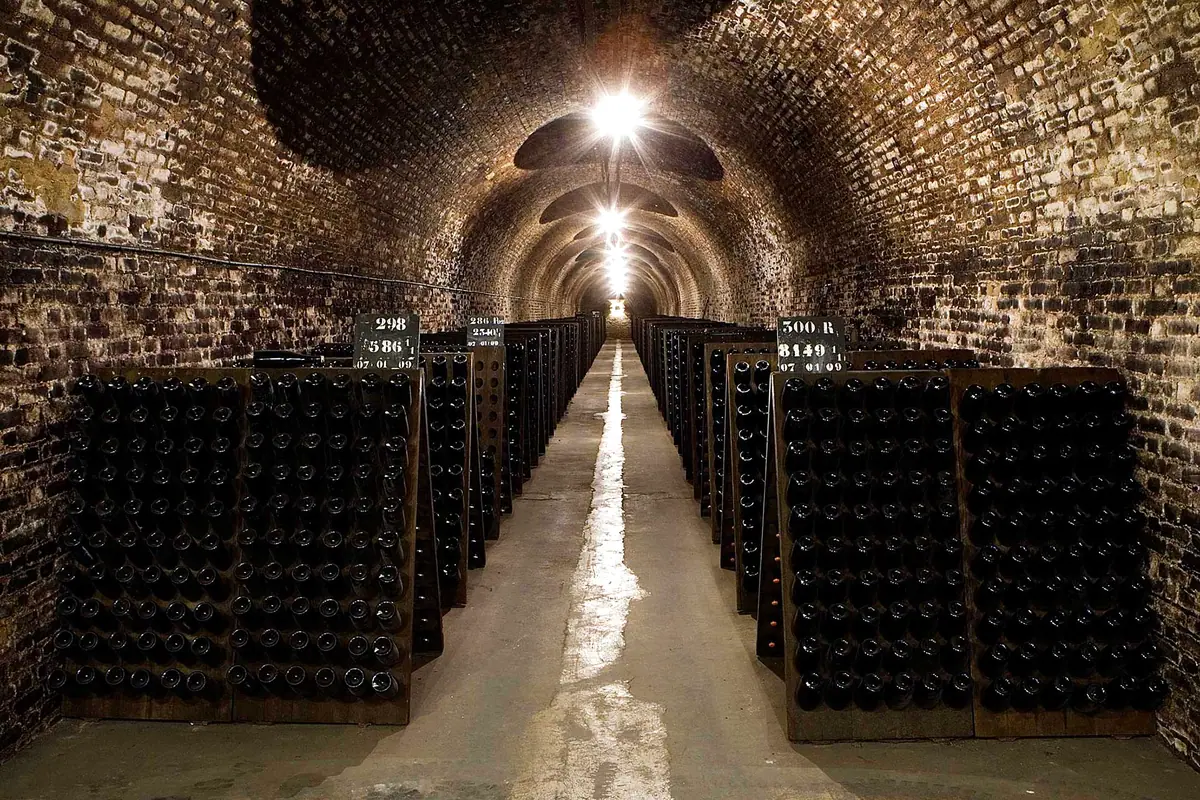 Ayala Champagner-Keller
011938 | Vintage | Champagne North ★★★☆ | Champagne South ★★★☆
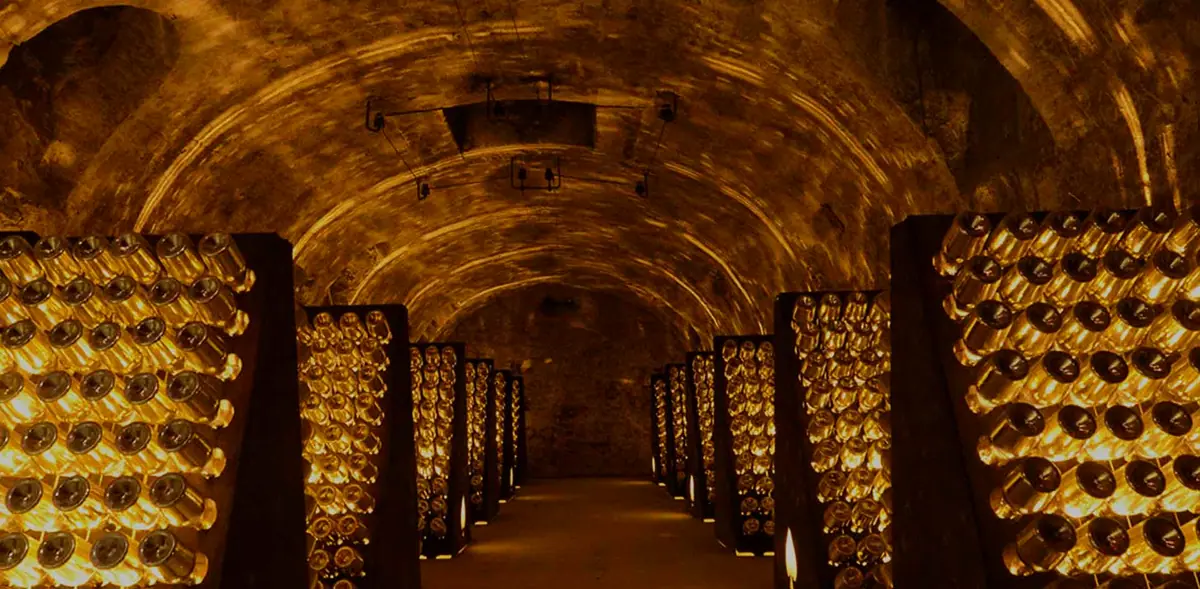 Cattier Champagner Keller
021937 | Vintage | Champagne North ★★★★★ | Champagne South ★★★★☆
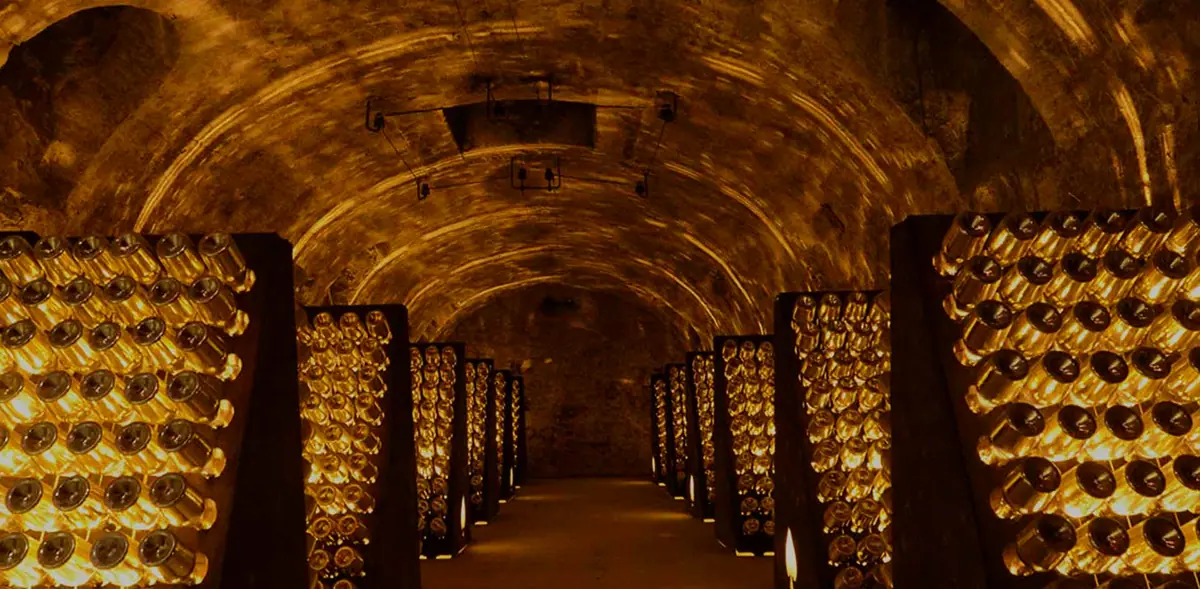 Cattier Champagner Keller
 0 %
