
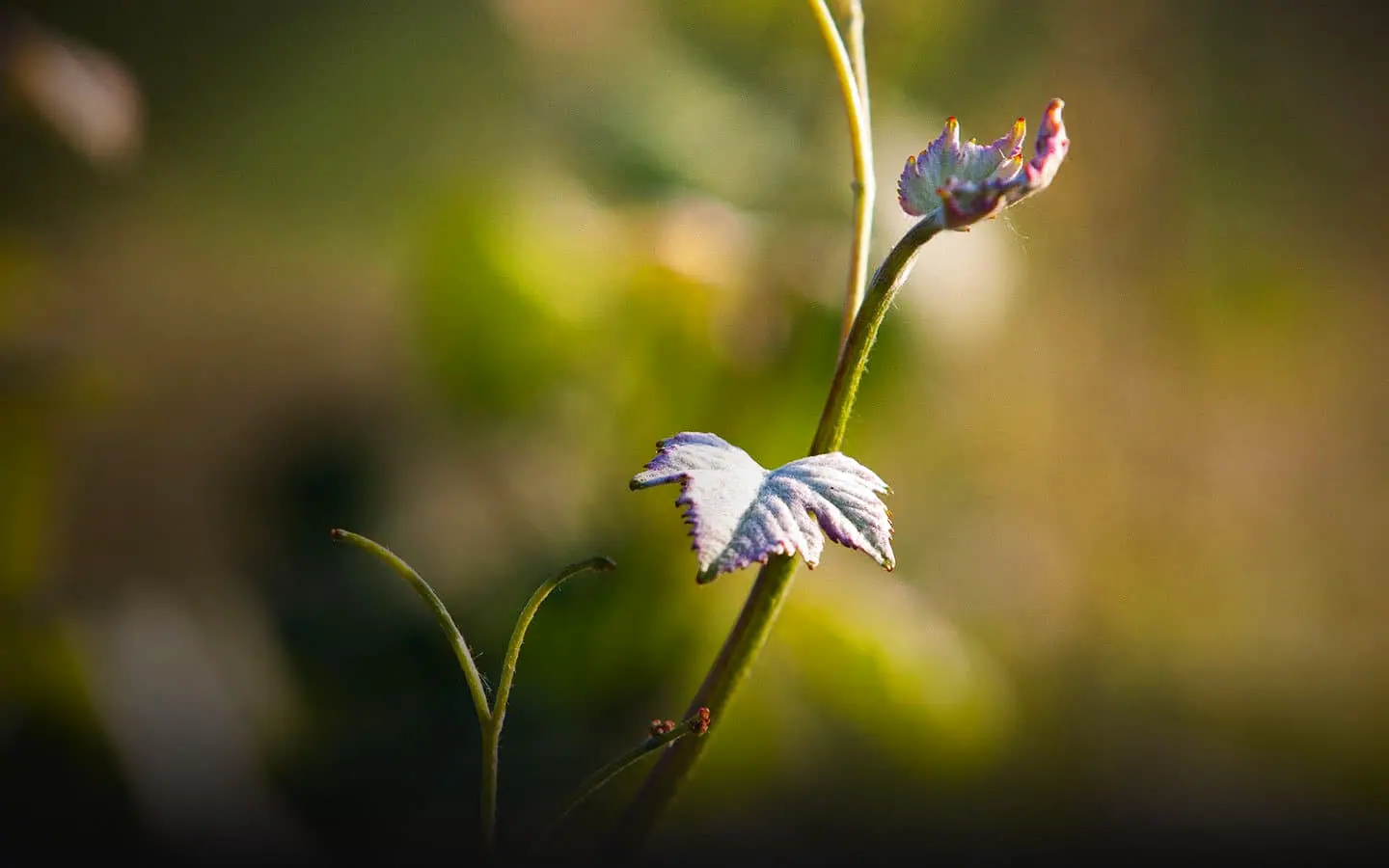
Bud break, in French <em>débourrement</em>, is the moment the buds burst open in spring and the vine's growing year begins. In Champagne it is one of the most critical points of the year because of the risk of frost.
Bud break marks the start of the vine's growing year. The buds, which have sat closed through the winter, protected by a woolly down, swell and open. The French term débourrement comes from bourre, the down that wraps the bud. First comes this cotton-wool stage, then the green tip (pointe verte), from which the first small leaves and the young shoot with its tiny flower clusters emerge.
Timing and trigger
Warmth is what counts. Once average daily temperatures rise and stay up in spring, the sap starts to flow; as a rule of thumb, the threshold is around ten degrees Celsius. In Champagne, bud break usually falls in April, and in warm years it can come earlier. The grape varieties react differently: Chardonnay buds early, Pinot Noir hardly later. Pinot Meunier opens its buds a little later, which is why it has the advantage in frost-prone sites such as the Marne Valley.
The risk of late frost
Once the young shoots are out, they can no longer tolerate frost. One clear night with temperatures below zero can kill the tender shoots and wipe out part of the harvest as early as spring. The vine can push again from secondary buds (contre-bourgeons), but these replacement shoots carry far fewer bunches. The frost of April 2021 showed how strongly a single event can shape an entire champagne harvest.
Protection in the vineyard
Growers try to reduce the danger of frost at bud break in several ways. Late pruning (taille tardive) delays the opening of the buds by a few days. On cold nights, heaters, frost candles, wind machines that mix the air, or frost-protection sprinklers, which form a protective layer of ice around the buds, can help. The choice of site and grape variety also plays a part.
The timing of bud break also sets the rhythm for what follows, from flowering to the harvest. An early start does not automatically mean an early picking date, but it does influence the course of the whole vintage.
Pictures

 0 %
