
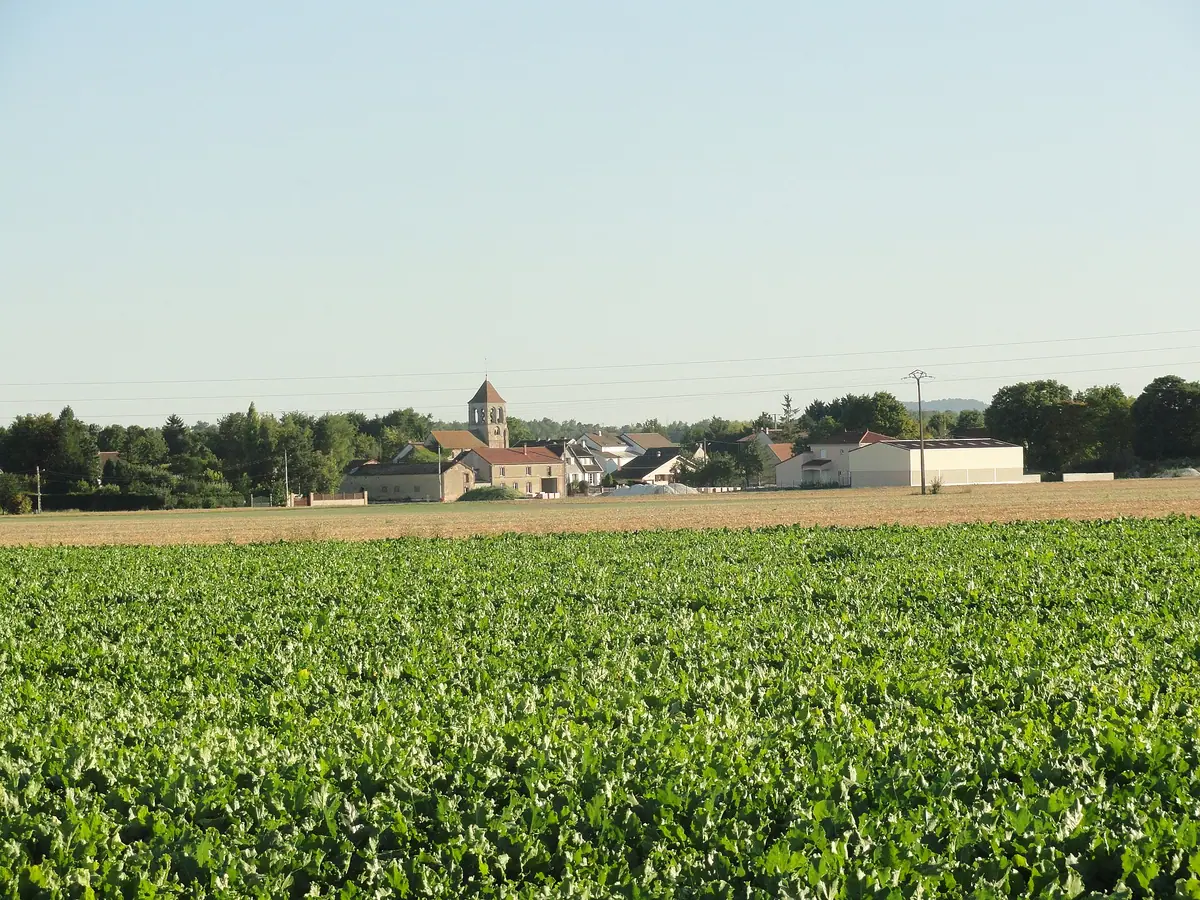
Grafting joins a scion of the desired grape variety to a phylloxera-resistant rootstock. In Champagne, virtually every vine is grafted in this way.
Grafting, known in Champagne as greffage, unites two parts of a plant into a single vine: above ground the scion, which carries the variety, such as Chardonnay, Pinot Noir or Pinot Meunier, and below it the rootstock, which provides the roots and tolerance of the soil. A slight swelling on the trunk usually remains visible at the point where the two have fused.
Why vines are grafted
The reason was phylloxera. This pest, accidentally brought over from North America, devastated Europe's vineyards in the 19th century and reached Champagne towards the end of that century. European vines (Vitis vinifera) have no defence against an attack on their roots. American wild species such as Vitis riparia, Vitis rupestris and Vitis berlandieri, on the other hand, cope with the louse. Growers use their roots but keep the familiar varieties on top, and with them the character of the wine.

The rootstock as a lever
Choosing a rootstock is about more than protection. It affects vigour, water uptake, the course of ripening and how well the vine tolerates the soil. In Champagne, with its lime-rich chalk soils, this matters a great deal, because some rootstocks react to high levels of lime with chlorosis, meaning yellow, weak leaves. That is why growers often turn to lime-tolerant crosses here, including the rootstocks 41B and SO4, depending on the plot, the depth of the soil and its water balance. In doing so, growers weigh up whether they want to restrain or encourage vigour.
How grafting is done
Grafting usually takes place in specialist vine nurseries, the pépinières. There, rootstock and scion are joined by machine or by hand, for example with an omega cut, and then encouraged to knit together. The grower then plants the young vines in the vineyard. The scion wood comes from selected mother vines, which is how the true-to-type character and health of the plants can be deliberately secured.
 Ayala champagne history
The exception: ungrafted vines
There are a few plots in Champagne with ungrafted vines on their own roots, which have apparently escaped phylloxera or were later propagated by layering (provignage). The best-known example is the house of Bollinger, which bottles a cuvée of its own from such vines. They are a rarity. The rule remains the grafted vine, without which viticulture in Champagne, in its present form, would hardly be possible.
Pictures







 0 %
