
- Département
- Marne (Grand Est region)
- Site
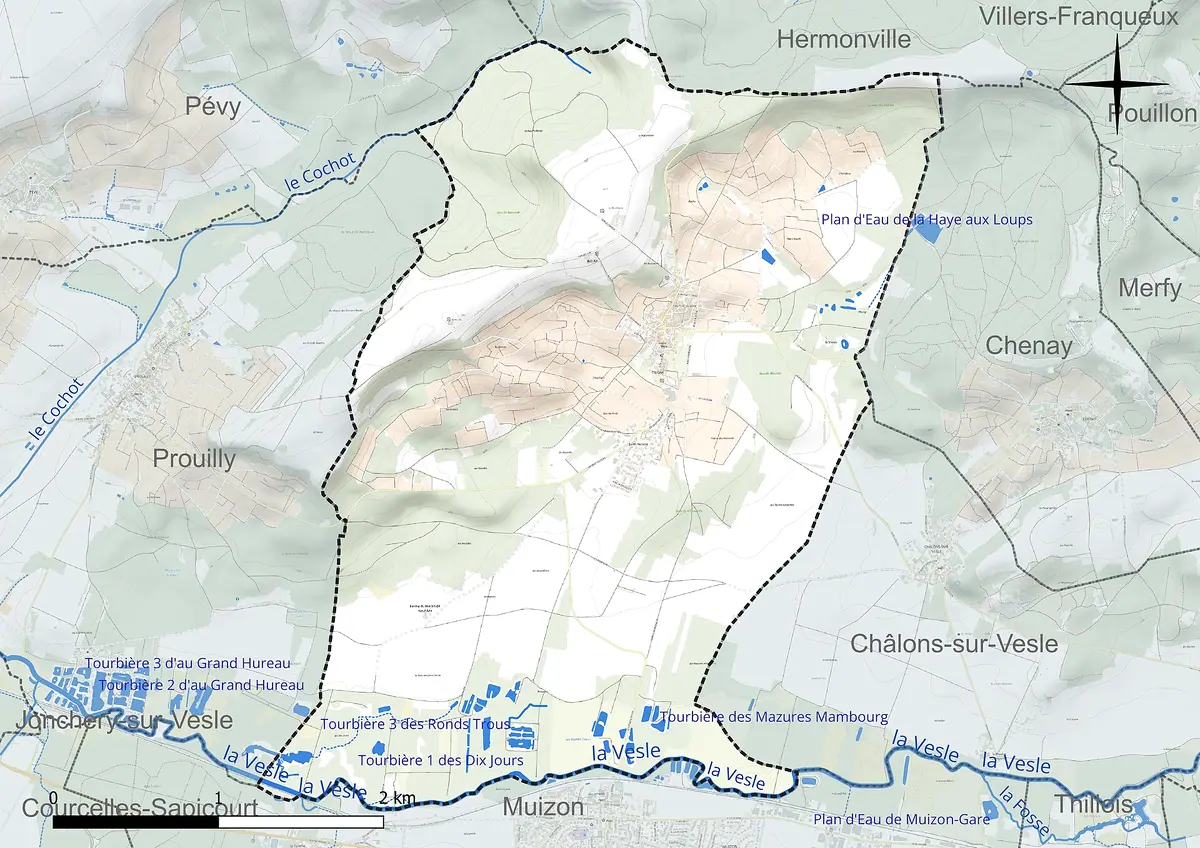
- Massif de Saint-Thierry, on the Vesle, west of Reims
- Inhabitants
- 619 (as of 1 January 2023)
- Source
- Wikipedia, eigene Zusammenfassung
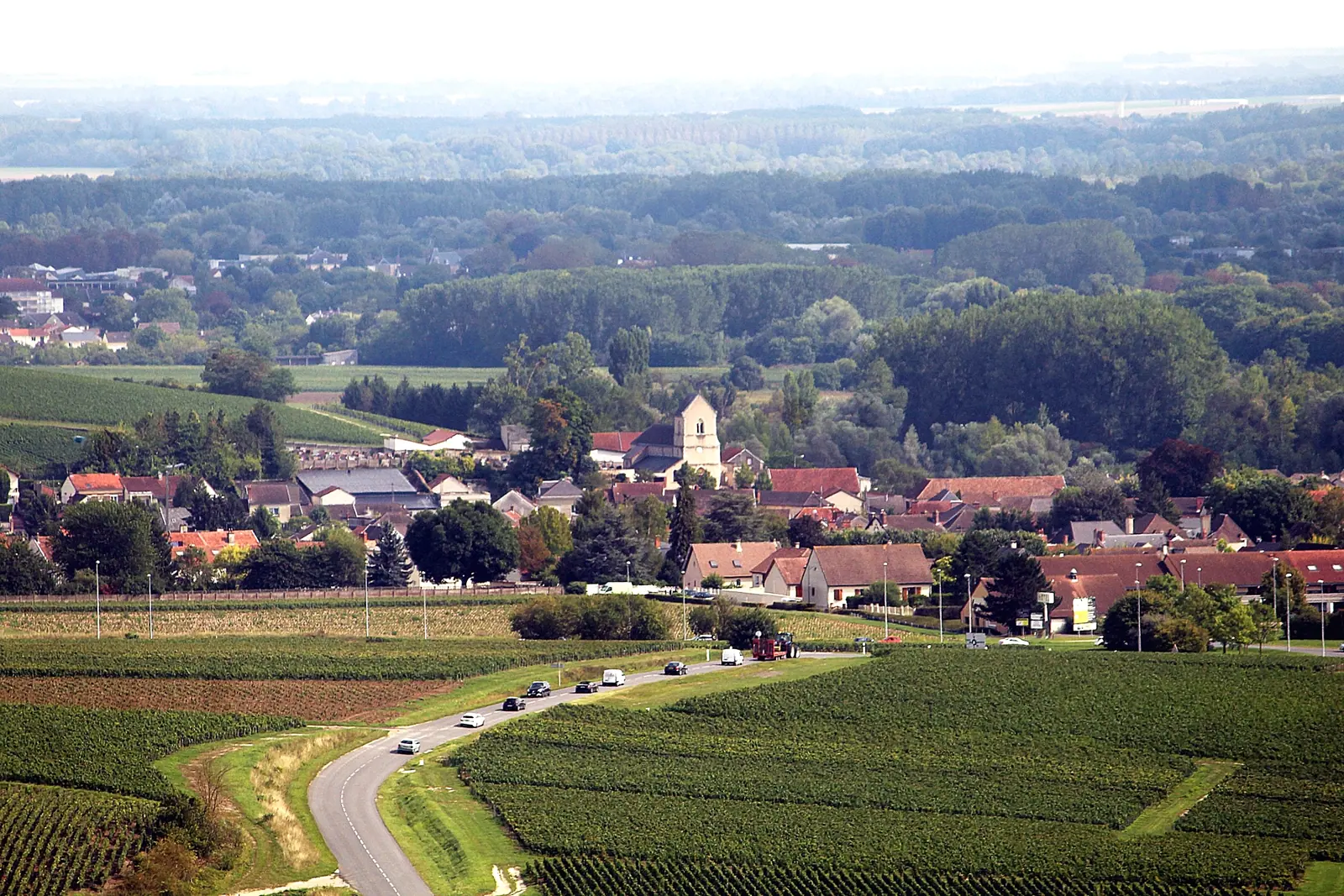
Trigny is a wine-growing village in the Massif de Saint-Thierry, west of Reims, on the River Vesle and on the Route touristique du Champagne. Monks were already planting vines here in the Middle Ages.
Location
Trigny lies in the north-west of the Marne département, about twelve kilometres west-north-west of Reims as the crow flies. By road it is roughly 15 kilometres to the city of coronations. The commune covers 1,221 hectares between the Massif de Saint-Thierry to the north and the Vesle valley to the south. The river also marks the boundary with Muizon. The Route touristique du Champagne runs through the village.
The ground rises from 68 metres in the marshes along the Vesle to 215 metres. To the north-west, the Mont Die (211 metres) and the Montagne (215 metres) rise above the village.
Viticulture and landscape
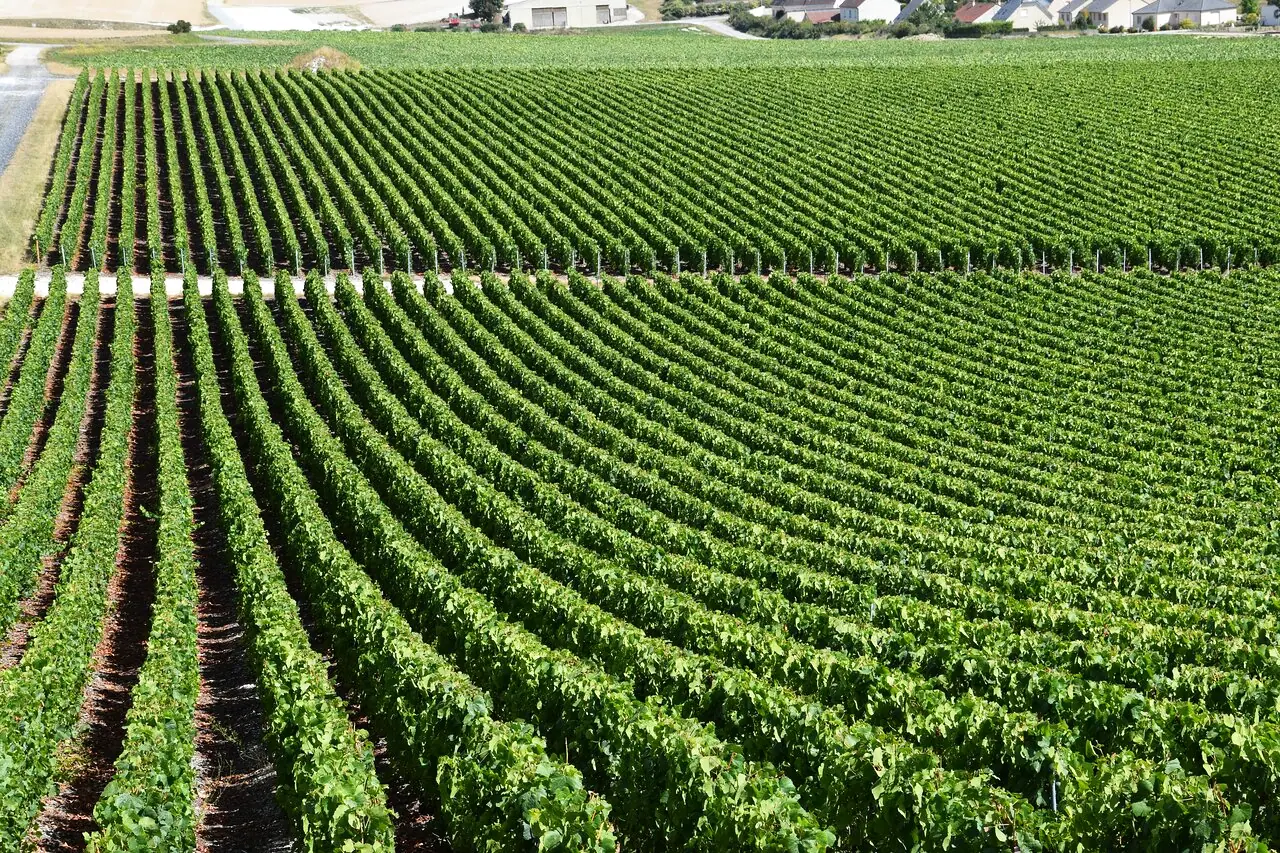
Trigny holds neither grand cru nor premier cru status. Even so, it is an interesting place for enthusiasts, because it shows you Champagne away from the big names. In the Massif de Saint-Thierry, Pinot Meunier has traditionally played an important role. The grape copes well with the cooler sites on the edge of the Montagne de Reims.
Land use is varied. According to Corine Land Cover data, in 2018 woodland made up 44.9 per cent of the area, arable land 31.6 per cent and permanent crops 17.9 per cent. In this part of the world, the latter includes the vineyards. There are also several small peat bogs, such as the Tourbières du Vivier, which are listed as a natural area of ecological interest (ZNIEFF).
According to Corine Land Cover data, in 2018 woodland made up 44.9 per cent of the area, arable land 31.6 per cent and permanent crops 17.9 per cent.
History
The origins of the village are closely tied to the Abbey of Saint-Thierry. Charles the Bald gave it the land of Marzella, from which Trigny emerged. After 36 years of Norman occupation, which lasted until 922, a charter of King Lothair in 963 confirmed the monks' ownership. They cleared the surrounding land and laid out vineyards. Winegrowing in Trigny is therefore documented since the Middle Ages.
 Capsules, Muselets, Plaque
For centuries, villagers and abbey argued over rights and dues. Only the Revolution ended this conflict, when the monks disappeared. In the 13th century a quarry belonging to the abbey, known as Maldenrée, supplied stone for Saint-Nicaise in Reims. In the First World War, Trigny lay only a few kilometres behind the front. The station at Muizon supplied the French troops, and the wounded were gathered in the village and sent on from there. Shelling was not spared.
What to see
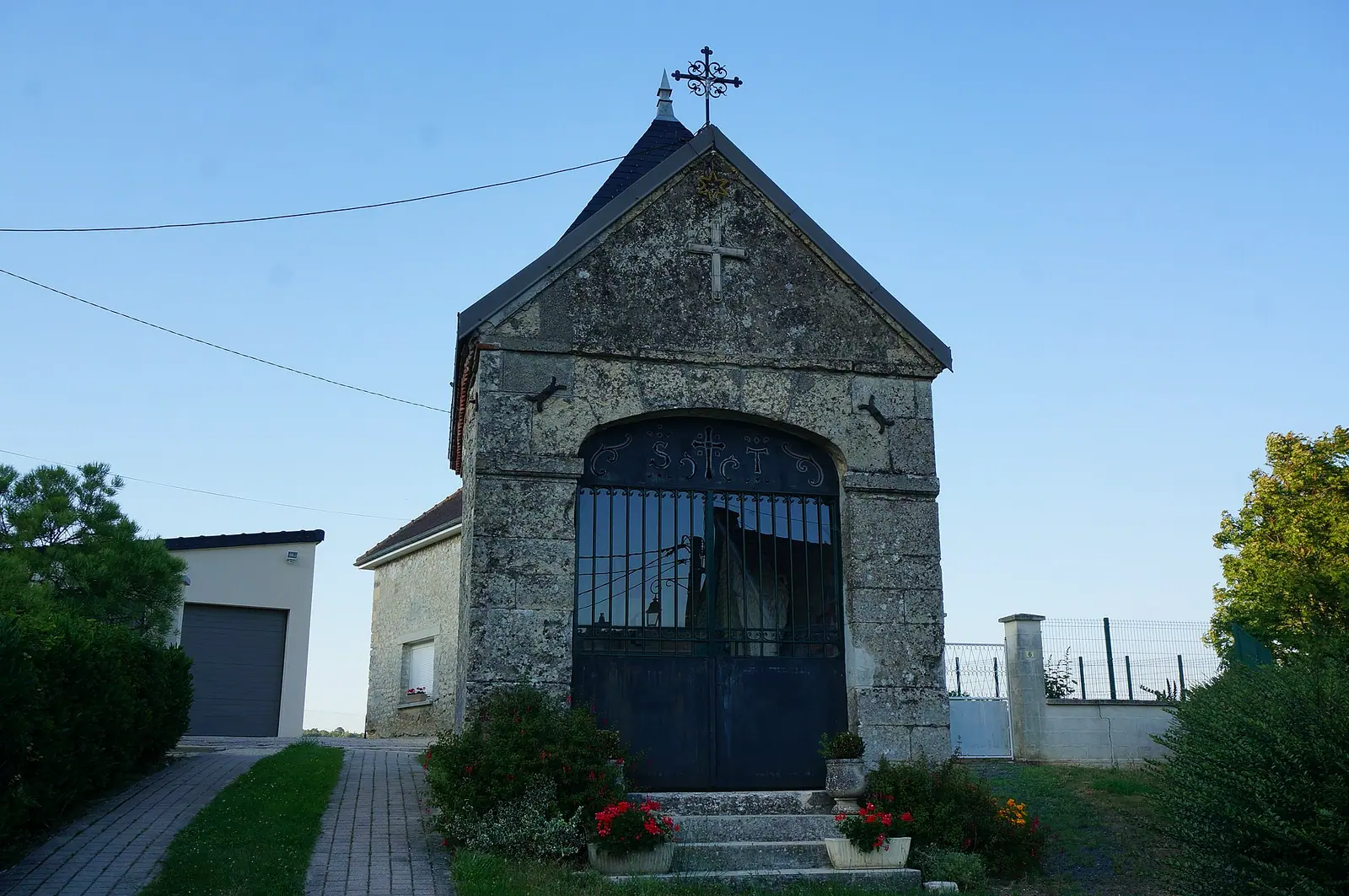
- The church of Saint-Théodulphe with the former presbytery
- The Tourbières du Vivier and the Vesle lowlands for walks
- The woods and heights of the Massif de Saint-Thierry
Until the middle of the 20th century, there were champignonnières on the road to Hermonville, at the edge of the village: mushroom-growing tunnels dug into the ground. Maurice Landrieux (1857 to 1926), who later became Bishop of Dijon, also came from Trigny.
With around 619 inhabitants (as of 1 January 2023), Trigny is a quiet village. It makes a good stop on a drive along the Champagne route, ideally combined with a visit to a grower in the area.
Pictures



 0 %
