
- Département
- Marne (Grand Est region)
- Site
- Brie champenoise, between Épernay and Sézanne, on the Côte d'Île-de-France
- Inhabitants
- 415 (as of 1 January 2023)
- Source
- Wikipedia, eigene Zusammenfassung
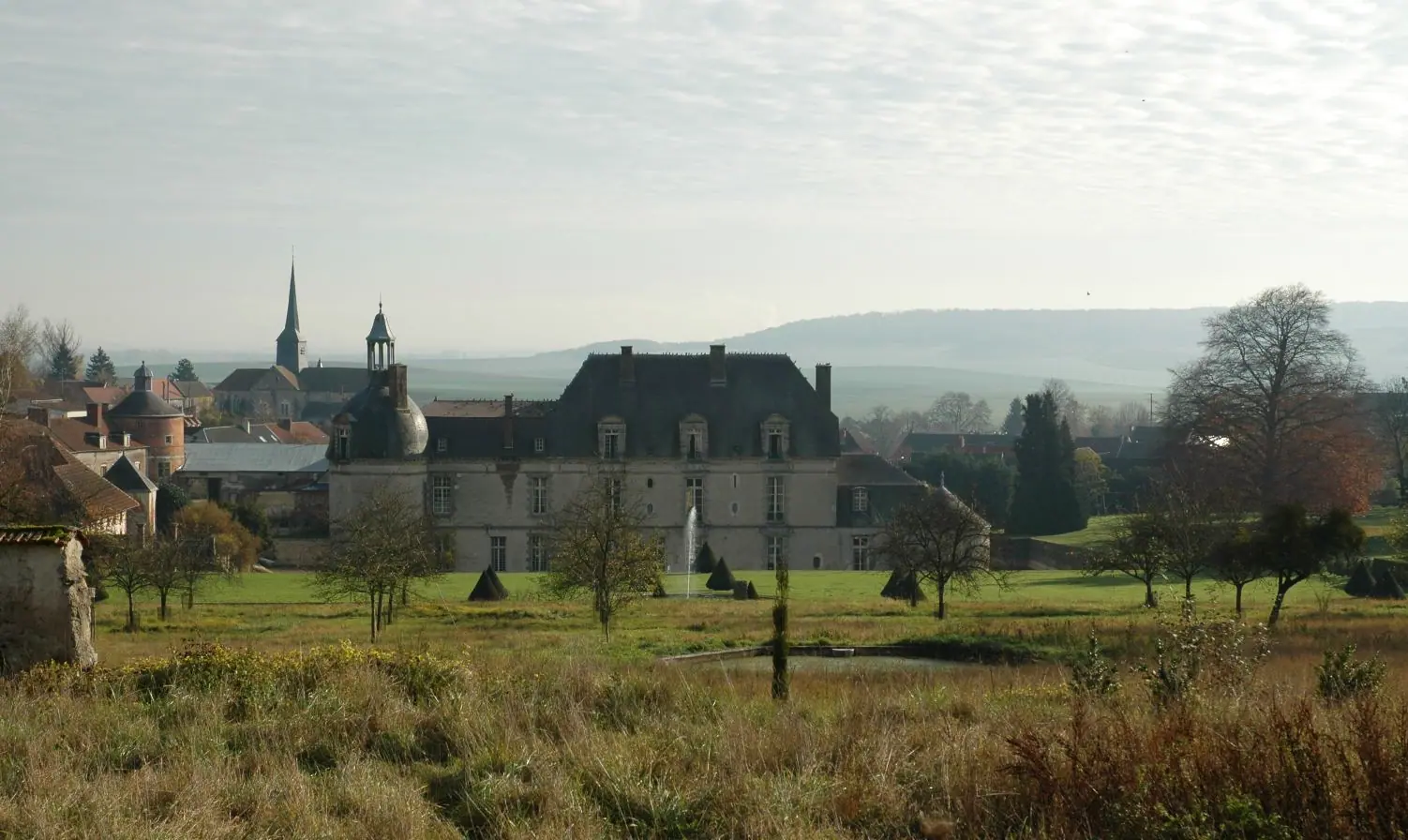
Étoges is a winegrowing village in the Marne département, between Épernay and Sézanne. It is known for its 17th-century moated château and for the roughly 15 growers who work here.
Location
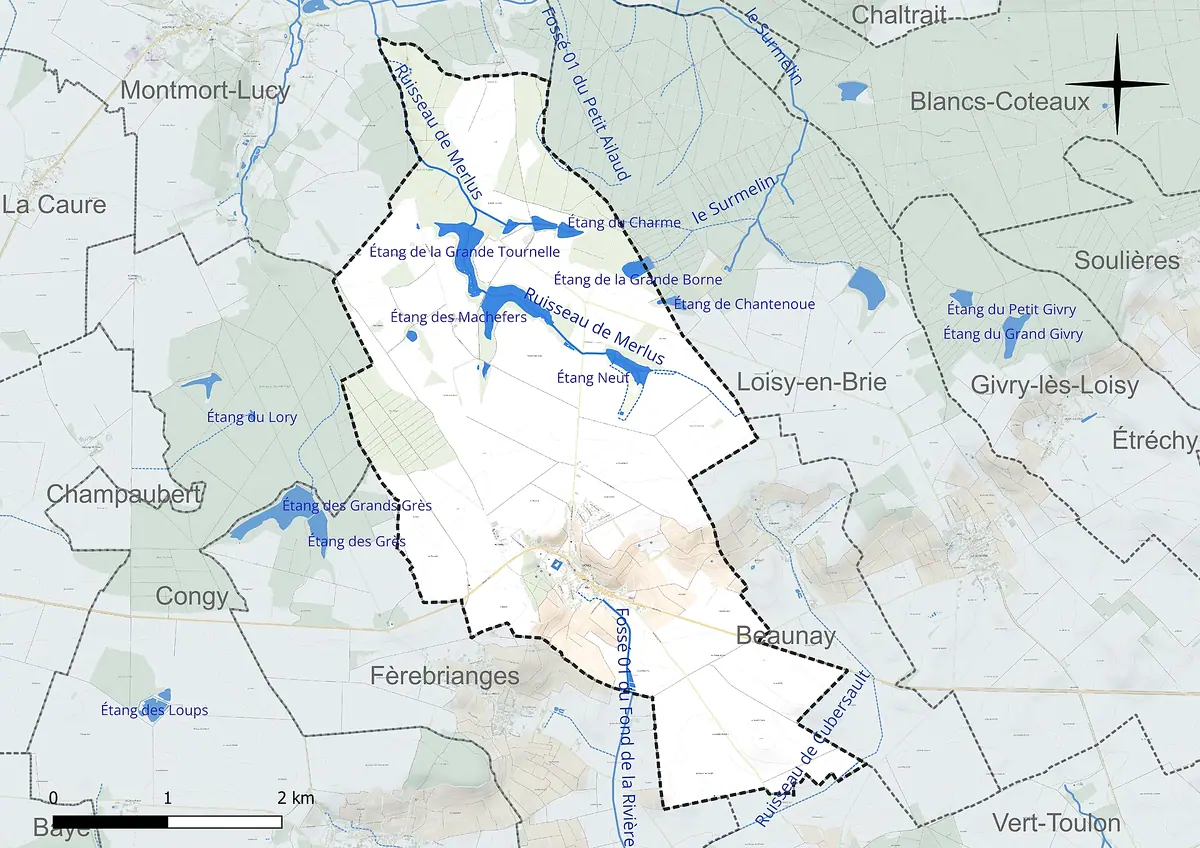
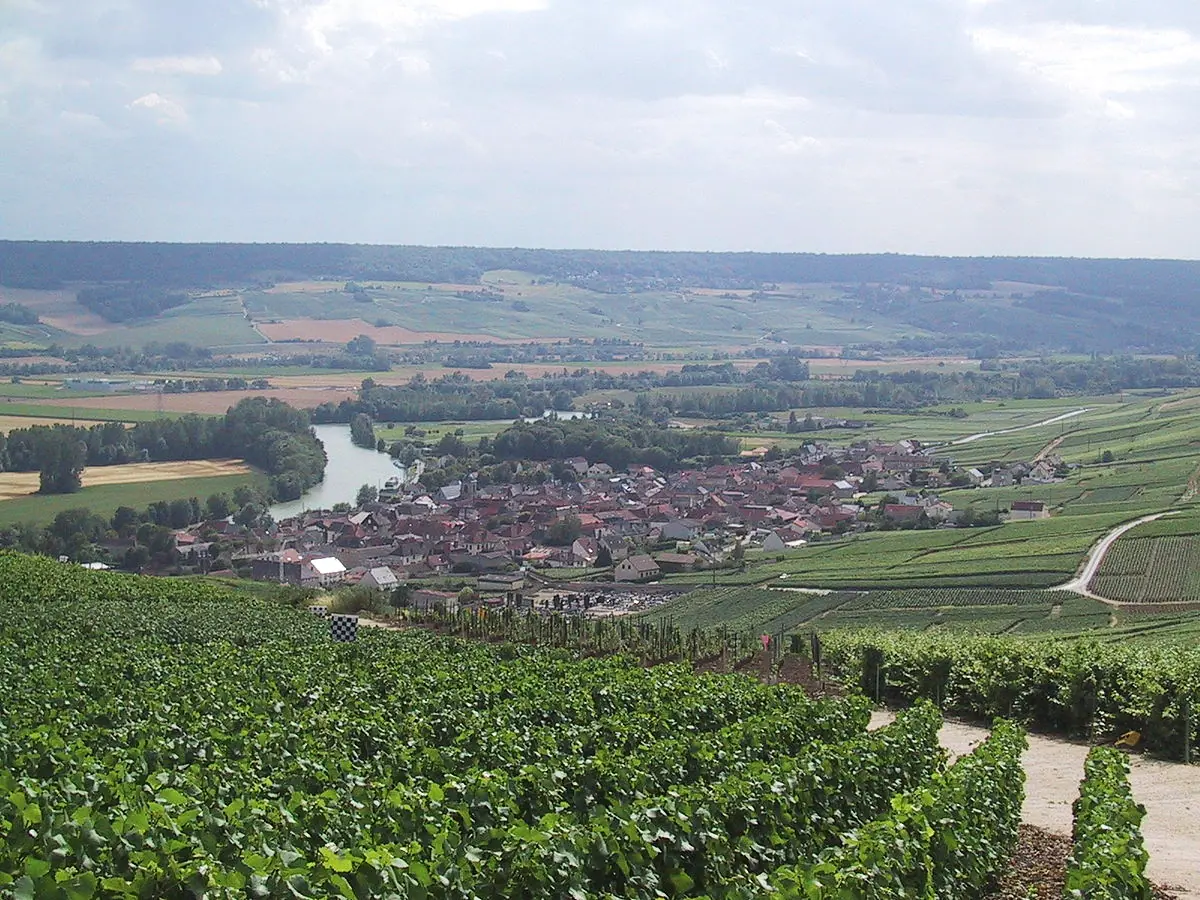
Étoges lies in the south-west of the Marne département, between Épernay and Sézanne, about 80 kilometres east of Paris. By road it is roughly 25 kilometres to Épernay and 40 kilometres to Châlons-en-Champagne. The village stretches along the slopes of the Côte d'Île-de-France, facing the Montagne de Toulon. The commune belongs to the Brie champenoise and covers 1,457 hectares. The land rises from 153 to 243 metres. In the higher, more heavily wooded north you find numerous ponds and the hamlet of Grand Malton.
The D933 runs through the village, the former Route nationale 33 between La Ferté-sous-Jouarre and Châlons-en-Champagne. Étoges has 415 inhabitants (as of 1 January 2023).
Viticulture
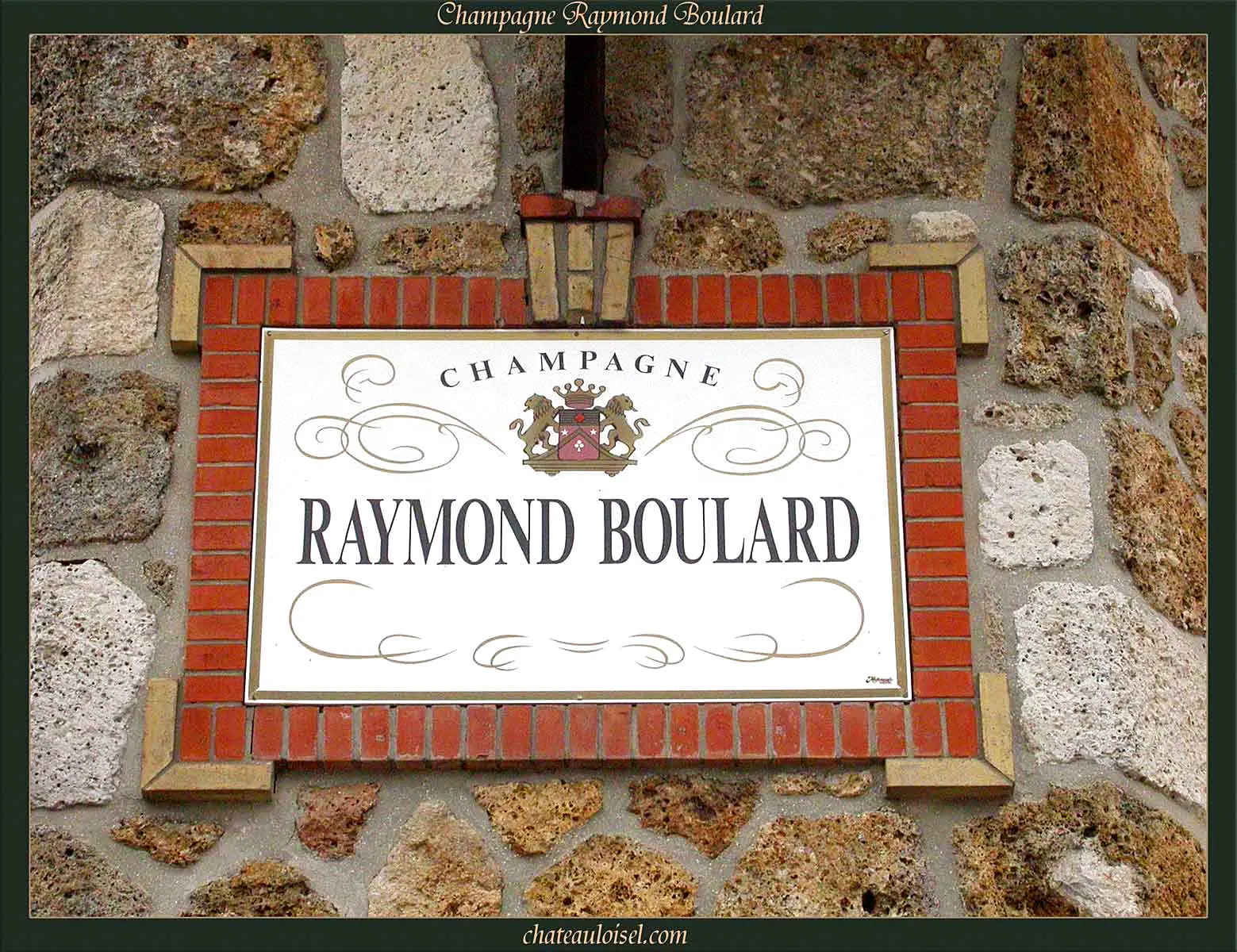
Étoges is classified neither as Grand Cru nor as Premier Cru. It is a Champagne village with a modest amount of vineyard: about 15 growers are based here. The landscape is shaped more by fields, since 71.7 per cent of the land is arable and 15.1 per cent is woodland. Permanent crops, which include vines, account for 6.5 per cent (as of 2018). If you want to discover grower champagne away from the famous names, this is a quiet place to start.
Étoges has 415 inhabitants (as of 1 January 2023).ViticultureÉtoges is classified neither as Grand Cru nor as Premier Cru.
History
In the 14th century Étoges belonged to Eustache III de Conflans, hereditary Marshal of Champagne. After his death without heirs, the village passed in 1339 to the Counts of Anglure through the marriage of his sister Marguerite to Oger III d'Anglure. In 1682 the lordship was raised to a county. The owners changed frequently in later years, and in 1803 the Comte de Guéhéneuc acquired the estate. Through his daughter, who was married to Marshal Jean Lannes, it passed to her descendants.
In February 1814 the area became a battlefield: Blücher's Silesian army broke through here at heavy cost against Napoleon's troops, whom Marshal Marmont had ordered to hold the strategically important position at Étoges.
 Laurent-Perrier Champagne
Sights
- Château d'Étoges: The complex dates from the early 17th century and is rectangular, with two main wings and four round corner towers. It is surrounded by a moat and a park. Between 1685 and 1688 the Count of Anglure had the passage to the château chapel painted by Jean Hélart of Reims. You can see family trees and coats of arms, along with 71 portraits of important figures from French history, from Clovis I to Louis XIV.
- Church of Saint-Sulpice-Saint-Antoine: Parts of it still date from the 12th century. The plan is a Latin cross with side aisles and a five-sided apse. The portal is Renaissance, and above it sits a 13th-century rose window.
- Village centre: Around the Grande Rue stand limestone houses with decorative brick details.
Since 1973 the village has been twinned with Oberweier, part of Ettlingen in Germany.
Pictures




 0 %
