
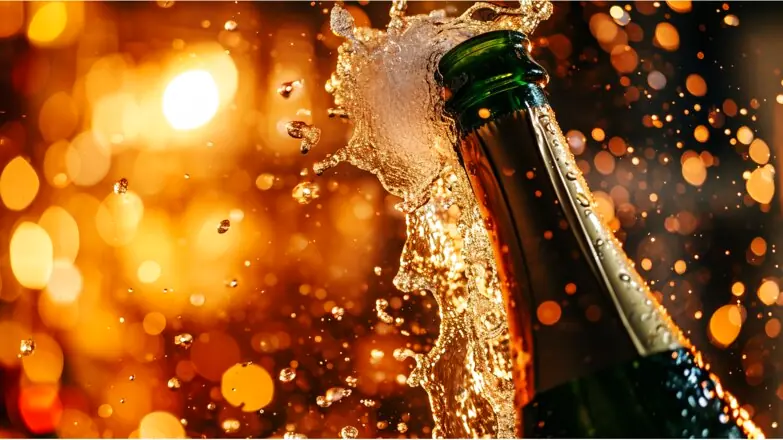
Non-vintage champagne stays good to drink for roughly 3 to 5 years after purchase, vintage for 10 years or more. The ideal is to keep it lying down, in the dark and undisturbed, at 10 to 12 degrees.
Shelf life and storage of champagne
Champagne, the most prestigious product of France's Champagne region, is known not only for its fine bubbles and complex aromas but also for its remarkable ageing potential. Storing it properly is essential to preserve its quality and let its aromas show at their best. In this text we look in detail at how long champagne keeps and how to store it.
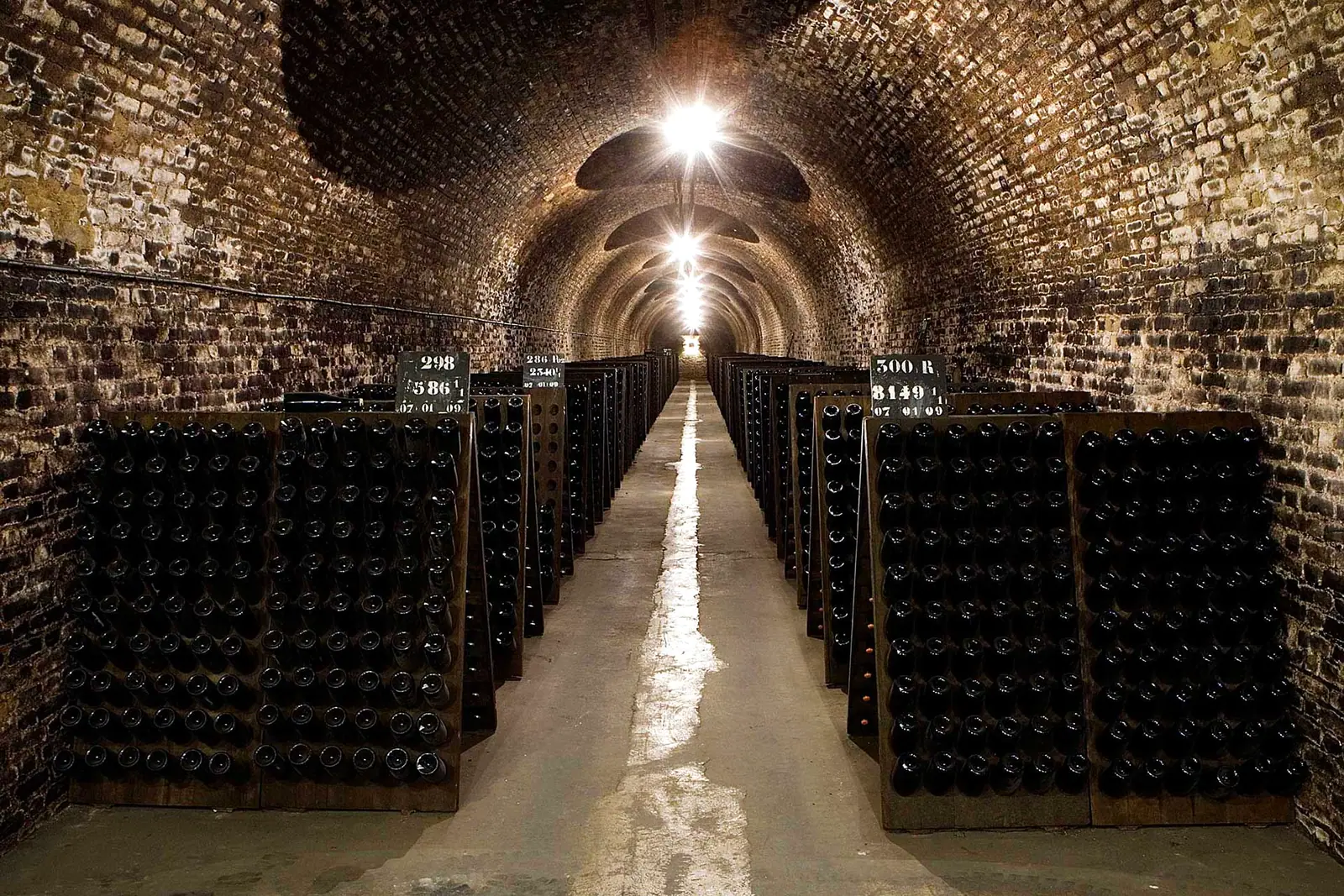
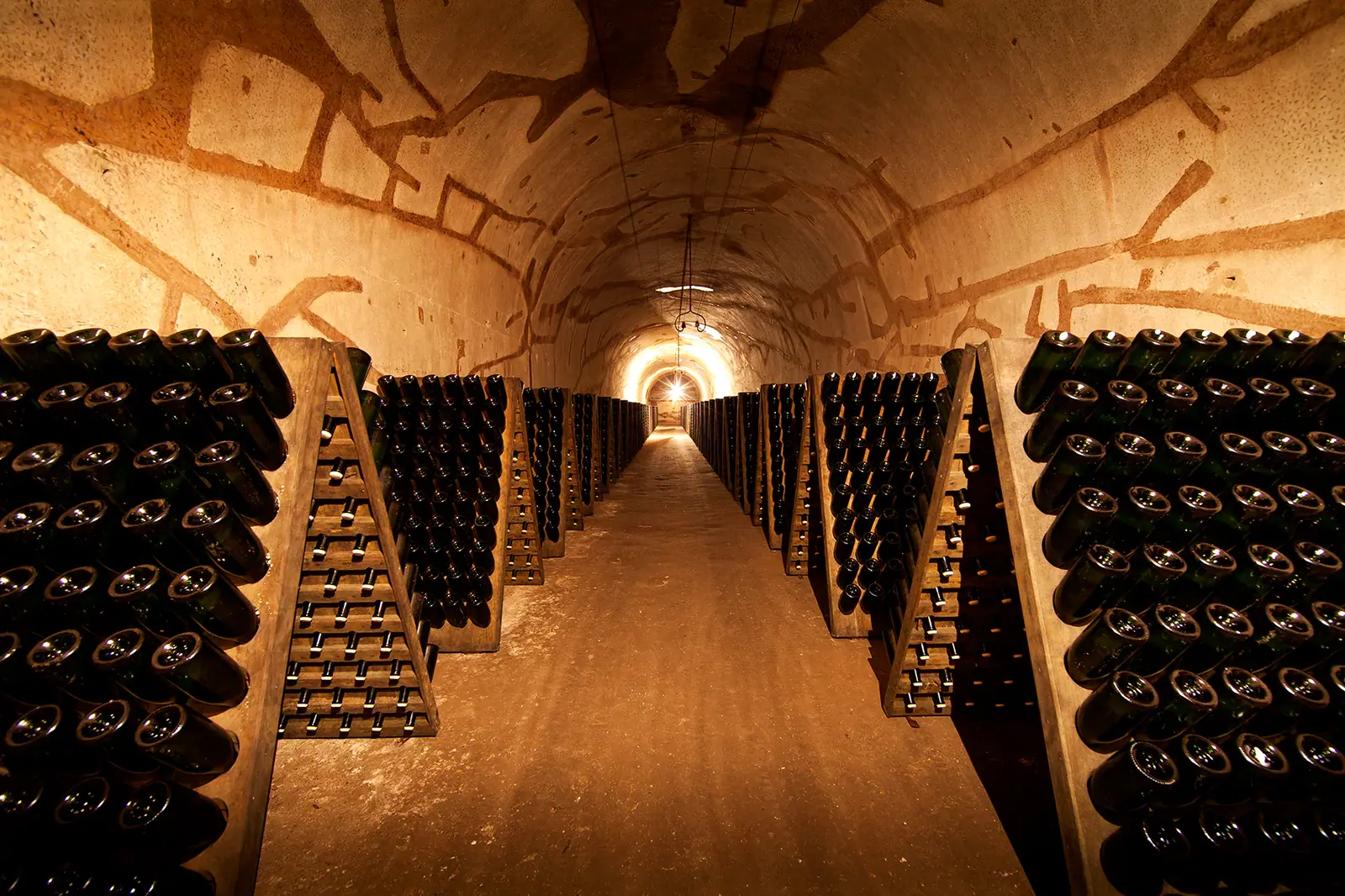
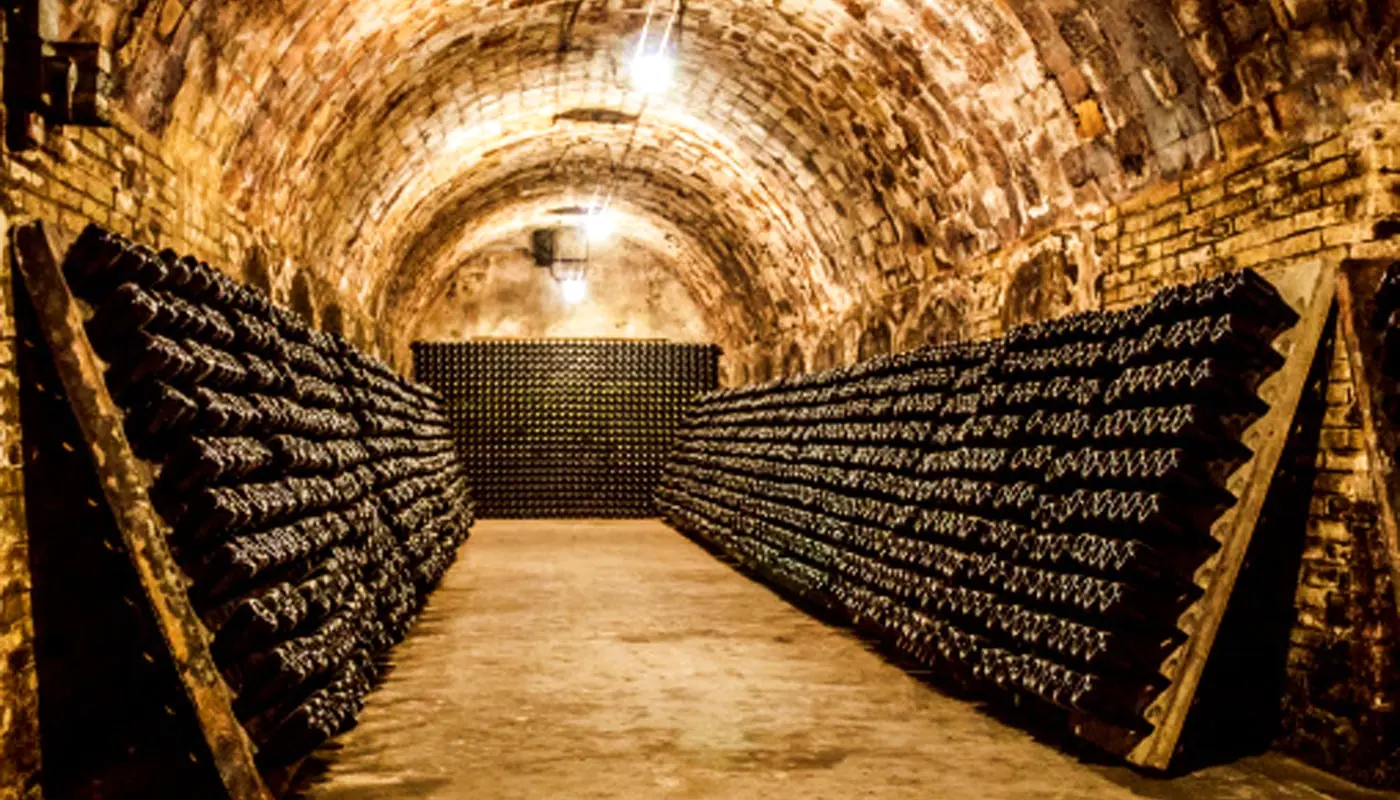
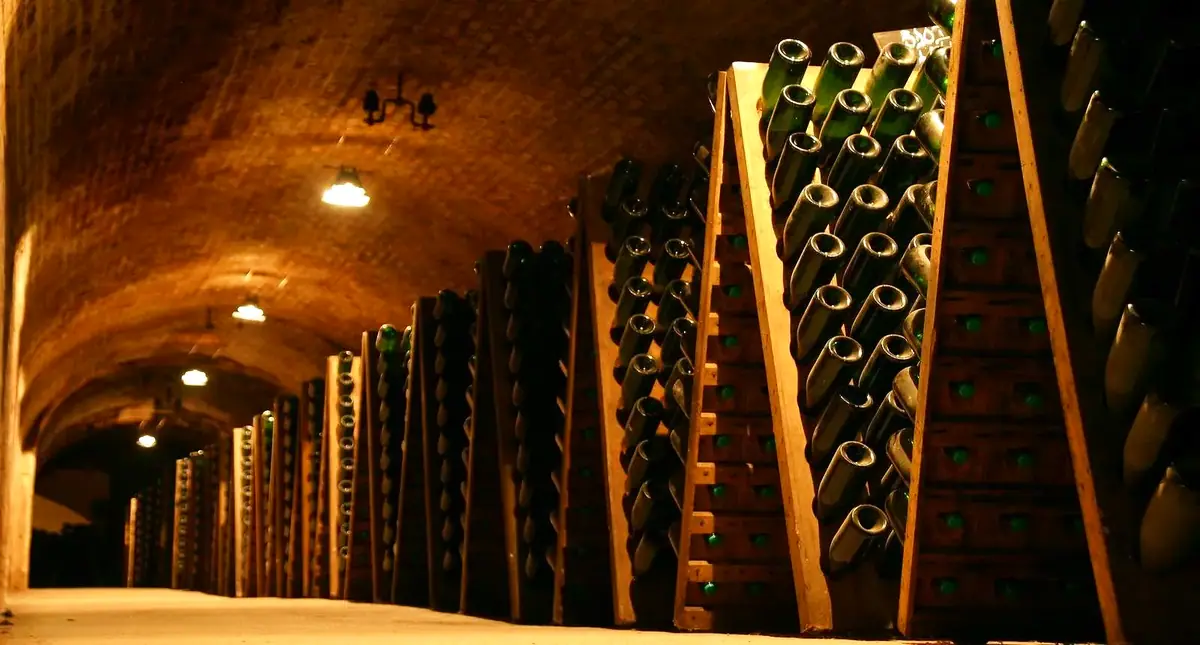 Paul Goerg Champagner Kellerei
01How long does champagne keep?
The shelf life of champagne depends on several factors, including the type of champagne, the dosage and the storage conditions. In general, we distinguish between non-vintage (NV) and vintage champagne:
- Non-vintage champagne: Non-vintage champagne, also known as an "assemblage", is a blend of wines from several vintages. This style is made for a broad market and is designed to be enjoyed straight away. On average, non-vintage champagne stays drinkable for about 3 to 5 years after purchase. Freshness and bubbles are at their best in the first few years, but the champagne can last somewhat longer without any significant loss of quality.
- Vintage champagne: Vintage champagne comes from a single year and is made only in particularly good years. It generally keeps for longer and can be cellared for 10 years or more. Vintage champagne continues to develop over time and often gains complexity and depth. The best vintages can even be stored for several decades before they reach their peak.
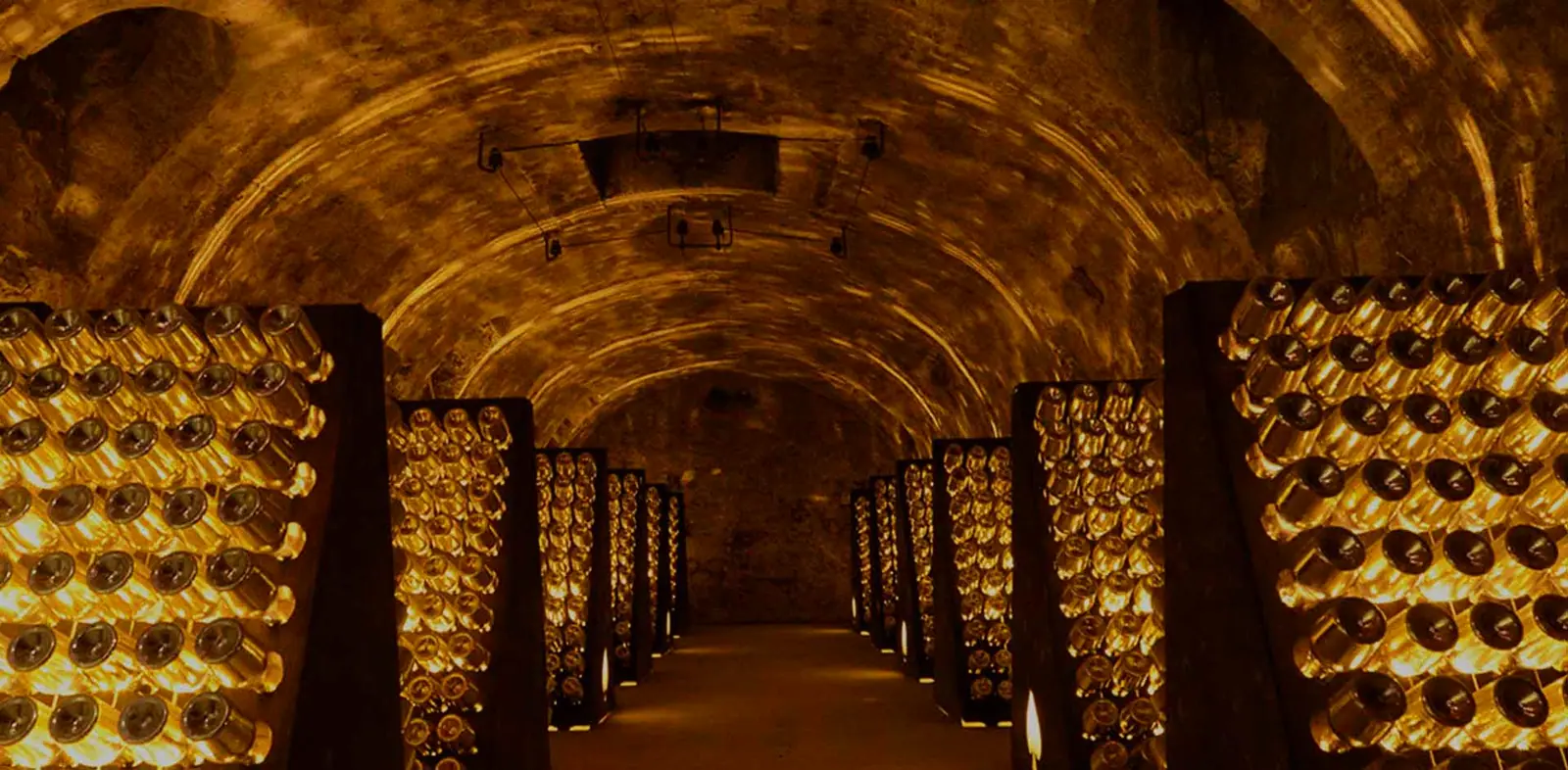
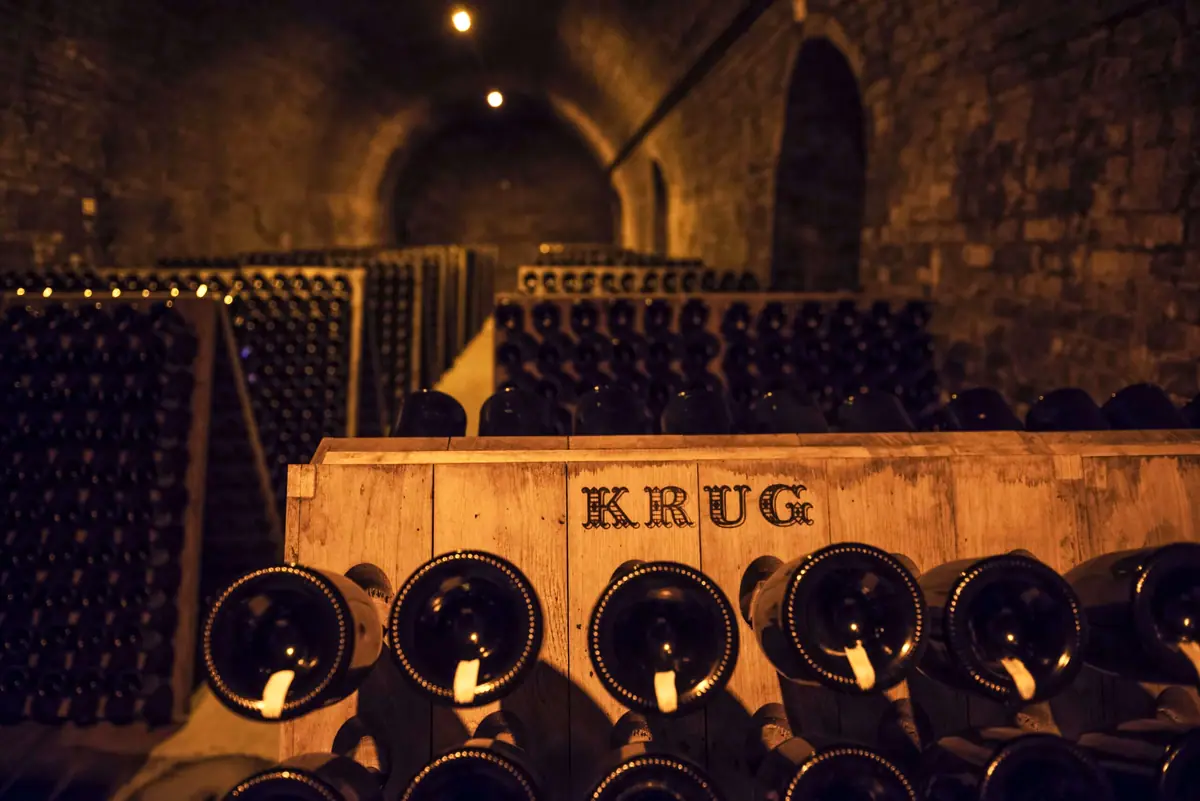 Krug Champagner Keller
02Storing champagne
Proper storage is crucial to safeguard the quality and shelf life of champagne. Here are the key factors to bear in mind:
- Temperature: The ideal storage temperature for champagne is around 10 to 12 degrees Celsius. Temperatures that are too high or too low can harm the wine. Heat speeds up ageing and can damage the bubbles and aromas, while temperatures that are too low can make the champagne mature too slowly.
- Humidity: Sufficient humidity is important to keep the corks in good condition. A relative humidity of around 70 per cent is ideal. If the air is too dry, corks can shrink and start to leak, which leads to a loss of carbonation and aroma.
- Light: Light, especially sunlight and artificial light, can affect champagne badly. UV rays can destroy its delicate aromas and speed up the ageing process. Champagne should therefore be kept in a dark or light-protected space.
- Vibration: Constant shaking and vibration can harm champagne by stirring up the sediment inside the bottle and dulling the aromas. Champagne should therefore be kept somewhere quiet, away from strong vibrations.
- Position: Most bottles of champagne should be stored lying down, especially if they are closed with a cork. This keeps the cork moist and stops it drying out. For bottles sealed with a screw cap, the storage position matters less.
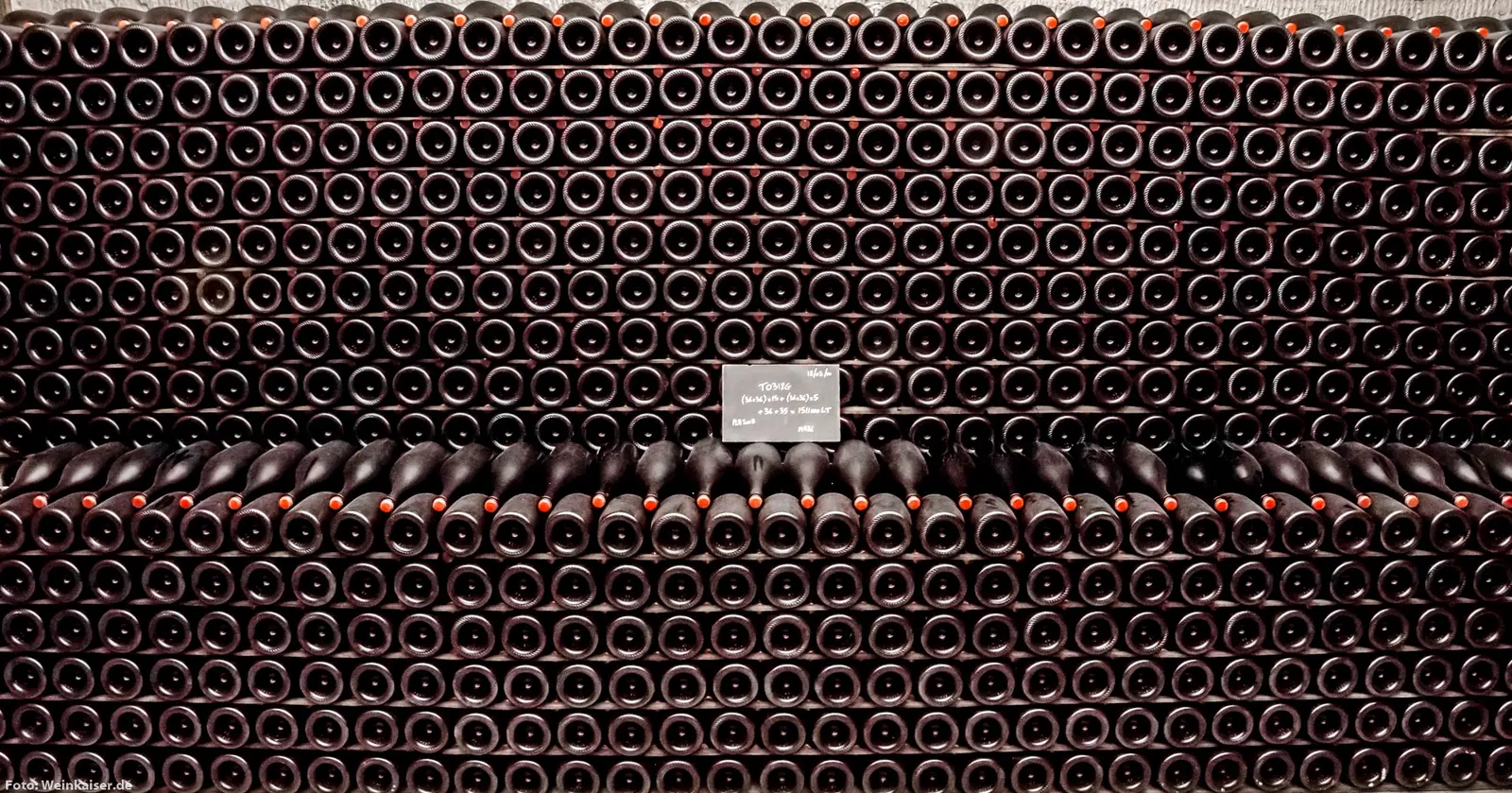
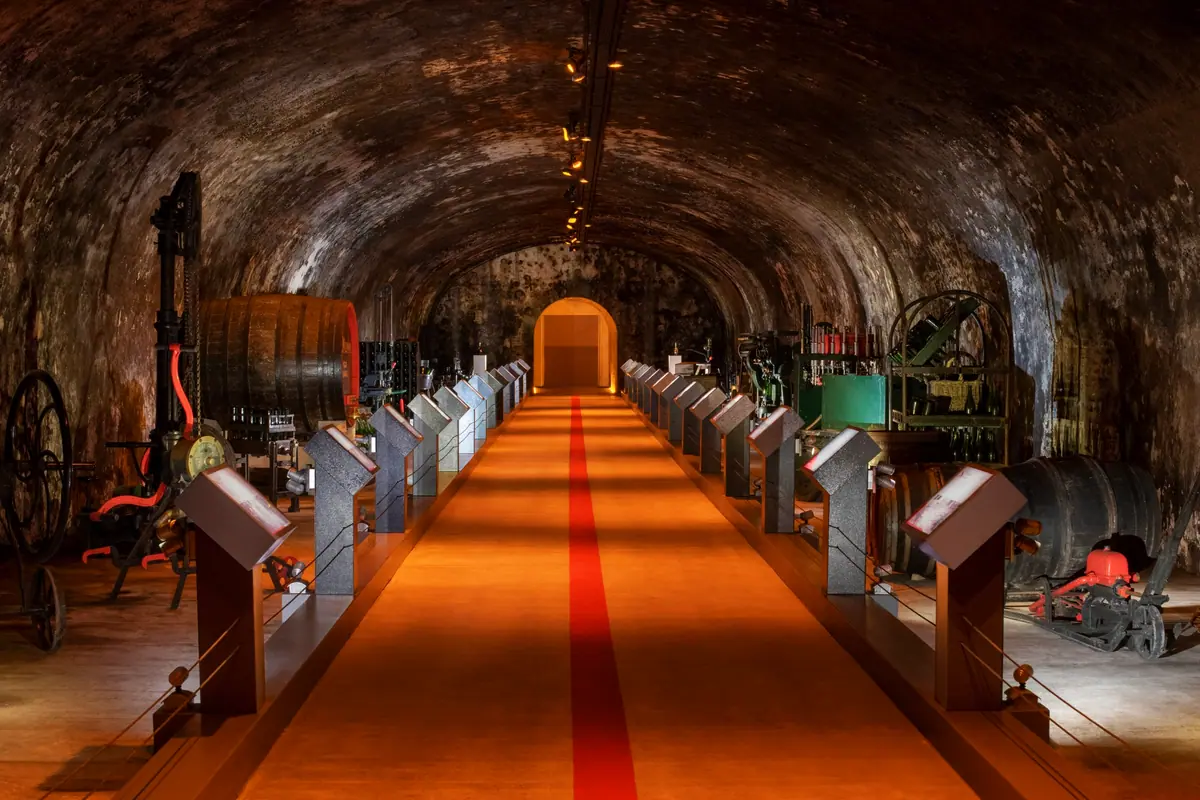 Mumm Champagner Keller
03Maturing and ageing champagne
During storage, champagne matures and keeps evolving. The effects of maturation differ depending on the style:
- Non-vintage champagne: This champagne is generally designed to be drunk young and fresh. It does not develop much further once the producer has released it. The aromas of fresh fruit and blossom are usually at their most pronounced when the champagne is young.
- Vintage champagne: Vintage champagne benefits from additional maturation. Over time it develops more complex aromas, which can include notes of nuts, honey, toast and roasted flavours. The wine often becomes smoother, with greater depth and complexity. It is important, though, to drink it at the right moment, as keeping it too long can mean it passes its peak.
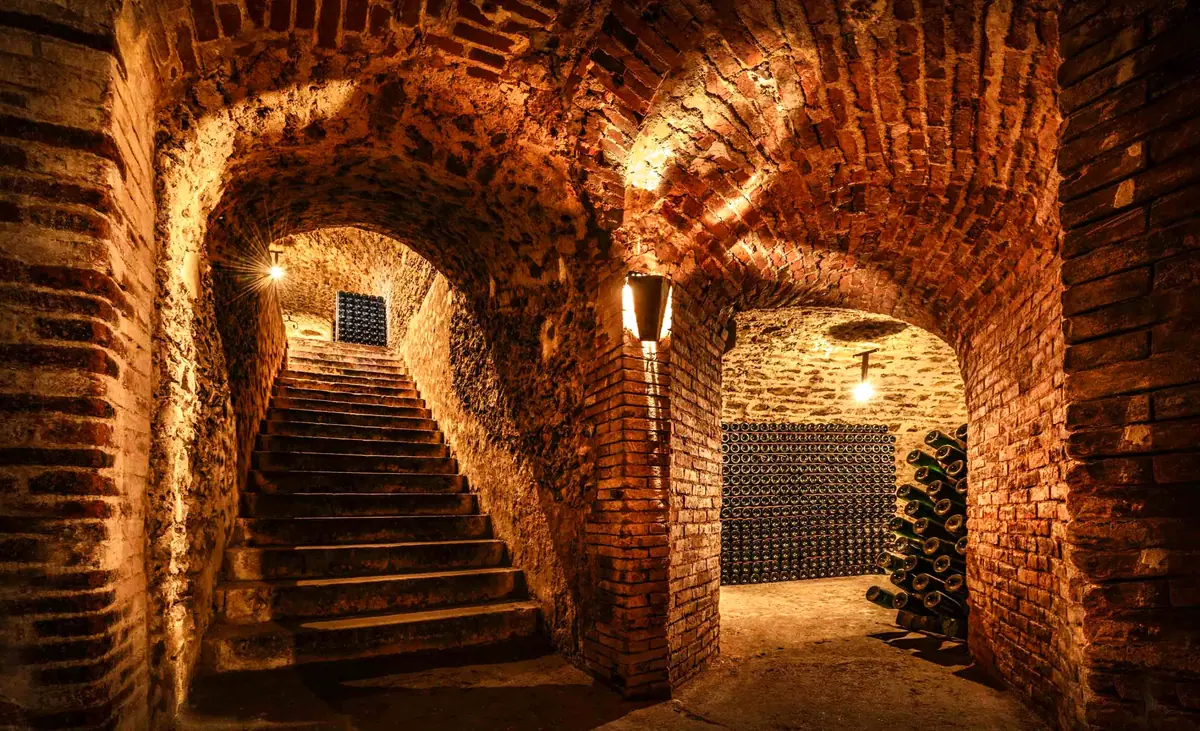 Salon Champagner Keller
04Conclusion
Shelf life and storage are decisive for preserving the quality and taste of champagne. While non-vintage champagne is best enjoyed young, vintage champagne can benefit from long maturation and develops complex aromas over time. Good storage, with control over temperature, humidity, light and vibration, is essential to keep the best qualities of the wine. If you take these factors into account, you can be sure your champagne holds on to its exceptional quality and unique character.
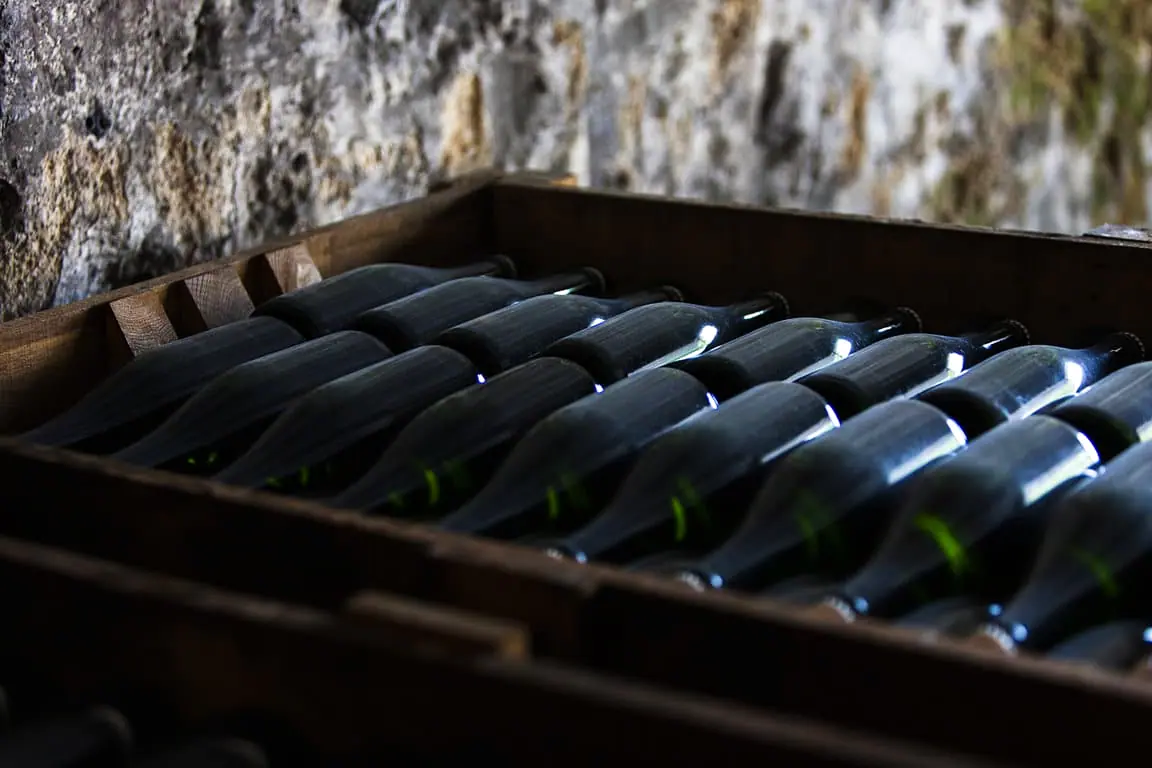
As a rule of thumb, shelf life follows the time a champagne spent maturing on the lees. For standard cuvées that means a period of about 3 years (supermarket and discounter champagne more like 2 years), and for high-quality champagne, such as the classified grand cru and premier cru champagnes, as well as prestige cuvées and vintage champagne, roughly 5 to 12 years. With sufficient acidity and otherwise perfect conditions, champagne can also keep for decades. Eventually, though, even the best cork gives way, and since there is normally no counter-pressure, the champagne loses its fizz. What is left is a still wine.
Pictures
 0 %
