
Summer pruning, or <em>rognage</em> in French, is the trimming of the vine shoots in summer, when the shoot tips above the top trellis wire are cut off. It is part of canopy management in the vineyard.
In early summer the vine shoots grow vigorously and soon rise above the wire frames that support them. In summer pruning, known in French as rognage, the grower cuts these shoots back. The tips and any overhanging growth are removed, and the canopy is left as a narrow, upright hedge between the wires.
Why growers do it
An unchecked shoot spends energy on further growth, energy the vine could put into the grapes instead. When shoot growth is held back, the vine sends more of its strength into the berries. There is also the matter of health: a loose, well-ventilated canopy dries out faster after rain. That matters in Champagne, where the climate is cool and often damp, and fungal diseases such as mildew and grey rot are a constant risk. The rows also stay clear for tractors and spraying equipment.
Timing and judgement
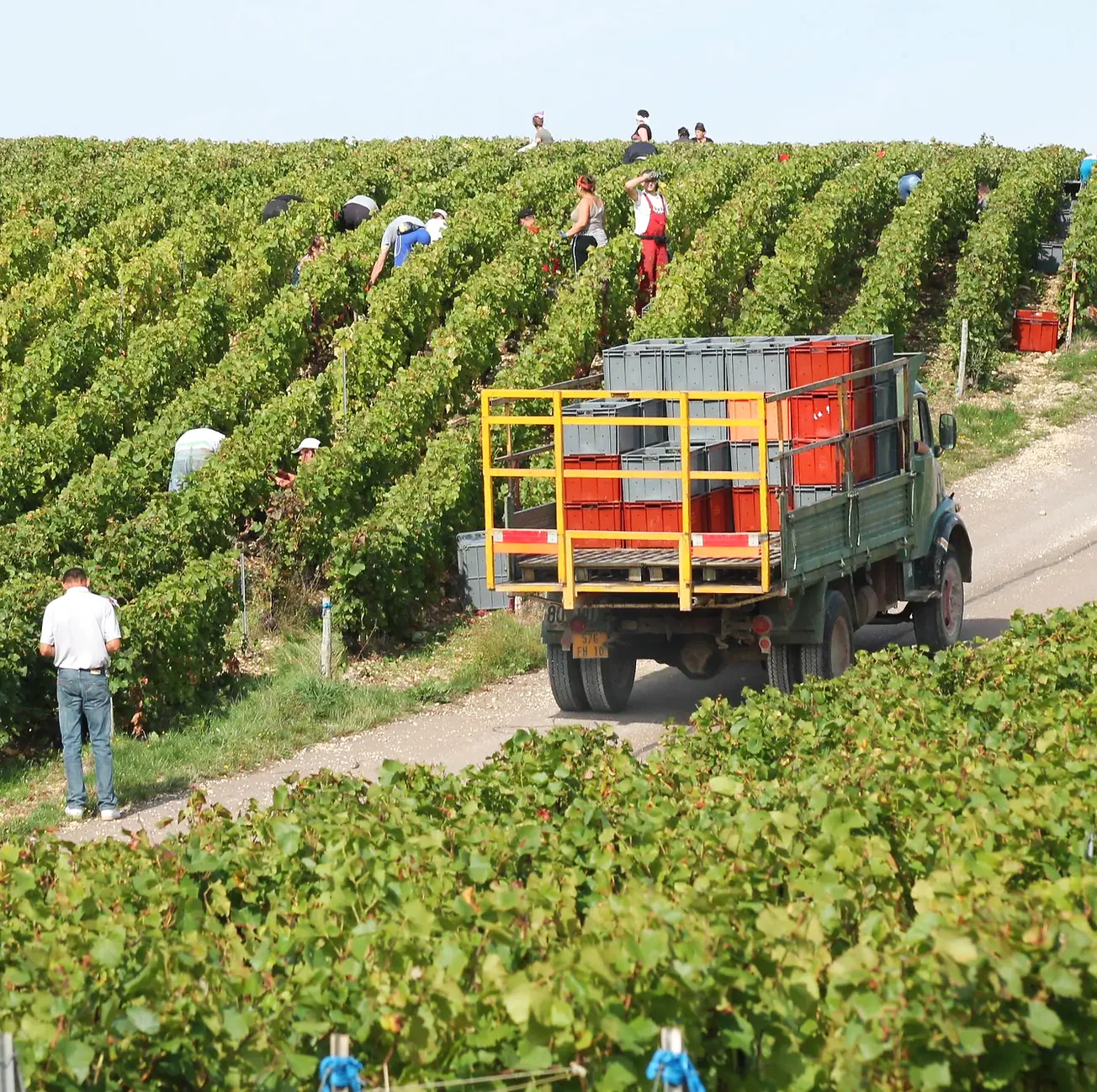
Summer pruning takes place after flowering, usually during the summer months, and often more than once. The timing needs thought. Cut too early or too hard, and the vine reacts with laterals (entrepousses), which push out from the leaf axils and thicken the canopy again. Remove too much leaf area, and the vine lacks the capacity to ripen the grapes properly. In a region where fresh acidity and sufficient ripeness both count, this balance is decisive.
Its place in canopy management
Summer pruning follows the training of the shoots upwards, the palissage, and sits alongside the removal of surplus shoots and the selective leaf removal around the bunch zone. Smaller, more traditional estates cut by hand or with hedge shears, while on larger plots a trimmer mounted on a tractor or straddle tractor does the work. This applies to all three main grape varieties of Champagne: Chardonnay on the Côte des Blancs, Pinot Noir on the Montagne de Reims and Meunier in the Marne valley.
Summer pruning is therefore not cosmetic. It steers where the vine sends its energy, keeps the grapes healthy and so influences the quality of the base wines from which the champagne is later made.
Pictures





 0 %
