
Millerandage, known in German as Kleinbeerigkeit, describes bunches carrying many small, often seedless berries alongside normal-sized ones. It usually results from a disrupted flowering, and in Champagne it is a familiar phenomenon, above all with Chardonnay.
What lies behind it
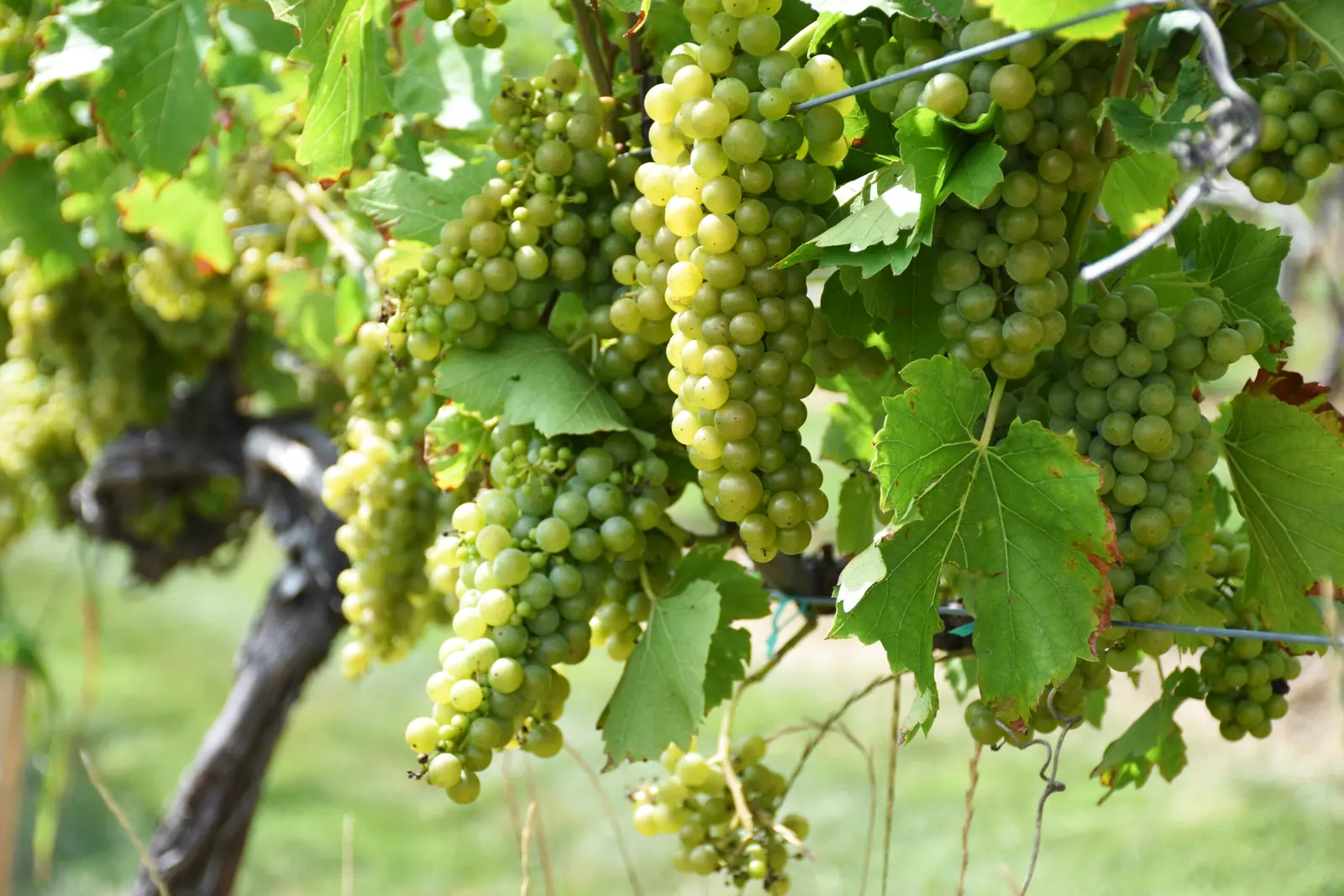
In early summer the vines flower, and every fertilised flower becomes a berry. If the flowering does not go smoothly, not all the flowers are fertilised equally well. The result is bunches with berries of very different sizes: normal berries beside distinctly smaller ones, which often contain few seeds or none at all. This is what is known as millerandage. In German it is called Kleinbeerigkeit, or sometimes Hühnerbeerigkeit, literally "hen berries".
Closely related is coulure, known as shatter in English. Here flowers or young berries drop off entirely, leaving the bunch full of gaps. The two problems often occur in the same year and even on the same vine.
Causes in Champagne
The trigger is usually the weather during flowering, which in Champagne normally takes place in June. Cool temperatures, rain, wind or too little light disturb fertilisation. Because Champagne sits at the cool limit of viticulture, a changeable flowering period is nothing unusual here. Nutrient supply and the vigour of the vine also play a part. Chardonnay is considered particularly susceptible, but Pinot Noir and Meunier can be affected too.
Effects on yield and wine
Yield falls, because small berries give less juice. The ratio of skin to juice also shifts in favour of the skin. Growers therefore often report more concentrated flavours and a lively structure. The bunches are also frequently looser, which can offer some protection against rot. None of this is certain, though: the outcome depends on the extent of the problem, the vintage and the site, and heavily affected bunches can also ripen unevenly.
The subject is especially relevant in Champagne because yields are limited anyway. The appellation sets a maximum yield (rendement) every year. If the crop is small because of a weak flowering, it hits growers financially, even though the quality of the remaining grapes can be very good.
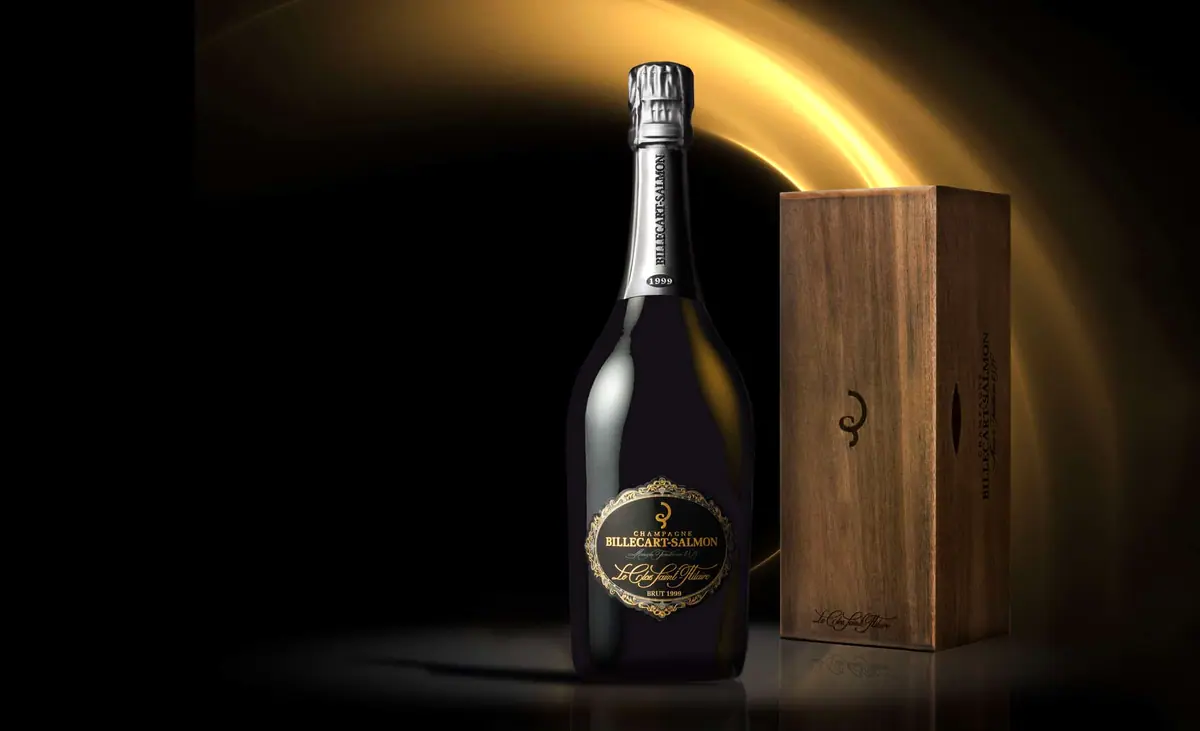 Billecart-Salmon Champagne
Dealing with it in the vineyard
Millerandage can hardly be prevented, since the weather cannot be controlled. Growers can, however, influence susceptibility through the choice of vine material and rootstock, canopy management and moderate fertilisation. At the hand harvest, the vendange, the pickers sort the bunches, so that very unripe or damaged parts can be set aside. Anyone tasting a vintage with a lot of millerandage will therefore not automatically find a weaker champagne, but often one with its own density and tension.
Pictures

 0 %
