
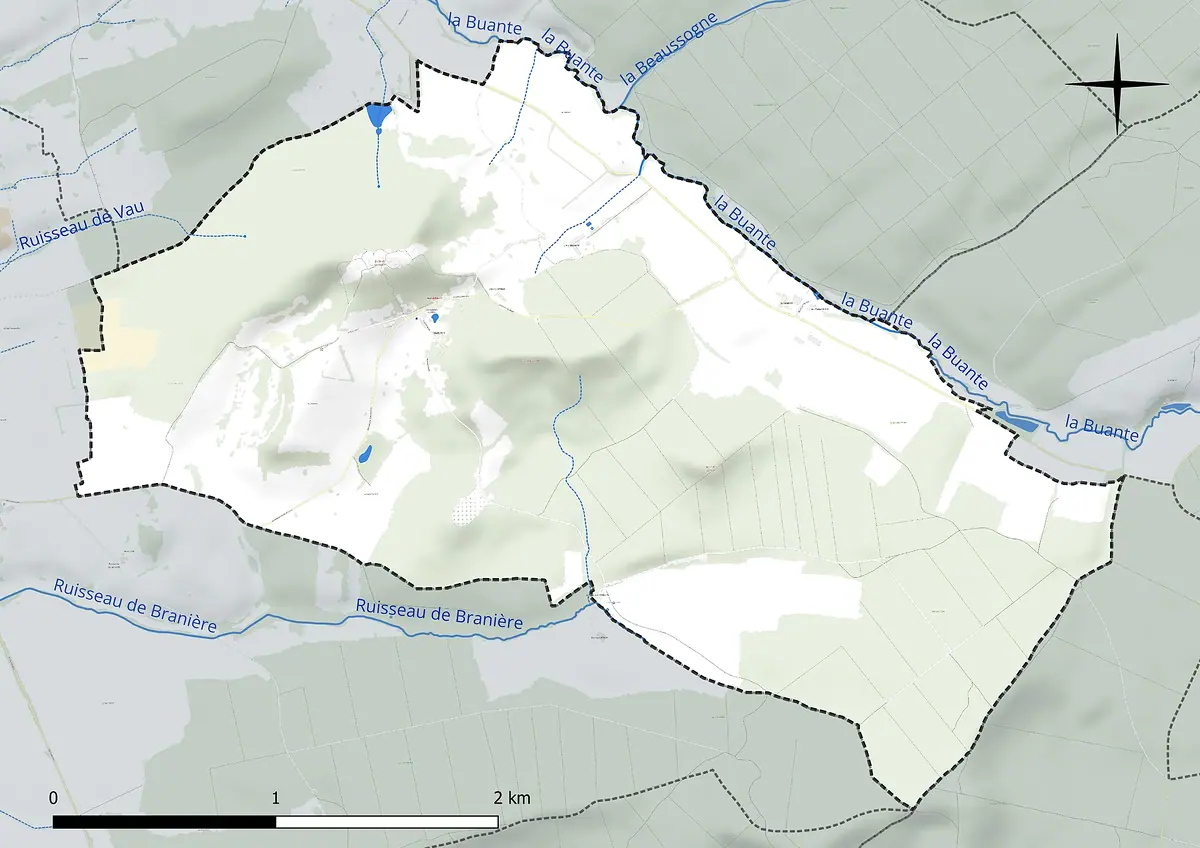
- Département
- Meuse (Grand Est region)
- Site
- Eastern edge of the Argonne, north-west of Verdun, outside the wine-growing area
- Inhabitants
- 23 (2023)
- Source
- Wikipedia, eigene Zusammenfassung
Vauquois is a tiny village in the Meuse on the edge of the Argonne. It has nothing to do with champagne. It is known for the Butte de Vauquois, the scene of one of the biggest mine wars of the First World War.
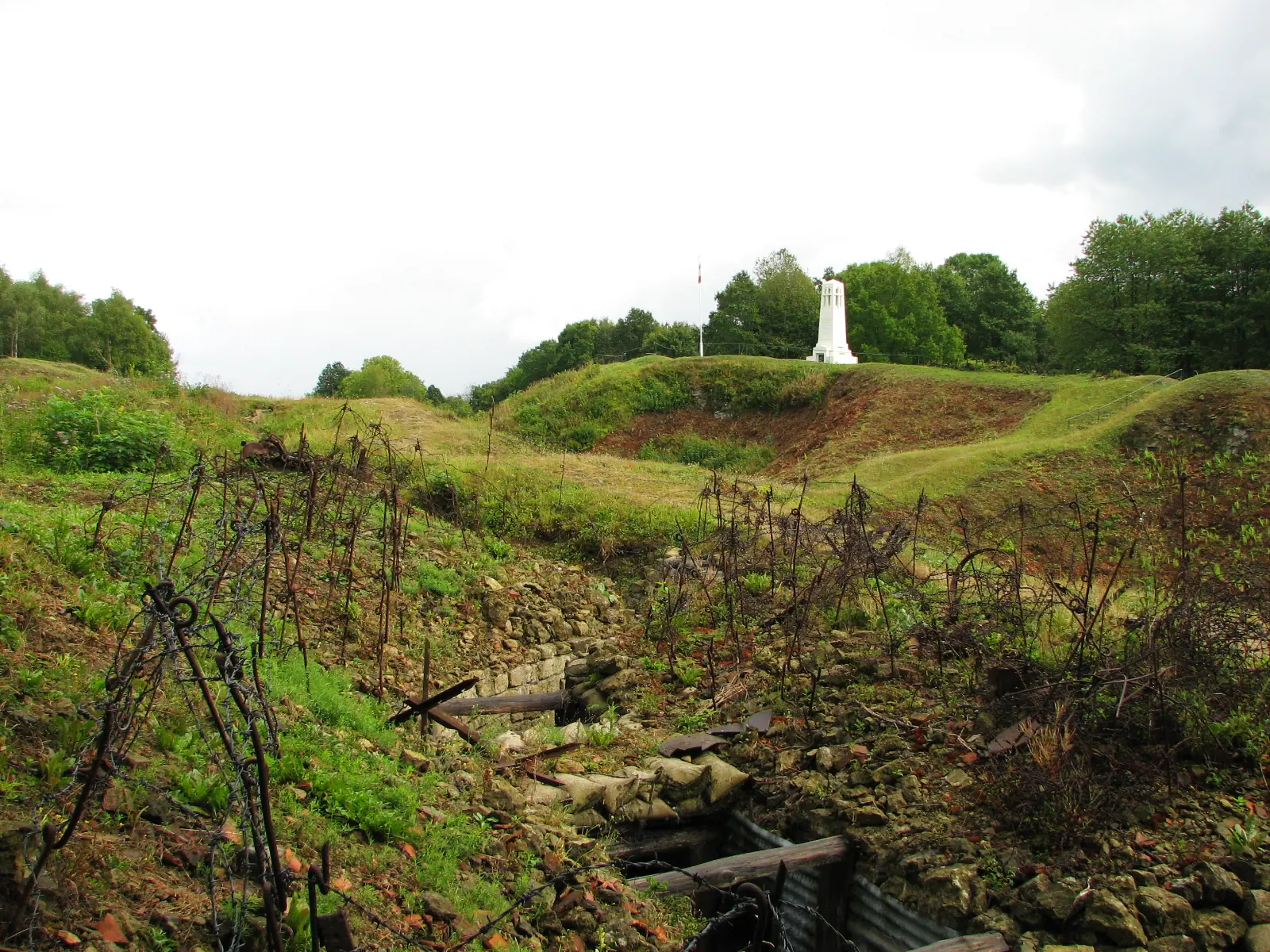
Location
Vauquois belongs to the département of Meuse in the Grand Est region, not to the Marne, the heart of champagne country. The village lies on the eastern edge of the Argonne, north-west of Verdun. The Argonne stretches between the Meuse, the Marne and the Ardennes, and so borders the Champagne. According to the source there is no viticulture in Vauquois: a good 57 per cent of the commune's area is forest, the rest meadow (as of 2018). The village has 23 inhabitants (2023) and counts as a rural commune with very scattered buildings.
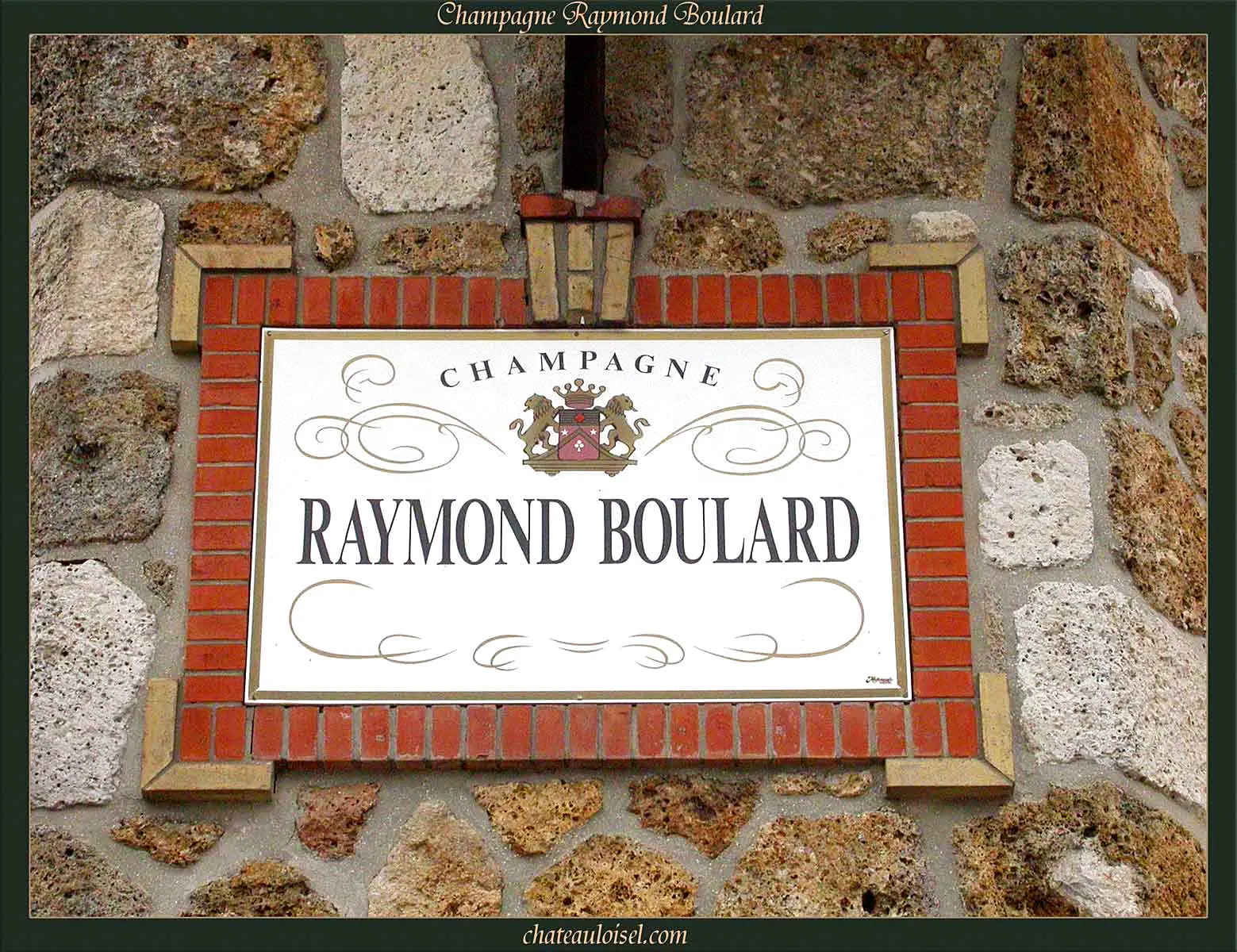
The defining feature is the Butte de Vauquois, a hill of 290 metres that rises about 130 metres above the plain.
History: a village disappears
The area was already settled in Gallo-Roman times. Until the First World War the village stood on top of the Butte. It was precisely this position that proved its undoing: from the heights one could survey the routes to Verdun and Sainte-Menehould and direct artillery fire. For that reason both sides regarded it as strategically important.
After the first fighting in the spring of 1915 it turned into a mine war. Both sides dug tunnels under the hill, packed them with explosives and detonated them before an attack. Around 519 detonations are on record, and some 14,000 soldiers lost their lives in the battle. The old village vanished completely. Only in 1918 did American troops break through the front. The future US president Harry Truman and the future General Patton also fought in this sector.
For that reason both sides regarded it as strategically important.After the first fighting in the spring of 1915 it turned into a mine war.
A fresh start at the foot of the Butte
Because of the munitions in the ground, the hill was declared a Zone Rouge. From 1920 the inhabitants rebuilt their village at the foot of the Butte, supported by the city of Orléans, home to many of the soldiers stationed here. The main street is still called Rue d'Orléans. The church of the Immaculée-Conception was rebuilt in 1928.
 Mercier Champagner History
What to see
- Butte de Vauquois: The deep craters and trenches on the summit can still be seen today. The Zone Rouge has been a protected monument since 1937.
- Memorial to the fighters and the fallen: It was erected on the Butte in the mid-1920s. The truncated pyramid carries a lantern of the dead, along with a soldier of 1915 and a lopped chestnut tree. The tree recalls the one felled by German machine guns because French artillery used it as a landmark.
- Military cemetery: 4,368 fallen French soldiers rest here.
- Tunnels: Some 14 kilometres of galleries are said to remain underground, partly collapsed. A society of volunteers looks after the site and offers tunnel tours on the first Sunday of every month, and for groups by arrangement.
A note for wine lovers
You will search in vain for champagne houses or vineyard sites in Vauquois. The village is a destination for anyone who, on a trip through the region, wants to learn something of its history alongside the cellars and vineyards.
Pictures

 0 %
