
Krug is a champagne house in Reims, founded by Johann-Josef Krug from Mainz. Connoisseurs regard its champagnes as a benchmark of quality, and some even call themselves 'Krugists'.
There are many outstanding champagnes and far more critical connoisseurs. Yet there are champagnes before which even the most critical experts doff their hats in unaccustomed unison: Krug is a champagne of this kind.
Some champagne lovers go so far as to call themselves 'Krugists' (French: Krugiste; German: Krugist). Krug champagnes have become their benchmark of quality, the standard by which every other champagne must be measured, because for a Krugist there simply cannot be a better champagne. End of discussion!
What is more, Krugists are often experienced wine connoisseurs who are not easily impressed by a wine brand. Even they wax lyrical about champagne from the house of Krug. Why? Because, for good reason, Krug is a truly special champagne.
Before we turn to how Krug champagnes are made, let us first look at the house's interesting history:
Johann-Josef Krug (1800-1866) came originally from Mainz in Germany. Later he became French by naturalisation (Jean-Joseph Krug). In 1834 he joined the already famous house of Jacquesson & Fils. In 1841 he married the Englishwoman Emma Anne Jaunay (1810-1879), sister-in-law of Adolphe Jacquesson (who was married to her younger sister Louisa Jaunay).
A brief note on the Jaunay family:
François Jaunay from Chantilly, closely tied to the French nobility in royal times, had fled to England during the French Revolution and went on to establish himself very successfully in the hotel trade (Brunet's Hotel, Jaunay's Hotel on the famous Leicester Square in London). There he married the Englishwoman Anne Howell. François Jaunay emigrated to Australia around 1839. His wife, however, moved to Châlons-sur-Marne to live from then on with her daughter Louisa Jacquesson.
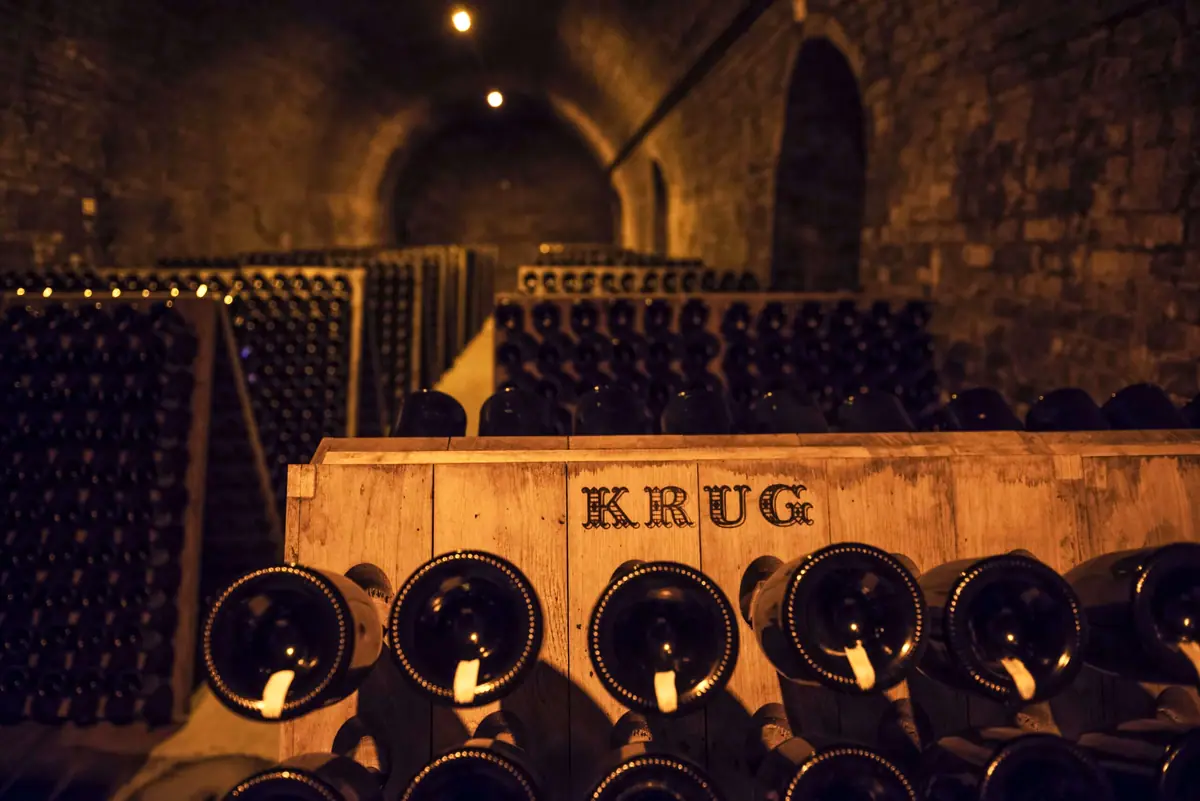 Krug Champagner Keller
In 1842 Emma Anne Krug gave Jean-Joseph Krug a son, Paul Krug (1842-1910).
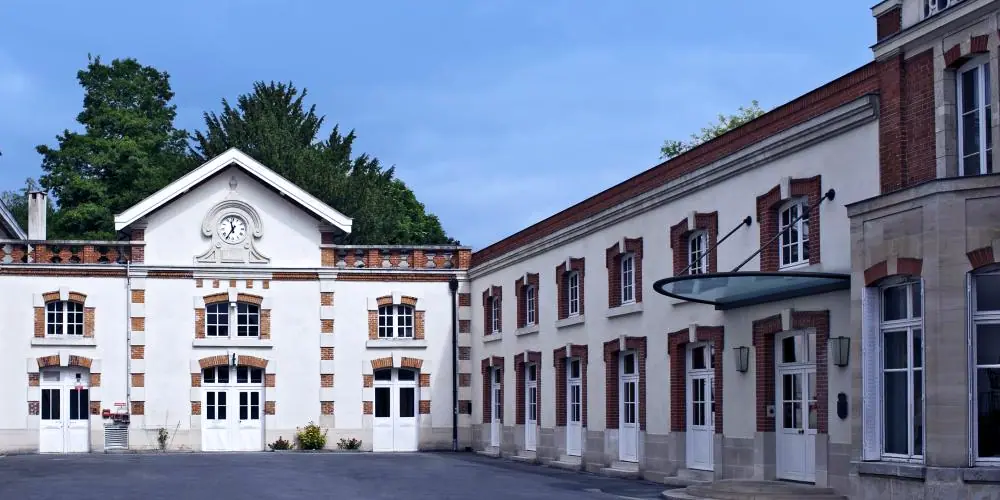
Eighteen months after his marriage, Jean-Joseph Krug left the house of Jacquesson and, together with his acquaintance Hyppolite de Vivès (a successful wine merchant in Reims), founded the house of Krug et Cie. in Reims. At first the house did not trade only in champagne but also offered other wines from the Champagne region. In the spring of 1845 Jean-Joseph Krug prepared the first cuvées for the young house (resulting in 40,842 bottles of champagne). The following year he began deliberately buying the finest grapes (at the time mainly from the village of Bouzy).
After Jean-Joseph's death, ownership of the business was divided between the widow Krug (25%), Hyppolite de Vivès (25%) and the son Paul Krug (50%). Shortly afterwards de Vivès retired and Paul Krug took over the running of the house. His diligence and great talent for making champagne of the highest quality brought outstanding success to Krug. Sales were particularly strong in England. In only his second year at the head of the business, through skilful assemblage of the best wines, he produced 207,048 bottles of champagne under the Krug name and a further 206,264 bottles for other houses.
Later he married Caroline Harlé (1846-1915). The marriage produced ten children, so the future of the family business seemed assured. The well-known author and historian John Stevenson, however, notes that apparently none of the children was interested in a future in the family firm. The eldest son, Joseph Krug (1868-1967), for example, was drawn to the sea. His father eventually managed to persuade him to join the business. After his father's death in 1910, he took over the venerable family firm.
Immediately after the outbreak of the First World War, Joseph Krug joined the French army, was wounded in the Battle of the Ardennes and was taken prisoner by the Germans. In the meantime his remarkable wife Jeanne Krug (née Jeanne Hollier-Larousse; 1880-1954) ran the business and produced the legendary 'Krug 1915'. When Joseph Krug returned from captivity in 1918, his health was badly damaged. The doctors gave him only a few more years and advised him against the demanding task of running his company.
His son Paul Krug II (1912- ) was still a small boy at the time. Krug therefore enlisted the help of his talented nephew Jean Seydoux. Quite unexpectedly, Joseph Krug recovered completely from his war injuries and remained actively involved in the business until he was 90.
The following years were marked by spectacular Krug champagnes. The well-known wine professional Ed McCarthy notes that the Krug 1928, which was recently served to him as an aperitif at a Burgundy tasting, was the best champagne he had ever tasted. According to McCarthy, 'the Krug' had, through its superb quality, overshadowed the actual Burgundy tasting before it had even begun.
 Krug Champagner
In 1935 Paul Krug joined his father Josef and his cousin Jean Seydoux and began working at the house. In 1941 he was appointed managing director, and in 1958 he took over Krug as its head. In 1962 Jean Seydoux died, having by then made an excellent name for himself in the production of the most exquisite champagnes. His father Joseph Krug died five years later at a great age.
By this time Krug had long been known as a master of making superb cuvées, whose grapes traditionally came from the best sites (rated 98% to 100%) belonging to other growers. Between 1970 and 1972 Paul Krug decided to buy first-class vineyards in strategic locations in Champagne, to give his champagne production a measure of independence through growing top-quality grapes of his own.
The Rémy-Cointreau group subsequently became a partner in the house of Krug and provided the financial strength to buy around 15 ha of vineyard. Of the Pinot Noir grape, so important for champagne, Krug now has nine ha of its own vineyards around Aÿ. Its supply of the elegant Chardonnay grape is secured by about 6 ha in the Le Mesnil-sur-Oger area, of which about 1.85 ha lie in the legendary Clos du Mesnil. These are exclusively grand cru sites (rated 100%).
The house's own vineyards thus cover about 20% of the grapes needed for its famous Grande Cuvée champagne. The wines from these sites form, so to speak, the foundation of the blends (the 'crus de base'), on which fantastic champagnes are built through skilful blending with up to 50 to 60 further base wines.
Paul Krug retired in 1977. His eldest son, Henri Krug (1937- ), was appointed managing director of the house and from then on was responsible for making the champagnes. His brother Rémi Krug (1942- ) is the house's commercial director and has for many years been a popular ambassador for Krug on the international stage. His daughter Caroline Krug, now representing the sixth generation, has also worked in marketing for years. Olivier Krug, Henri's son, is likewise a capable member of the team.
After decades in the service of Krug, the brothers Rémi and Henri Krug are already regarded as 'living legends' of the champagne world, not only for their uncompromising defence of traditional values in making their champagnes, but also for safeguarding champagne culture in general.
Although the house was bought in 1999 by the famous luxury group LVMH, the Krug family's independence in champagne production remains intact.
Henri Krug sees being part of the financially strong LVMH group as an advantage and remarked: "Now I can invest more in the cellar and in new casks. I can go on creating the same wine, but I can now be even more selective in production!" One example of this 'selectivity' is that Krug rejects 20 to 70% of the grapes offered to it from the best sites as not good enough for the quality it wants, and leaves them instead to other houses for their champagnes.
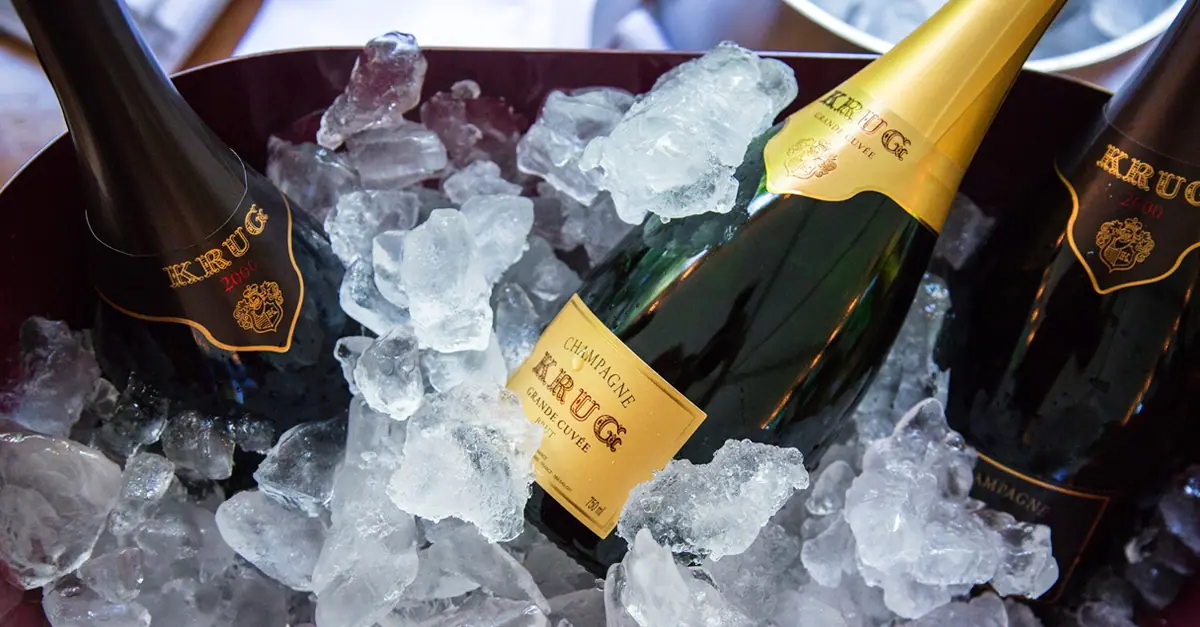 Krug Champagner
Let us now turn to the Krug champagnes themselves: what sets them apart from most other champagnes?
In the spring of 1845 Jean-Joseph Krug prepared the first cuvées for the young house (resulting in 40,842 bottles of champagne).
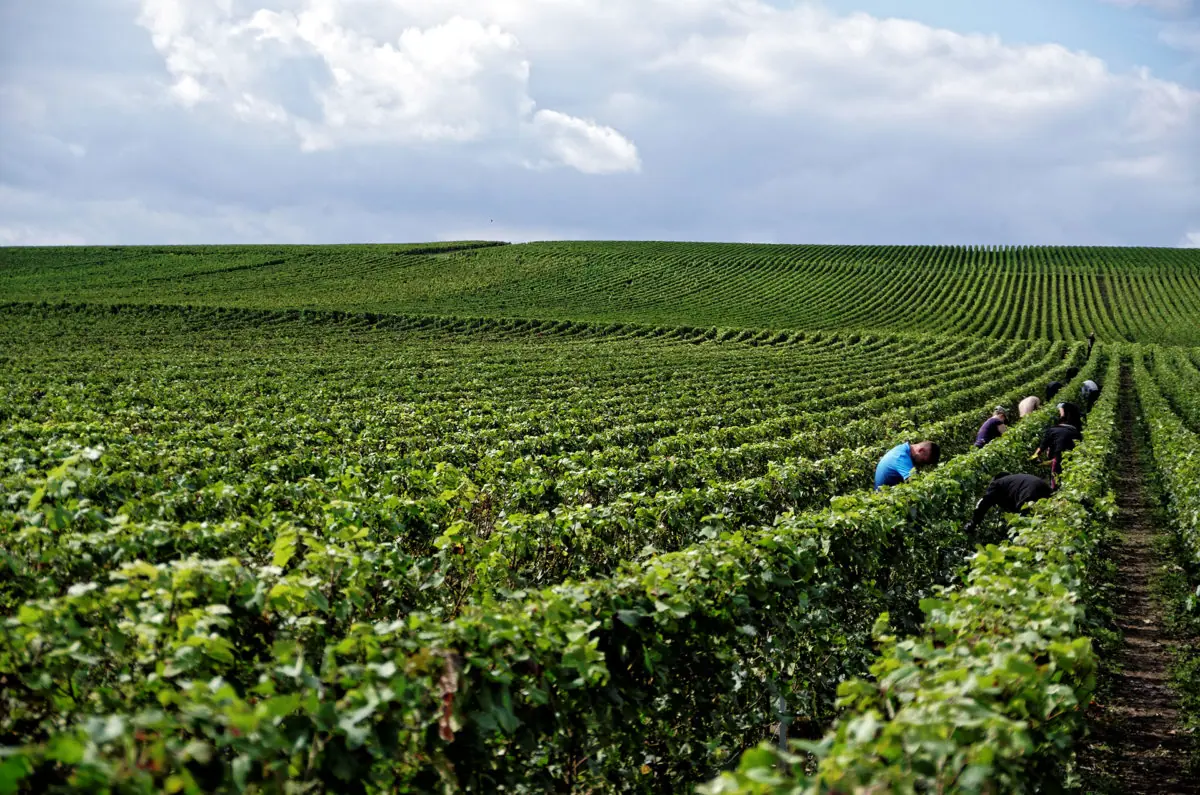
Krug lives by the old motto that good things take time. This begins with the harvest: every single berry should be perfect! Flawed berries are carefully picked out so as not to damage the perfect ones.
With almost 'religious fervour', the highest quality of the grapes is ensured long before the champagne is made. Its own vineyard in the Clos du Mesnil is an example of this unrivalled quality control: Rémi Krug notes that the harvest of this relatively small vineyard could be completed in a single working day. But it happens that some vines look ideal on Monday, while others should only be picked on Wednesday or Thursday. Krug expects the same uncompromising attitude to quality from its grape suppliers. Only the best grapes are accepted. In addition, only the must from the first pressing is used (see also taille).
For the (first) fermentation Krug uses only small oak casks. A 205-litre oak cask of this kind is called a pièce. These Argonne oak casks are sometimes 30 years old. More than 3,300 of these tried and tested casks are in use at Krug. New oak casks bring flavour nuances such as vanilla or coffee and give natural tannins, which other producers actually covet. Krug, however, prefers older casks, since ageing in old casks gives a particular suppleness.
The 'woody' taste imparted by new casks is not wanted. Instead, the aim is a hint of toast along with subtle caramel and nutty notes.
The wine should unfold in its natural environment, pure, round and rich. About 10% of the old casks are retired each year and replaced by new ones. At Krug, however, new casks must first 'mature' before they are used: first they are soaked in a hot water solution. Then, for up to three years, they are used only to store surplus wines, which of course are not destined for Krug champagne but are sold on elsewhere (for brandy production, for example). Only after that are the casks suitable for fermenting Krug's high-quality wines.
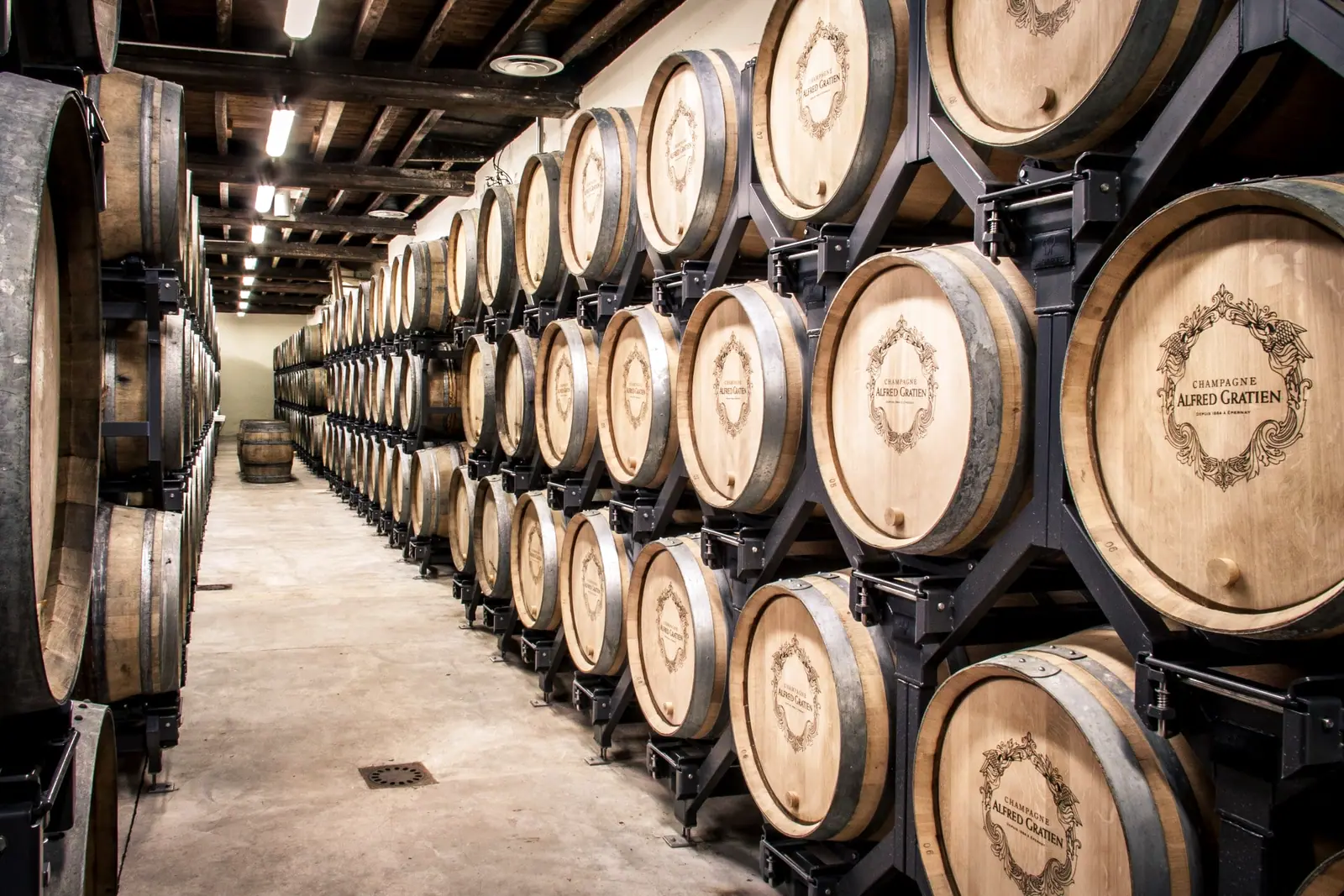
The effort involved with the casks is enormous and very costly. The casks are stacked like pyramids and sorted by site and grape variety. After the initial filling they must be carried by hand to the stacking area. Later racking from one cask into another means the emptied cask has to be properly cleaned and maintained.
During fermentation the small oak casks allow a natural, barely perceptible exchange of oxygen through the pores of the wood. This leads to slight oxidation of the wines and apparently contributes to the widely known exceptional keeping quality and longevity of Krug champagnes. Malolactic fermentation is not encouraged either, but at best takes place quite naturally, more or less of its own accord, during the long ageing of the champagne. The wines also pass through no filtration equipment but clear by themselves in the casks during the long storage. Later the wines are transferred by gravity from a higher cask into another. The sediment stays behind in the emptied cask.
 Pol Roger Champagner Keller
Krug has always been known as a true master of assemblage, the skilful blending of up to 60 different wines from 20 to 25 different sites. Six to ten different vintages can come into play to capture the world-famous, demanding Krug flavour in yet another Grande Cuvée. The formula of the 'Krug style' is written down nowhere but is passed from one generation to the next through plenty of practical experience and constant collaboration. Despite the different roles family members play in the daily life of the company, they work together on blending the cuvées.
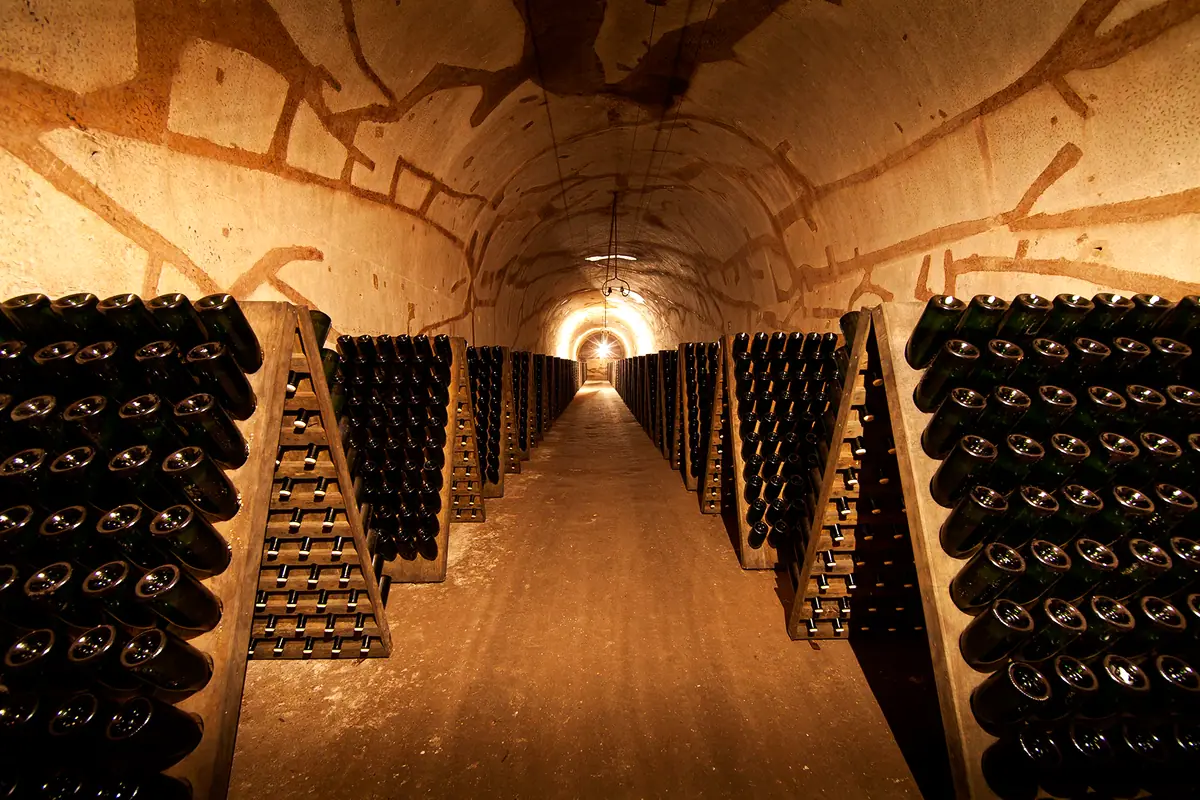
At the end of the production process, Krug champagnes are aged in bottle for an exceptionally long time. The Grande Cuvée, for example, the 'flagship' of Krug, benefits from at least six years 'on the lees'. The typical ageing time for Krug vintage champagnes is between seven and 15 years.
After all this effort and attention to detail, what is finally released is a champagne that almost always ranks among the best in the world. In professional tastings they have always regularly scored over 90 points. Krug champagnes also disprove many of the usual rules that apply to most other champagnes:
- While many champagnes (especially non-vintage ones) are not suited to additional long-term cellaring, Krug champagnes are often ideal for it, so much so that they clearly have speculative value, much like many a great Burgundy.
- While a champagne should usually reach a proper serving temperature (8° to 11°C) before it is poured, Krug champagnes often show better at a few degrees warmer.
- While champagne is generally regarded as the best aperitif of all, Krug champagnes are better suited as fantastic companions to almost any meal. With rich and varied flavour nuances, they need not hide even from the 'power' of many of the heavy reds supposedly prescribed for certain dishes. They win you over instead with their own strength and the bonus of the finesse and lightness of a true champagne. Add the visual pleasure of the fine mousse of a golden Krug, and you can quickly become a convinced Krugist.
Krug offers several champagnes:

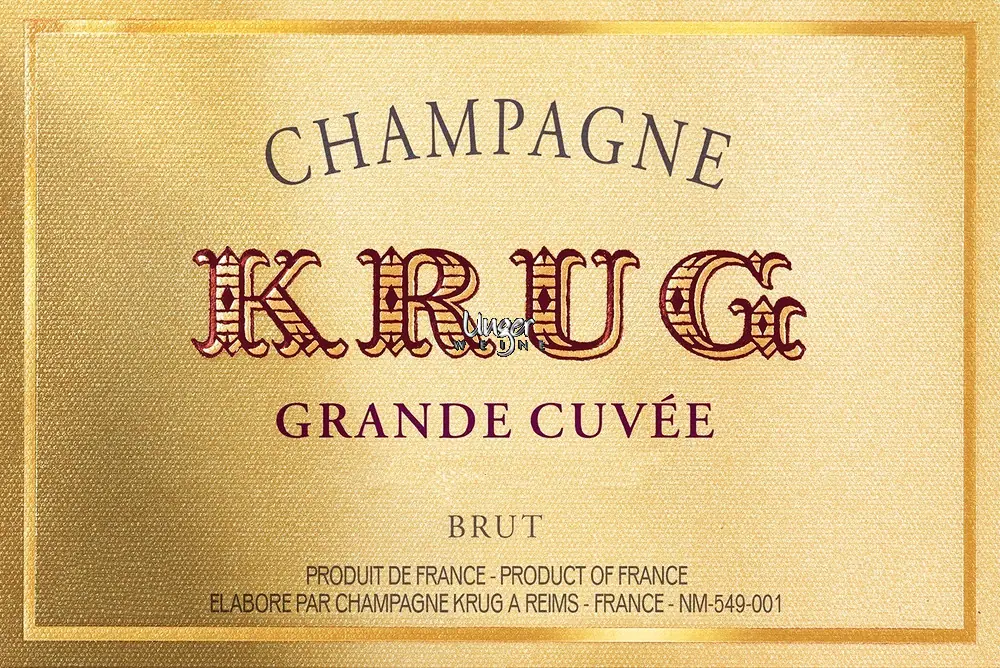
As already noted, the Grande Cuvée is regarded as the flagship of Krug. It embodies the house's basic flavour profile. At the same time it accounts for 65% to 80% of the house's production. To make it, 50 to 60 wines from up to 25 sites and six to ten vintages are blended. It is therefore understandable that Krug resists the usual label 'non-vintage' and, with good reason, would rather see the Grande Cuvée understood as 'multi-vintage'. The grape varieties are about 45 to 55% Pinot Noir, 10 to 15% Pinot Meunier and 30 to 45% Chardonnay. Many wine professionals recommend a further one to two years of proper storage after release for this 'multi-vintage champagne' (some connoisseurs even recommend up to ten years).
 Billecart-Salmon Champagner 200
The proportions of grape varieties in Krug vintage champagnes (Krug Vintage Brut, Krug Millésimé) vary. The typical ageing time is seven to 15 years. For the first time in Krug's history, incidentally, three vintages came to market one after another (though not in chronological order): the 1989, then the 1988 and finally the 1990. Krug traditionally declares only outstanding years as vintage champagnes under its name, so this is a great rarity.
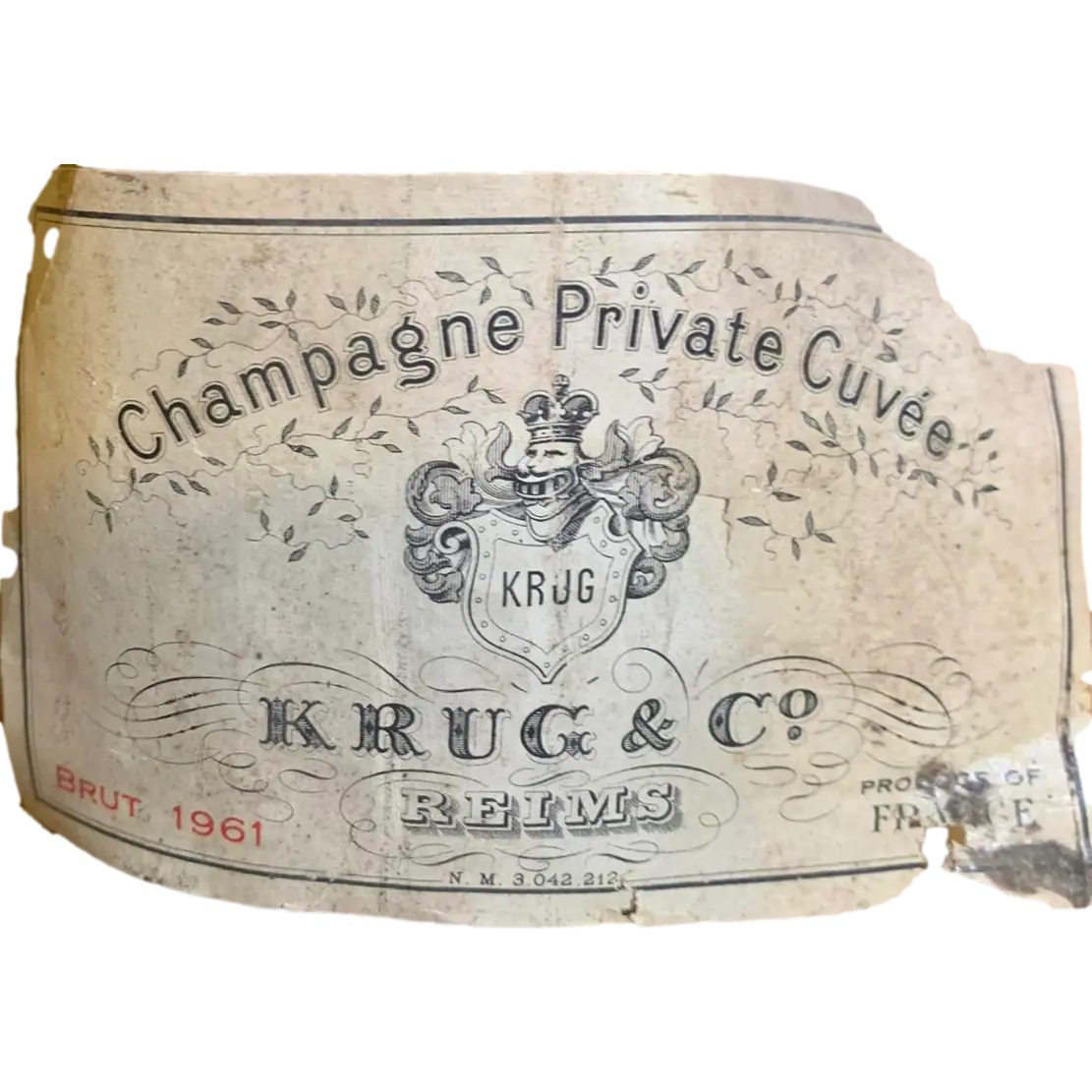
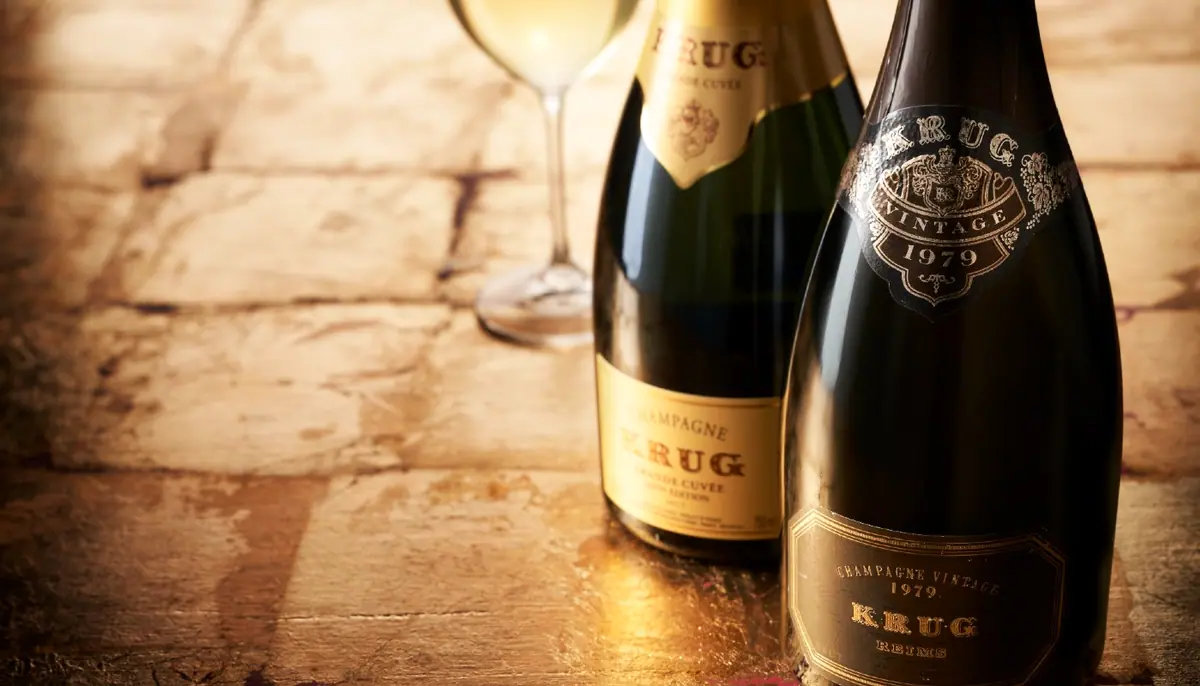
Vintages such as 1982, 1979, 1976, 1975, 1973, 1969 and 1964 are today regarded as first-class and are highly sought after. Even the 1961, the last vintage Paul Krug himself produced, is still considered an excellent champagne and a great treasure (a Krug 1961 fetched US$1,497 at the famous auction house Sotheby's in London a few years ago).
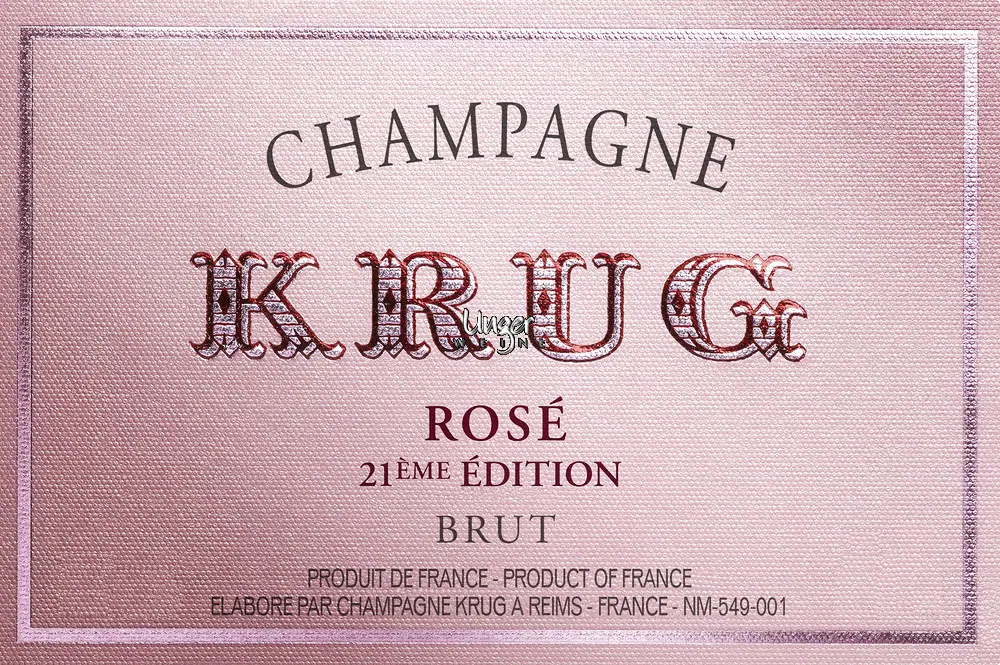
The Krug Rosé, first introduced by Henri Krug in 1983, is another multi-vintage champagne. It is very fruity and full-bodied, and at the same time very dry. It is regarded as a serious, complex champagne, created from an extremely sophisticated assemblage from many sites and up to six vintages. It consists of about 50 to 55% Pinot Noir, about 20% Pinot Meunier and 25 to 30% Chardonnay, with the addition of a still red Pinot Noir wine from the Aÿ area. In colour it is not the typical 'pink' of many other rosé champagnes but considerably paler. This is not a champagne for novices. It is more for connoisseurs, who pair it deliberately with matching culinary specialities, a harmony that creates a new whole of enjoyment.
Krug, however, has another jewel in store: the famous Krug Clos du Mesnil! This is a very special blanc de blancs, made exclusively from the grapes of a small walled vineyard (a 'clos') in the wine village of Le Mesnil-sur-Oger. According to a plaque there, the wall around the vineyard (or rather 'walled garden') was built in 1698. Until 1750 it belonged to the Benedictine monastery of Le Mesnil, and among locals in this largest wine village of the Côte des Blancs the vineyard is still known by its old name, 'Clos Tarin'. In 1971 Krug bought this precious vineyard. The purchase is regarded as a strategically clever expansion for Krug, which had already been buying grapes there for its champagnes for over a century. Krug also renovated the house and cellars that belong to it.
With the 1979 vintage, Henri Krug dared for the first time to make a Krug Clos du Mesnil. This champagne proved outstanding and scored 98!
Further vintages have been produced since: 1981, 1982, 1983, 1985, 1986, 1988 and 1990. Among these uniformly excellent vintages, 1982, 1985, 1988 (99 points!) and 1990 stand out in particular.
 Autochthon Champagner
In their youth the Krug Clos du Mesnil show enormous acidity and demand long ageing (twelve to 15 years is typical) in the house's cellars. After that they present themselves to the drinker as a dreamlike champagne. Their great mosaic of seductive aromas offers a rich spectrum from fresh bread and nuts to citrus fruit. With long ageing in Krug's own cellar, a Clos du Mesnil improves still further. These champagnes are a true rarity: with only around 10,000 bottles produced, they are a coveted collector's item among wine lovers. Only about 2,200 bottles reach the US market, where they trade at US$300 to 500.
Finally, there is Krug Collection to mention. These champagnes differ only slightly from the Krug vintage champagnes. They have benefited from many additional years on the lees, deep in the house's cellars. Krug releases these Collection champagnes only sporadically, usually in handsome wooden boxes. On the market at present are, for example, the 1973 Collection and the 1976 Collection. As the name suggests, they are choice collector's items, though of course they are also excellent champagnes to enjoy. The price of the Collection champagnes, however, tends to put off ordinary mortals (US$300 to 400 for a standard bottle is not unusual in the USA).
There are many champagne fans who have never tried a Krug. One reason is that even the Krug Grande Cuvée is considerably more expensive than other non-vintage champagnes (on the US market it costs around US$100). But every champagne lover should choose a Krug at least once as a stylish, exquisite companion to a festive meal.
 0 %
