

Mating disruption is a biotechnical method of controlling grape moths in the vineyard. Synthetic sex pheromones stop the moths from finding each other and mating.
Mating disruption, known in Champagne as confusion sexuelle, protects vines from moth caterpillars without attacking them directly. The focus is on the two grape moths: the grape berry moth (Cochylis, Eupoecilia ambiguella) and the European grapevine moth (Eudémis, Lobesia botrana). Both are among the most important animal pests in viticulture.
The principle
The females attract the males with a species-specific sex scent, a pheromone. With mating disruption, the grower releases this scent synthetically in the vineyard. Small containers, known as dispensers, are hung in the vine rows and give off the substance evenly. The air becomes so saturated with the lure that the males can no longer locate the females. Mating becomes rarer, fewer fertilised eggs are laid, and fewer caterpillars hatch.
Why it matters in the Champagne vineyard
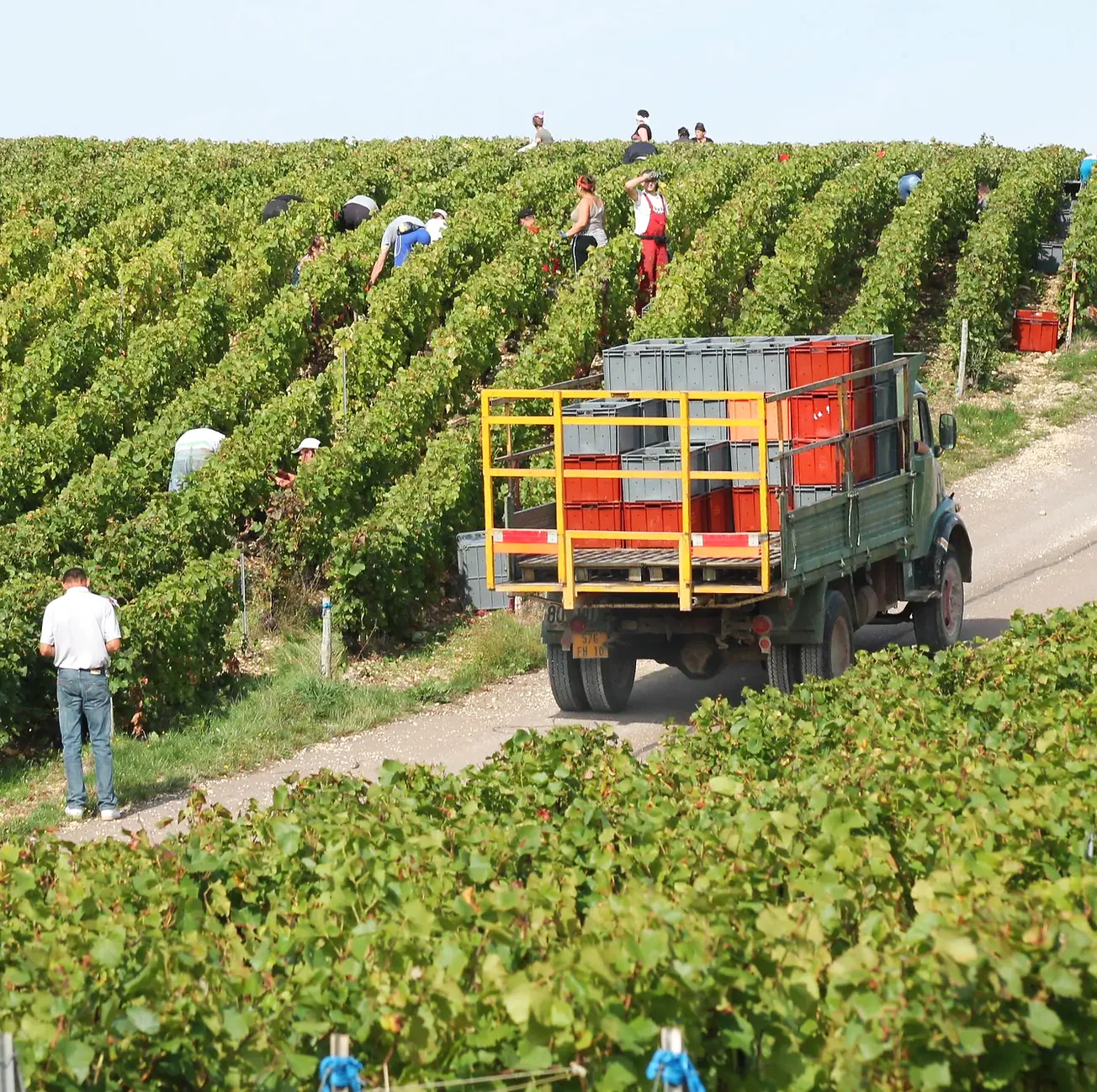
The caterpillars of the first generation feed on the flower clusters, those of the second on the berries. Damaged berries are an entry point for grey mould and sour rot. This can make the harvest harder and reduce the quality of the fruit. Chardonnay, Pinot Noir and Meunier are often trained close to the ground in Champagne and are prone to rot in the damp climate, so healthy fruit is the foundation for clean base wines. Mating disruption replaces many insecticide treatments and fits with the region's efforts towards more sustainable viticulture. It is also permitted in organic farming.
Use and limits
The dispensers have to be put out before the first moth flight in spring, usually by hand. Area is decisive: the method works best when many neighbouring plots take part, because mated females can fly in from outside. With small, fragmented plots, which are common in Champagne, coordination among growers is therefore important. Where pest pressure is very high, another measure may be needed as well. Wind and sloping sites affect how the scent is distributed.

One advantage is selectivity: the pheromones act only on the target species and spare beneficial insects such as predatory mites or lacewings. Residues on the grapes are not an issue either, since the scent is not sprayed. Mating disruption is thus a good example of how the biology of a pest can be put to use in crop protection.
Pictures









 0 %
