
Coulure (known in German as <em>Verrieseln</em>) is the dropping of flowers or newly set fruit from the vine after flowering. The bunches carry fewer berries as a result, and yields fall.
In early summer, the vineyard decides how big the harvest can be. The vine flowers, and every fertilised flower is meant to become a berry. With coulure, this only partly succeeds. Some of the flowers or tiny young berries drop off, and the bunch is left with gaps.
Causes
The main trigger is the weather during flowering. Cool, rainy and windy days disrupt pollination and fertilisation, as does a lack of light, which weakens the vine. Other factors come from the vineyard itself: very vigorous shoot growth that draws nutrients away from the bunch, a shortage of trace elements such as boron, and drought stress or waterlogging. Usually several causes act together.
Coulure and millerandage
Coulure is often confused with millerandage (known in German as Durchrieseln). Here the flowers are fertilised, but they develop unevenly: alongside normal berries hang small ones, usually seedless. Both phenomena have similar triggers and often occur together, even though they look different on the bunch.
Why it matters in Champagne
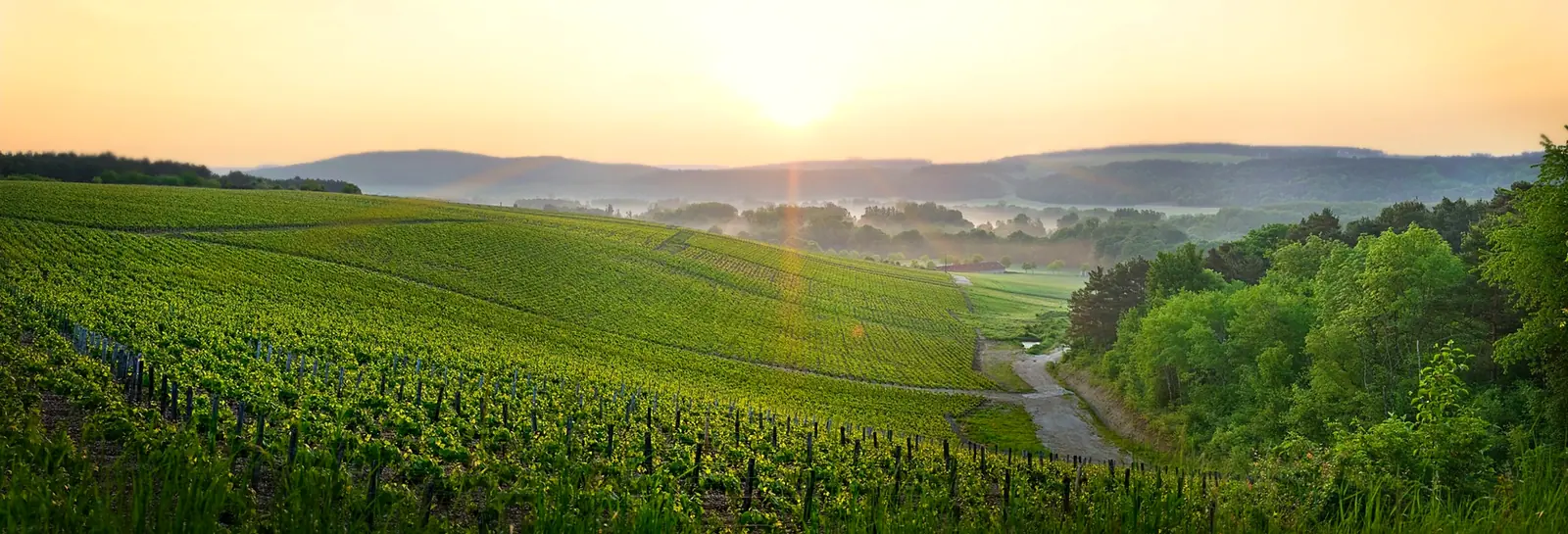
Champagne sits at the climatic edge of what is viable for viticulture, and flowering falls at a time of year when the weather can still be fickle. Chardonnay is considered especially vulnerable, while Pinot Meunier, which flowers later, runs less risk in some sites. Because the appellation sets maximum yields and the harvest date follows the flowering date, a failed flowering is not only a question of quantity. It also shifts the character of the vintage and the planning of the houses. Those with reserve wines in the cellar are better placed to absorb the shortfall.
Prevention and consequences
Coulure cannot be prevented entirely. Growers rely on well-matched rootstocks and clones, avoid excessive nitrogen fertilisation and manage the canopy so that the vine does not pour its energy into too much growth. The consequence of coulure is a smaller crop, but not necessarily poorer quality. Loose bunches dry faster after rain, which reduces the pressure from rot, and the remaining berries can turn out more concentrated. For the grower it remains a financial risk all the same, and one that can only be gauged after flowering.
Pictures






 0 %
