
Marl (<em>marnes</em>) is a sedimentary rock made of limestone and clay. In Champagne it shapes above all the slopes and soils outside the purely chalky zones, especially in the south, in the Aube.
What marl is
Marl forms when lime mud and fine clay particles mix on the floor of a marine basin. Depending on the proportions, you speak of clayey limestone marl or calcareous clay marl. The rock is softer and denser than pure chalk, weathers into heavy, fine-grained soils and holds water considerably longer.
Marl in Champagne
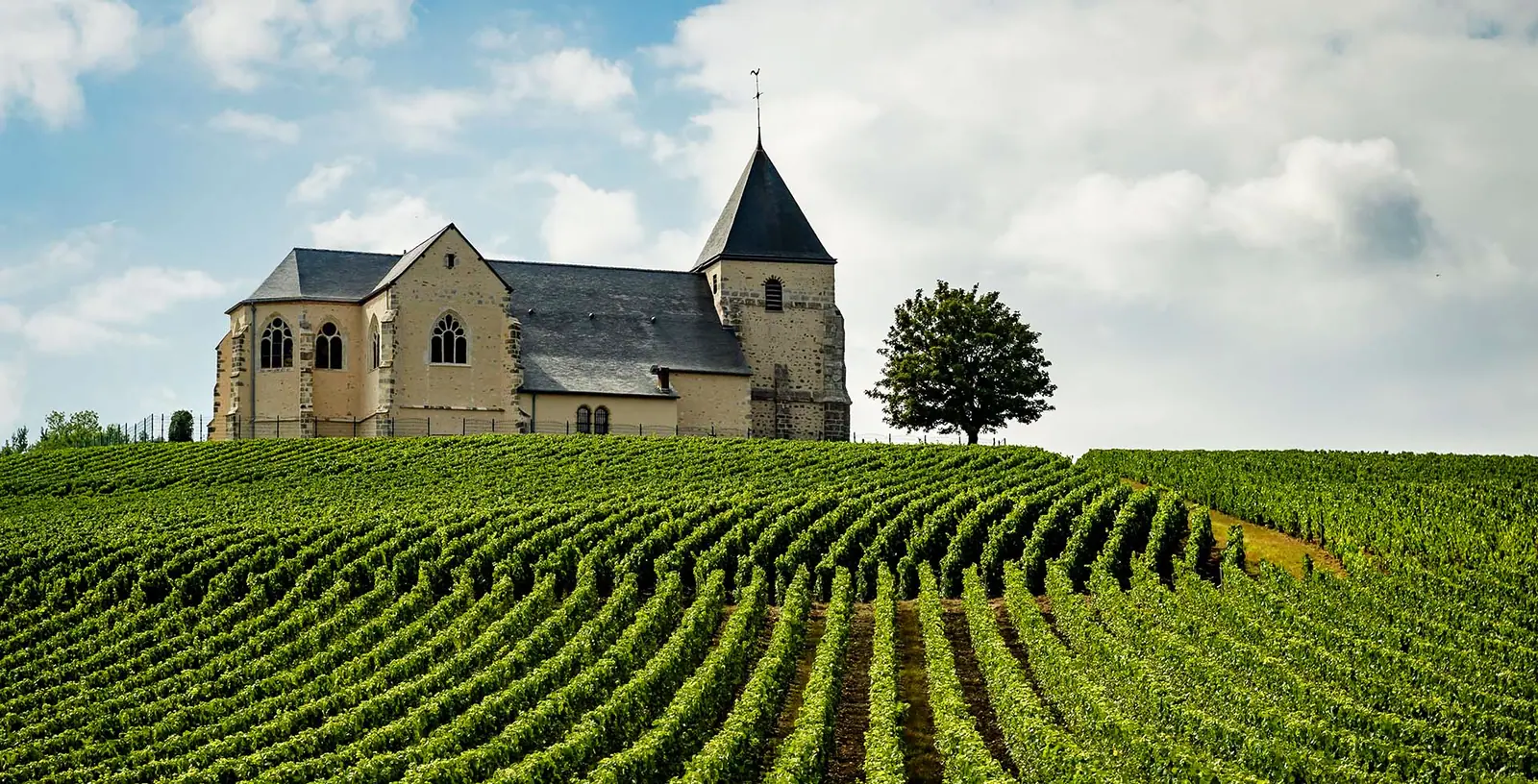
Champagne is known as chalk country, and indeed the famous craie lies beneath the Montagne de Reims and the Côte des Blancs. But the picture is more varied. On many slopes, younger layers of clay, marl, sand and loam sit above or beside the chalk. Marl is most obvious in the south, in the Côte des Bar in the Aube département. There the soils come from the Jurassic, mainly the Kimmeridgian, and are marked by limestone marls. Geologically they are related to the soils of Chablis.
Effect in the vineyard
Marl soils store moisture and release it to the vines in dry spells. They warm up more slowly than sandy soils and slow down water drainage, which can also be a drawback in very wet years. For the wine, this often means more body, fullness and a ripe, powerful fruit. The taut, salty-mineral line we associate with chalk then recedes somewhat. This is a rule of thumb, because site, aspect, grape variety and vintage always play a part.
On clay-rich soils Pinot Noir and Pinot Meunier often feel particularly at home. Chardonnay, by contrast, gives its most precise wines on the chalk of the Côte des Blancs. In blending, cellar masters use these differences deliberately to balance structure, fruit and freshness.
How it differs from chalk
Chalk is porous and permeable, acting like a water reservoir with good drainage. Marl is more compact and releases water more stubbornly. Both rocks contribute to the diversity of Champagne. If you compare grower champagnes from different zones, you can often follow this difference in the glass: where marl dominates, the wines tend to feel rounder and broader, where chalk dominates, slimmer and tauter.
Pictures



 0 %
