
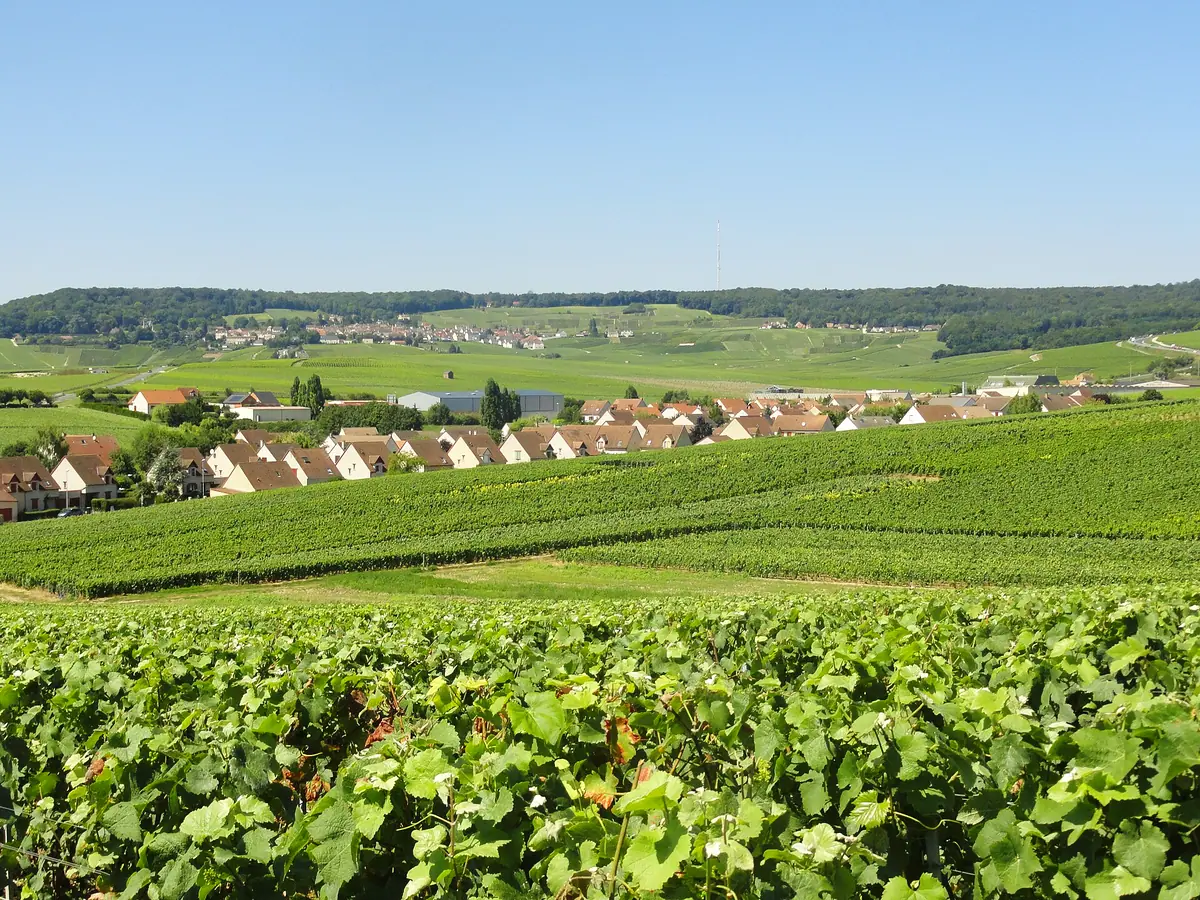
Chalk is the soft, porous limestone beneath much of Champagne. It stores water, gives the wines tension and minerality, and made the region's cellars possible.
Dig into the soil almost anywhere in Champagne and you soon hit pale, soft limestone. This is chalk from the Upper Cretaceous, formed from the calcareous shells of tiny marine organisms that settled on the floor of a warm, shallow sea. In French it is called craie. It forms the geological foundation of the region and is regarded as a cornerstone of its terroir.
What chalk does in the vineyard
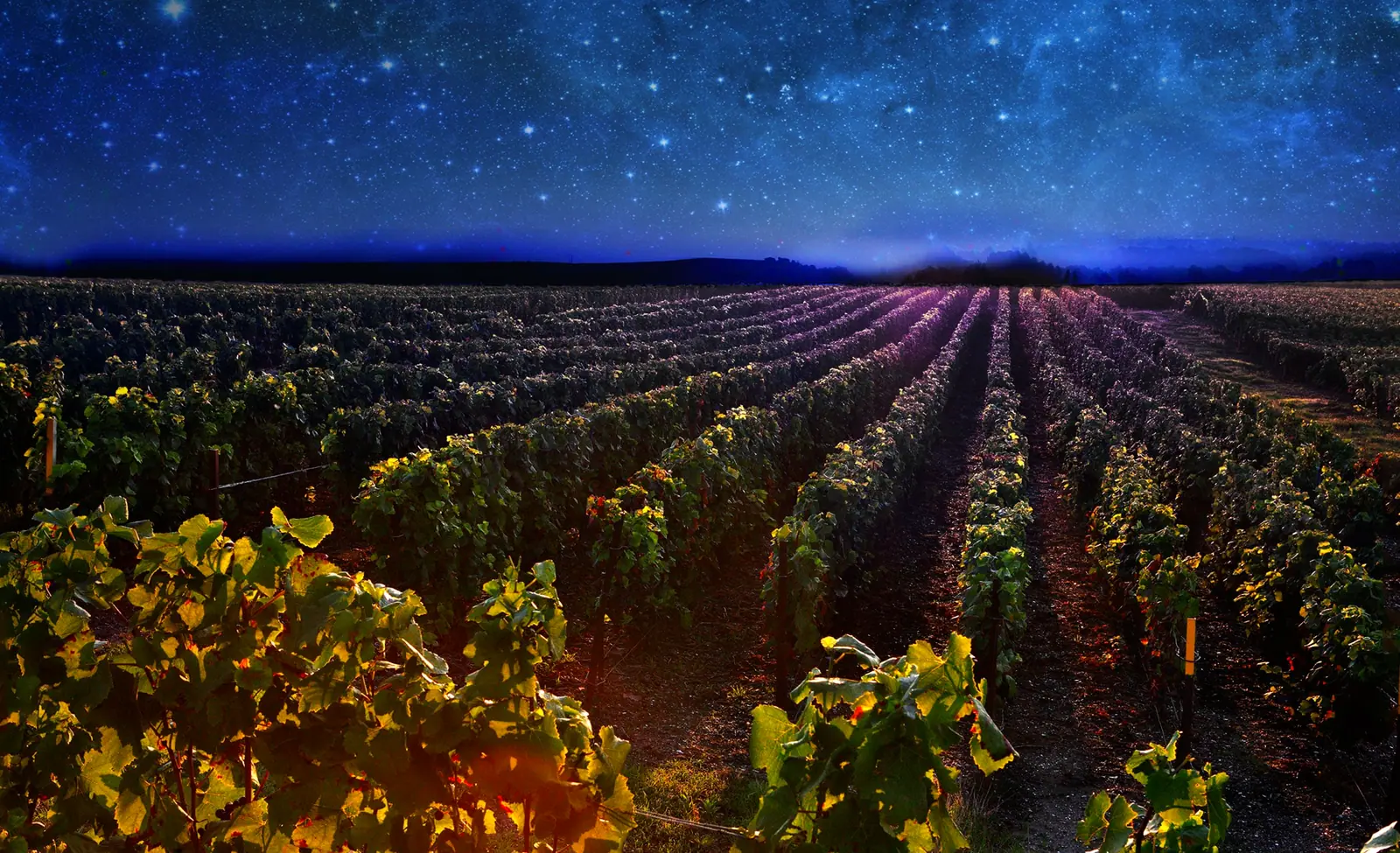
Chalk is highly porous. It soaks up rainwater like a sponge and releases it slowly in dry spells. The vines are therefore less prone to drought stress, and waterlogging is rare because excess water drains away well. At the same time, the poor, lime-rich soil forces the roots to dig deep. Being pale, the rock also reflects light back up, which can help the grapes to ripen.
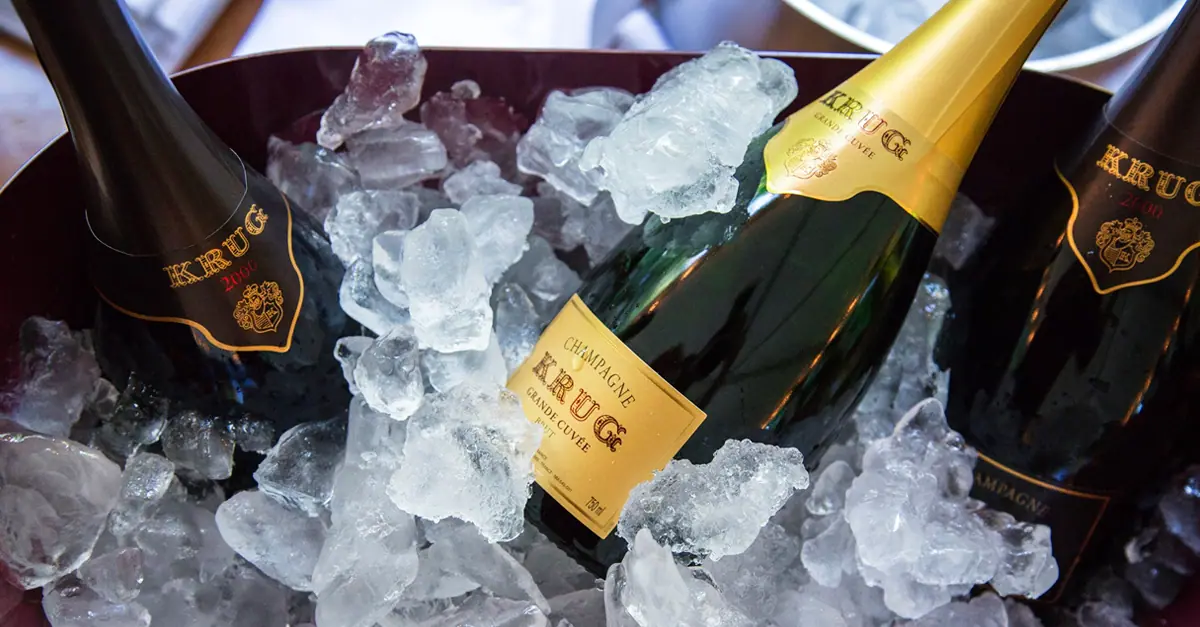
In the glass this often shows as taut acidity, salty or chalky notes and a fine, long-lasting structure. The connection is clearest in Chardonnay from the Côte des Blancs, but Pinot Noir and Meunier benefit from the subsoil too.
Not the same everywhere
Chalk is not simply chalk. Geologists tell the layers apart by, among other things, index fossils such as belemnites or sea urchins of the genus Micraster. Depending on the site, the rock lies just below the surface or is covered by clay, sand or marl. How deep the roots can reach down to the chalk shapes the character of a plot. In the south, in the Aube, other limestone and marl soils dominate, so chalk does not play the leading role there.
Chalk underground: the cellars
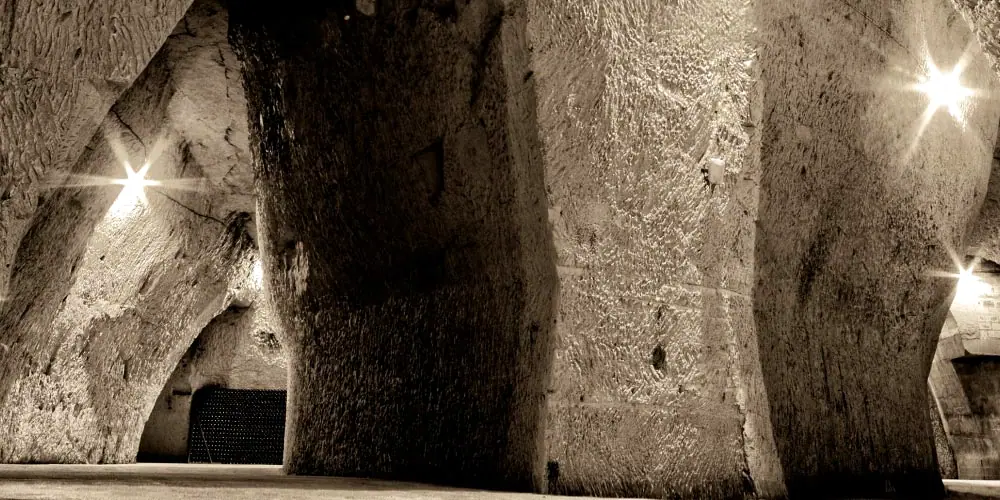
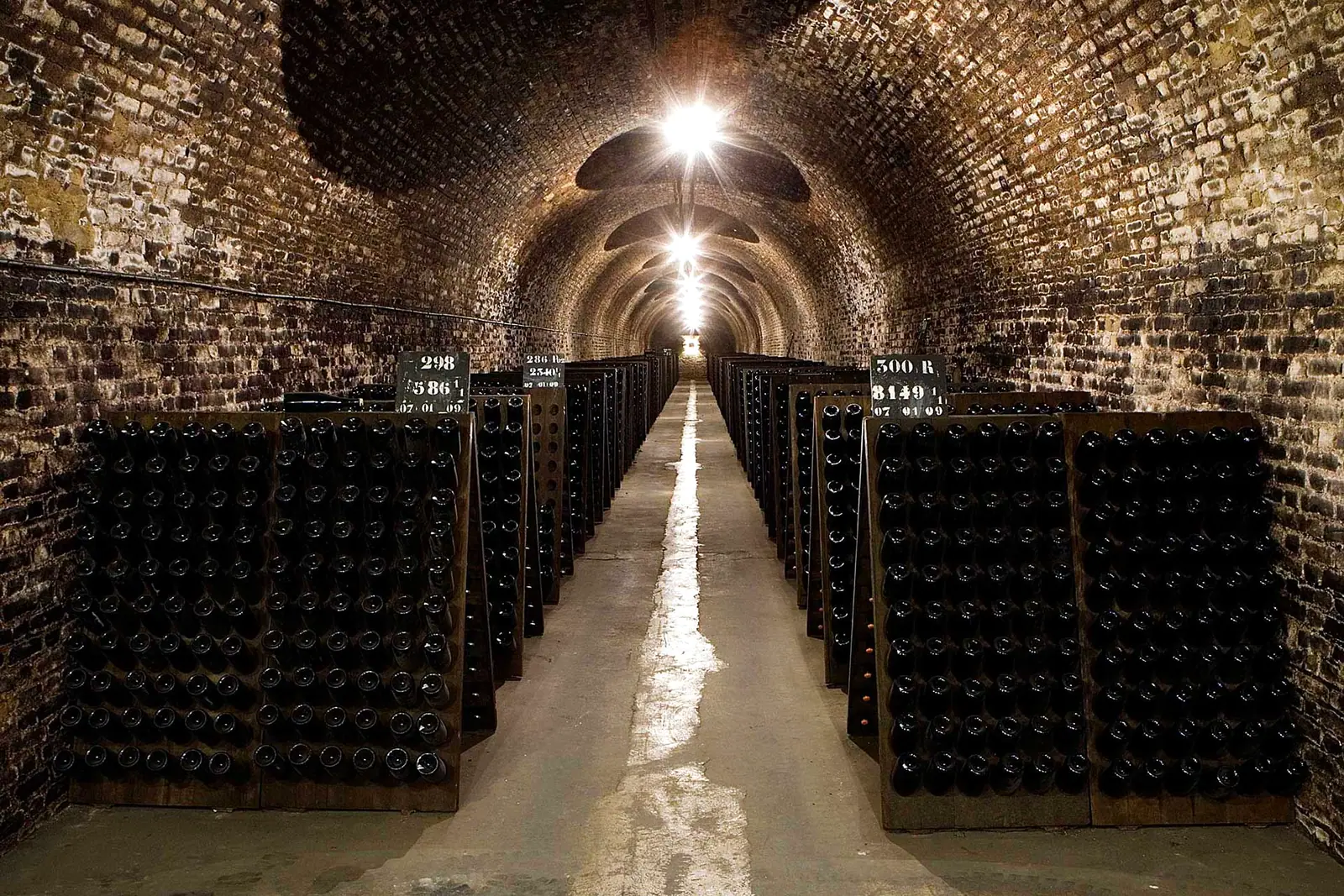
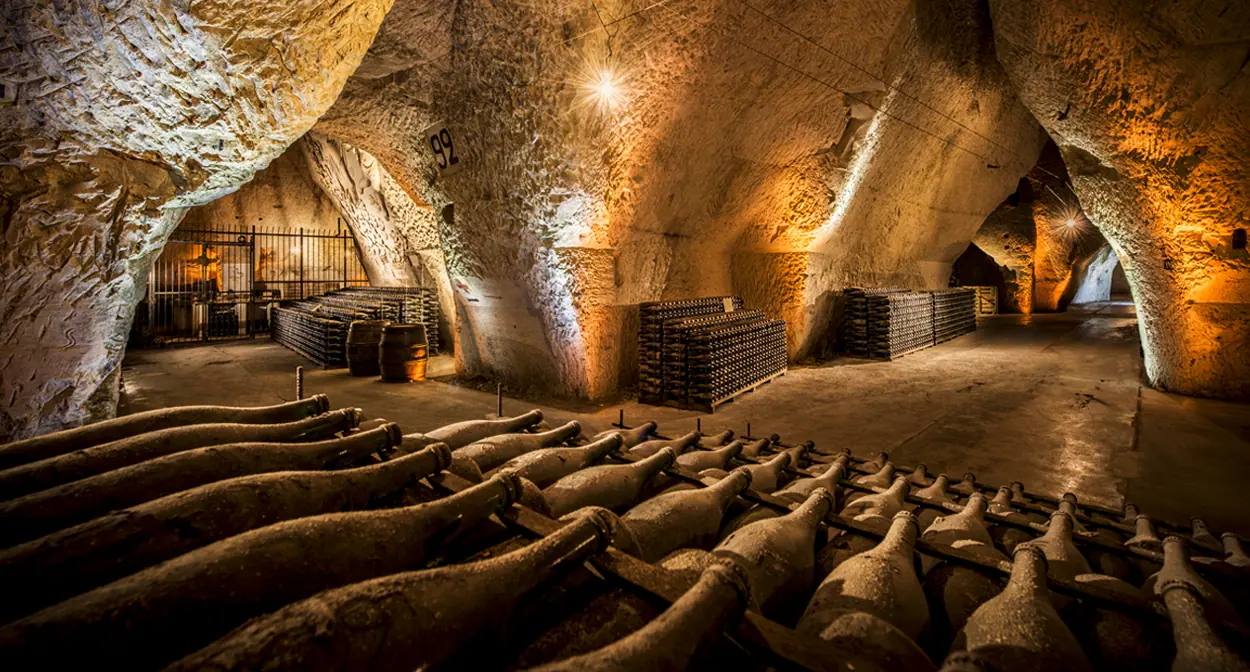
The soft rock was easy to quarry. Old quarries, the crayères, grew over the centuries into sprawling cellar systems. In Reims and Épernay especially, millions of bottles lie in these tunnels. The temperature stays low and very constant all year round, and the humidity is high. Both are ideal for slow ageing on the lees and for storing the bottles. Parts of these cellars are now included in the UNESCO World Heritage listing for Champagne.
Chalk therefore works twice over: above ground as a water reservoir and flavour-giver in the vineyard, below ground as a natural storeroom. Together, the two explain why it is so often seen as the symbol of champagne's origins.
Pictures

 0 %
