
Palissage is the champagne term for tying in and training vine shoots up a wire frame. The work shapes the canopy and lets in air and light, which keeps the grapes healthy.
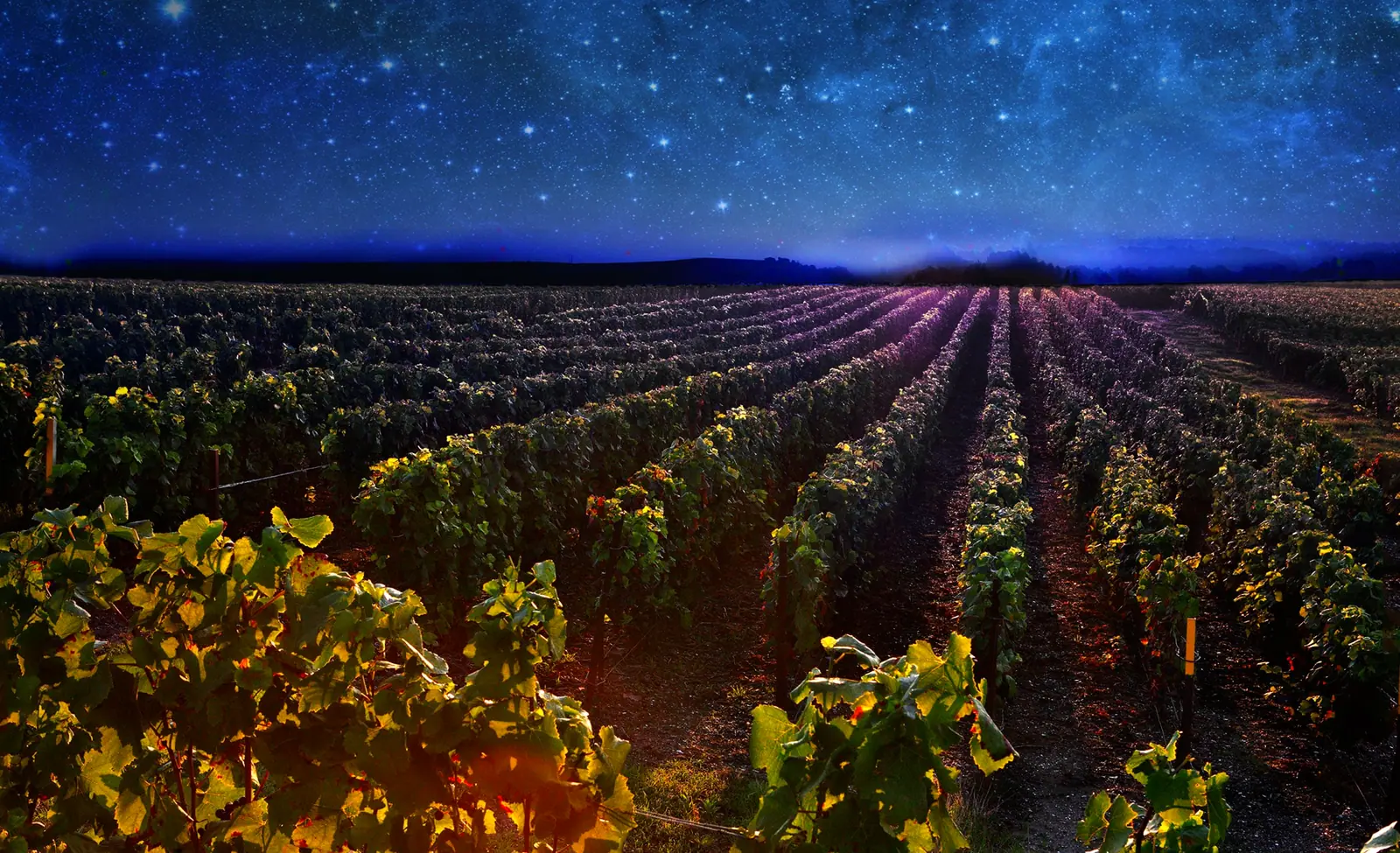
Palissage is the training of the vine on wires. It covers all the hand movements by which fruiting wood and green shoots are fixed to a framework and brought into an orderly shape. In the vineyards of Champagne it is a fixed part of the vine's year, and much of it is still done by hand.
From winter to summer
The work begins after pruning (taille). In spring the fruiting wood left on the vine is tied to the lowest wire, as an arch or as an arm, depending on the training system. Champagne recognises four permitted pruning systems: Chablis, Cordon de Royat, Guyot and Vallée de la Marne. Which one is chosen also depends on the grape variety. Chardonnay is often trained in the Chablis system, Pinot Noir and Pinot Meunier frequently as Cordon de Royat.
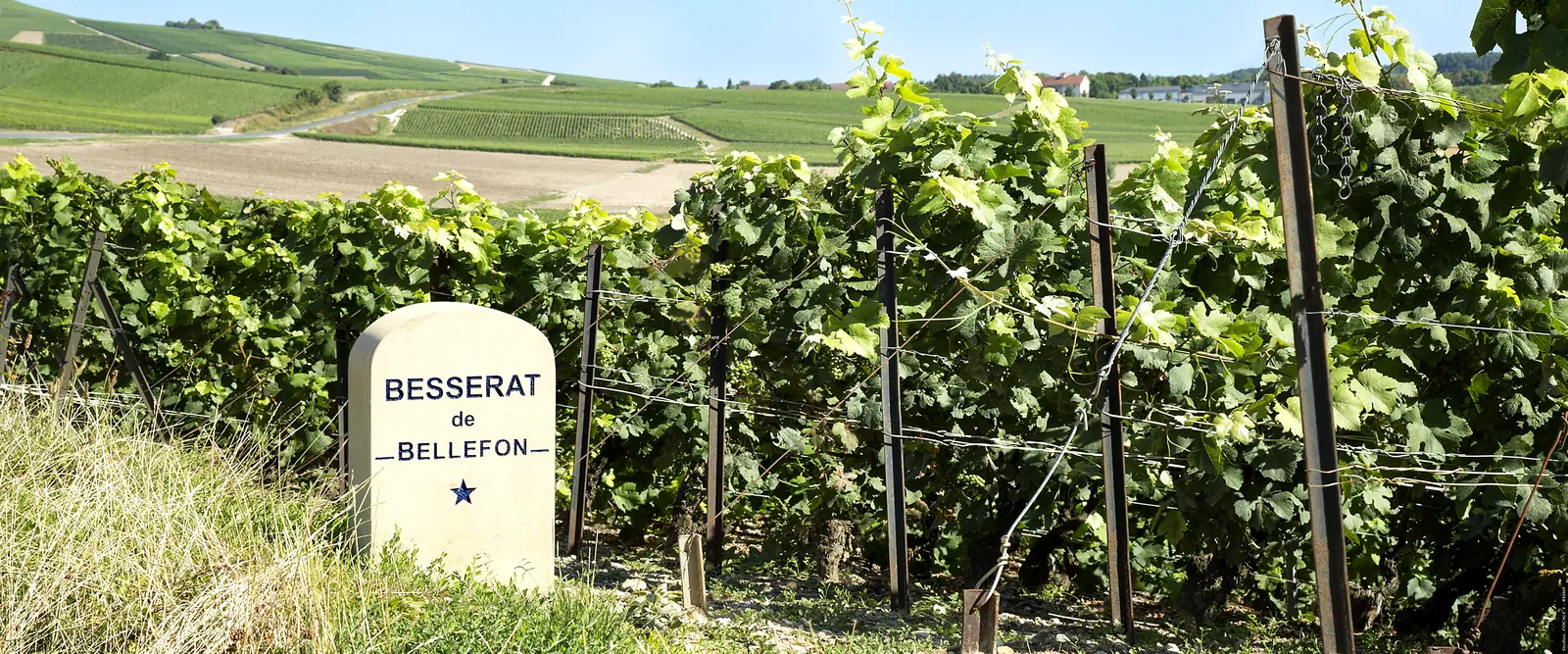
In summer the shoots grow vigorously upwards. The movable double wires (fils releveurs) are then lifted and clipped together. This holds the shoots upright between the wires and forms a narrow canopy. Afterwards the overhanging shoot tips are cut back (rognage). The tying material used to be natural, such as willow withies; today it is mostly plastic or biodegradable ties and clips.
What is it all for?
A well-managed canopy has several jobs to do:
It lets air move through the row and dries the foliage faster after rain. That eases the pressure from fungal diseases such as powdery and downy mildew or grey rot, which matters particularly in the cool, changeable climate of France's northernmost major wine region. Light also falls more evenly on leaves and bunches, which helps ripening. And finally the alleys stay open, so that vineyard care, spraying and harvesting, by machine or by hand, remain practical.
Why it matters for champagne
Palissage influences the yield, health and ripeness of the harvested fruit. For champagne this is crucial, because the grapes must be healthy at picking and should keep their acidity while reaching sufficient ripeness. Careful canopy work is therefore one of the unspectacular but important foundations of a good base wine, from which the champagne is later made.
Pictures



 0 %
