
- Département
- Aube
- Site
- Côte des Bar, in the Aube valley near Bar-sur-Aube
- Inhabitants
- 223 (as of 1 January 2023)
- Source
- Wikipedia, eigene Zusammenfassung
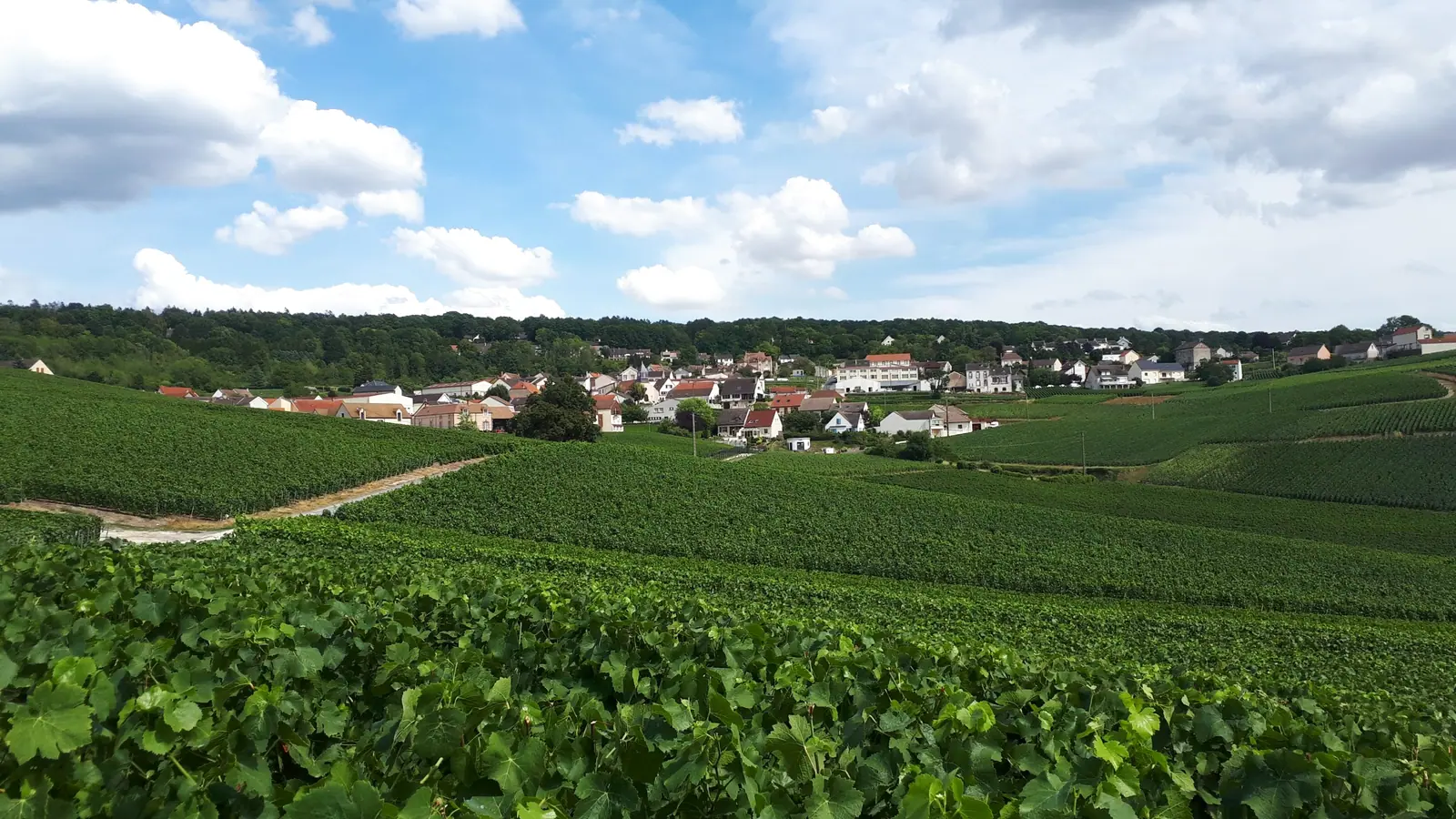
A winegrowing village in the Aube valley, 2.5 kilometres from Bar-sur-Aube. Ailleville is planted mainly with Pinot Noir, which supplies base wines for champagne.
Location
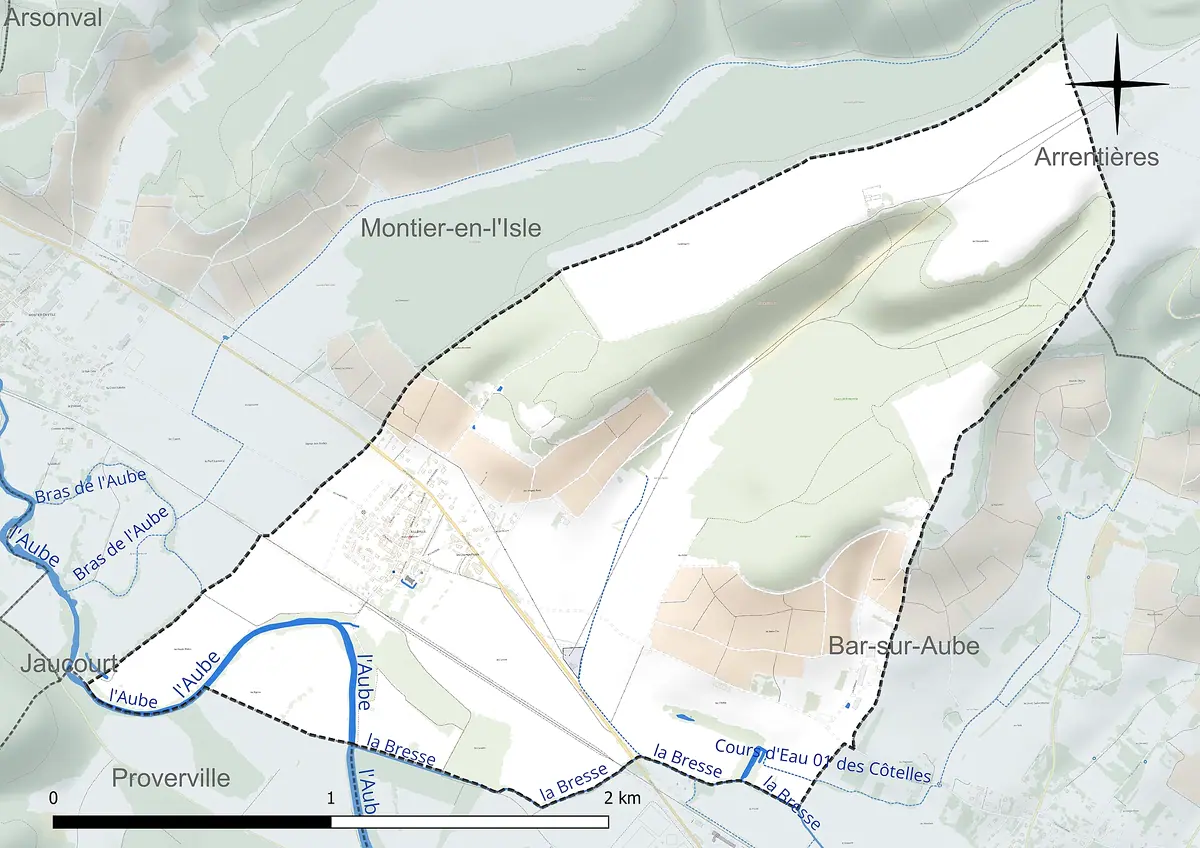
Ailleville lies in the Aube département, on a bend of the river of the same name, two and a half kilometres north-west of Bar-sur-Aube and around 50 kilometres east of Troyes. The commune covers a little over 5 square kilometres. From the Aube valley at about 160 metres, the land rises over the vineyard slopes to a partly wooded plateau at 296 metres. Alluvial woodland can still be found along the river, and the Bois du Val Joudrey forest stretches to the east. The Bresse flows into the Aube here. The village has 223 inhabitants (as of 1 January 2023). Ailleville has no grand cru or premier cru status.
Viticulture
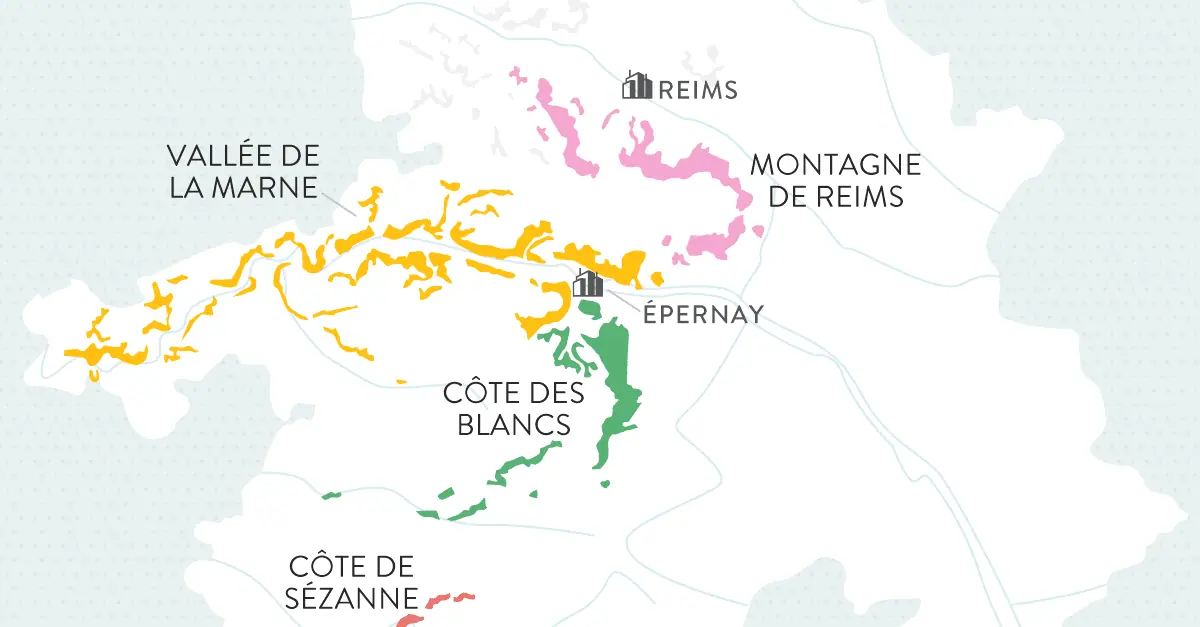
Ailleville belongs to the Côte des Bar in the south of Champagne. The soil is Portlandian limestone, threaded with tongues of Kimmeridgian marl. This combination suits vines very well, and cereals only secondarily. Several springs emerge from the clay layers and run into the Aube below the village.
- Eight wine-growing estates are based in the village.
- The main grape is Pinot Noir.
- Depending on quality, the grapes may be used as base wines for champagne.
- Well-known lieux-dits include the Côte Jobert, the Val-des-Vignes and the Côte de Bretonvau.
The Côte Jobert, opposite Bar-sur-Aube, is regarded as the best-known slope in the commune. Gallo-Roman traces have also been found there.
From the Aube valley at about 160 metres, the land rises over the vineyard slopes to a partly wooded plateau at 296 metres.
History
The village lay close to the Roman Via Agrippa, which linked Boulogne-sur-Mer with Turin via Reims, Châlons, Langres and Lyon. Excavations turned up Merovingian sarcophagi with grave goods from the late 7th and early 8th centuries. The village was Christianised in the 9th century. In 1076 the county of Bar-sur-Aube passed to Count Thibaut I of Champagne, and since then the village's history has been closely tied to Champagne.
 Lanson Champagner Gläser
The great Champagne fairs made Bar-sur-Aube a trading centre. Many of the town's inhabitants lived in the surrounding villages and worked in the fields and vineyards there, which helped Ailleville to grow. The Cistercians of Clairvaux also left their mark on the area: in 1215 a community of nuns was founded at the abbey of Val-des-Vignes.
What to see
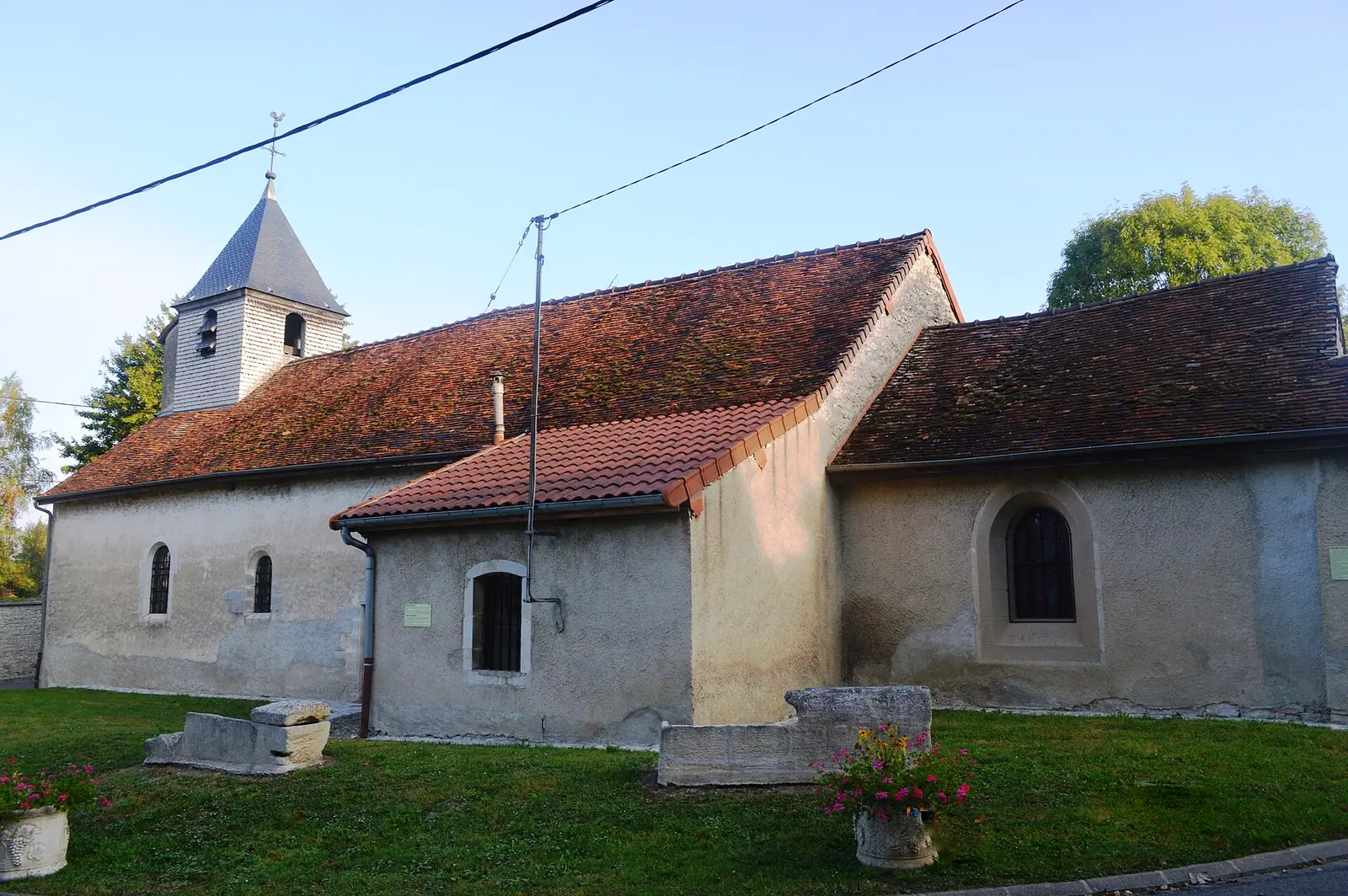
- The church of Saint-Martin, built of limestone at the start of the 12th century. In the Middle Ages Martin was the patron saint of winegrowers.
- Three Merovingian sarcophagi beside the church.
- The 17th-century château with four square towers, a dovecote and a park with two avenues of plane trees.
- The 16th-century Cistercian cross in the Val des Vignes.
- The Maison du Folklore de Champagne, dating from 1822, which recalls the culture and traditions of the region.
- The 19th-century wash house.
Visitors arriving by car take the D 619 between Troyes and Chaumont. The nearest railway station is in Bar-sur-Aube, on the Paris–Mulhouse line. From there, a visit to Ailleville combines well with a tour of the winegrowing villages of the Côte des Bar.
Pictures

 0 %
