
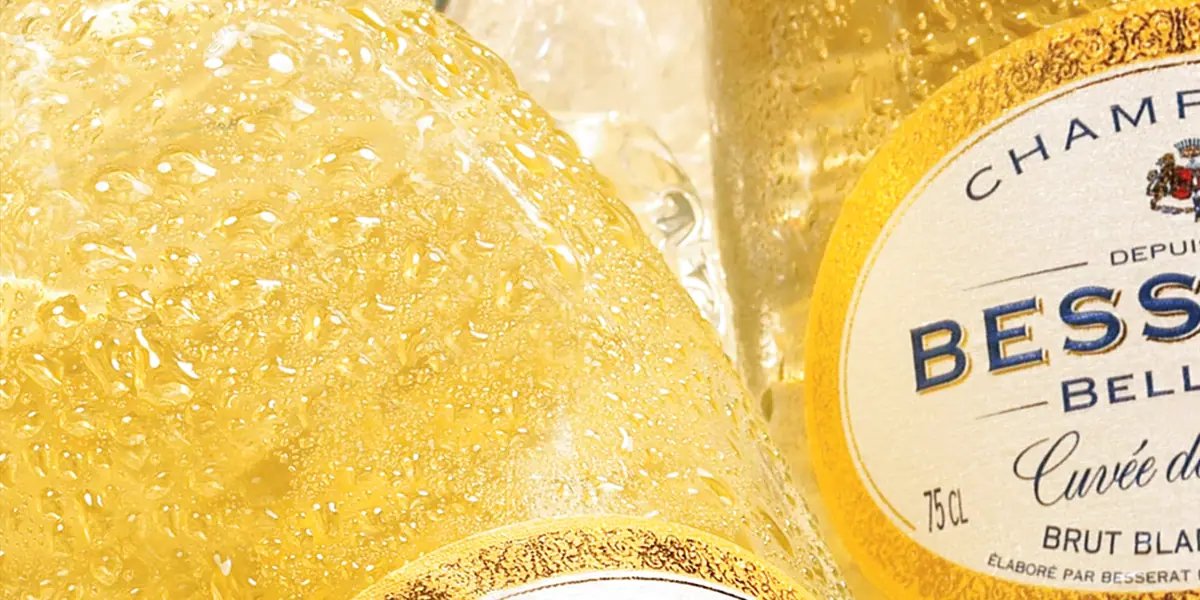
<em>Goût de lumière</em> is a wine fault that develops when light acts on champagne in the bottle. It shows up as a smell of boiled cabbage, wet woolly jumper or onion, and it smothers the fruit.
What happens in the wine
Goût de lumière is a photochemical fault. The trigger is short-wavelength light, meaning the UV portion and the blue light from sunshine or fluorescent tubes. In the wine, riboflavin (vitamin B2) acts as a light catcher. It absorbs the energy and passes it on to sulphur-containing amino acids such as methionine. This produces volatile sulphur compounds, including methanethiol and dimethyl disulphide. Very small amounts are enough for them to be detectable by smell.
How it smells and tastes
Typical notes are boiled cabbage, onion, wet wool or damp dog. The delicate fruit and the brioche tones of the champagne recede, and the wine seems dull and musty. The fault is related to the "sunstruck" character of some beers, even though different compounds are involved there. You will not confuse it with cork taint once you have experienced the two side by side: cork smells of cellar and cardboard, light-strike of cooked vegetables and sulphur.
Why champagne is particularly vulnerable
Champagne is pale, low in tannins and often sold in bottles of clear glass. Dark glass blocks a large share of the harmful light, clear glass hardly any. Research in Reims looked into these reactions in champagne wines as far back as the 1980s. Some houses therefore opt for dark green glass, for boxes or for wrappings. With transparent bottles, protection is a subject in its own right.
How to avoid it
The fault does not arise in the grower's cellar, but usually on the way to the glass. Shop windows, shelves under harsh lighting and long hours in the sun are especially risky.
Store champagne somewhere dark and cool, ideally in its original box. At parties, do not leave bottles standing in full sun. When buying, it is worth a look at how the bottle has been stored and at the glass. A sulphurous, musty smell straight after opening can be a clue, particularly with clear-glass bottles that have stood in the light for a long time.
Pictures






 0 %
