
Yeast addition, or <em>levurage</em> in French, is the deliberate adding of selected cultured yeasts to the must or base wine. In Champagne it applies to the first fermentation in tank or barrel and above all to the second fermentation in the bottle.
Two fermentations, two moments
Champagne is made in two fermentation steps, and yeast plays the leading role in both. In the first levurage, yeast is added to the freshly pressed, settled must so that the sugar ferments quickly and cleanly into alcohol. The result is the still base wines. The second moment matters more for the character of the sparkling wine: at bottling, yeast goes into the liqueur de tirage, a mixture of wine, sugar and yeast. Inside the sealed bottle it triggers the prise de mousse, the formation of carbon dioxide.
Selected yeast instead of chance
Most houses and growers use cultivated strains of the species Saccharomyces cerevisiae. They ferment predictably and avoid off-flavours or stuck fermentations. A few producers, by contrast, rely on the native yeasts of vineyard and cellar for the first fermentation. This gives the wine more individuality, but it demands close attention and remains the exception.
Demanding conditions in the bottle
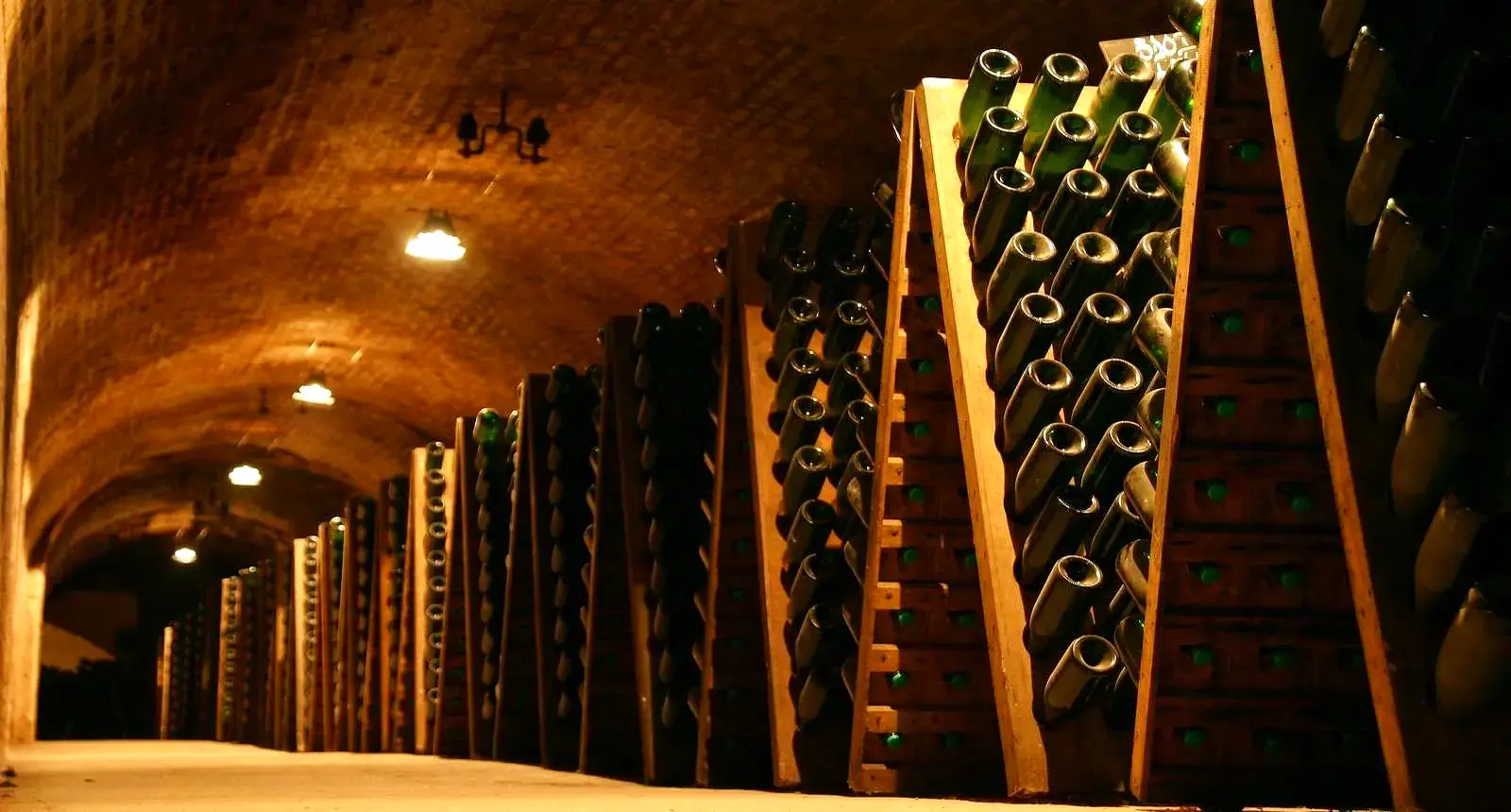
For the second fermentation the yeast has to put up with a lot: a base wine that already contains alcohol, high acidity, cool cellars and a pressure that climbs to several bar inside the bottle. The usual dose is around 24 grams of sugar per litre, which produces roughly six bar of pressure. For this reason the yeast is first acclimatised step by step to alcohol and cold. This starter culture is called the pied de cuve and ensures an even, complete fermentation. Settling properties matter too: the yeast should later end up as a loose deposit in the neck of the bottle, so that remuage and dégorgement can be carried out cleanly. Some producers use yeast encapsulated in alginate beads for this purpose.
Why yeast still matters after fermentation
Once the sugar is used up, the yeast dies and stays in the bottle as a deposit. During the long ageing on the lees it slowly breaks down (autolysis) and releases compounds into the wine. These shape aromas of brioche, nuts and pastry and round out the texture of the fine bubbles. The choice of yeast, and adding it at the right moment, therefore lays the foundation for a champagne's style and ageing potential.
Pictures

 0 %
