
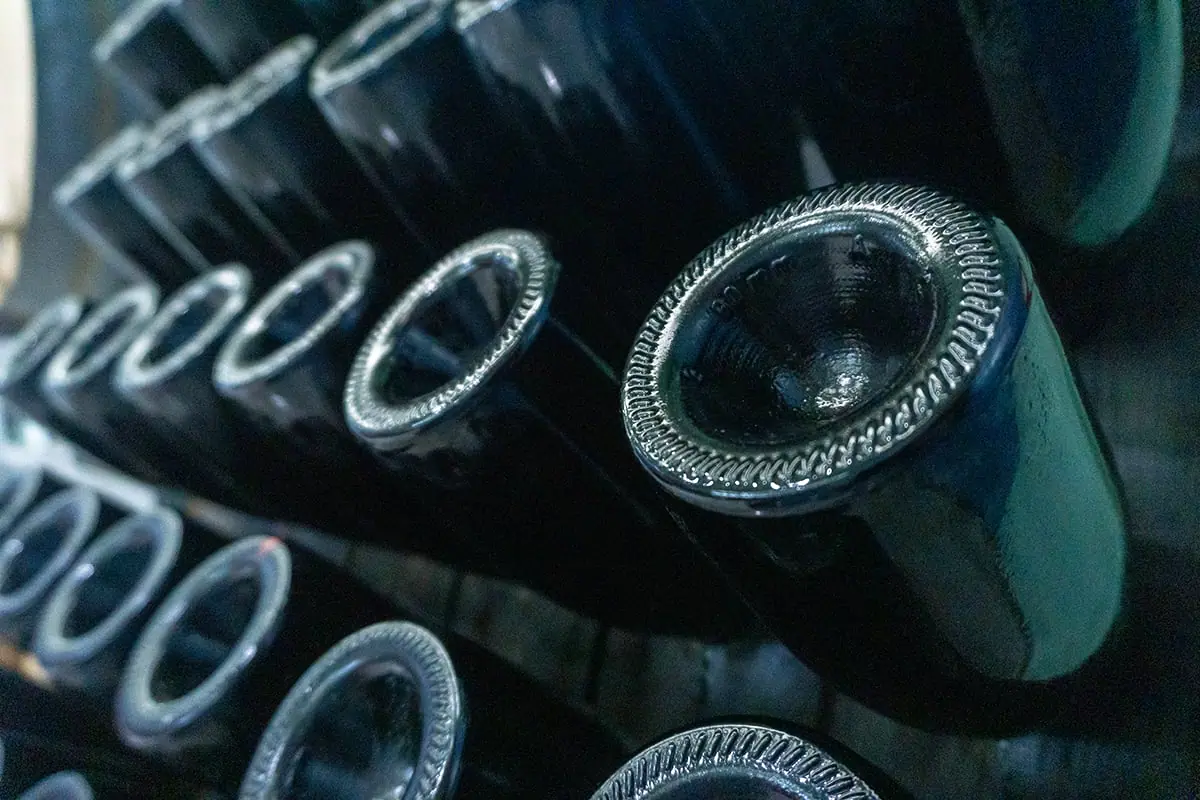
Bottle fermentation is the second fermentation, which takes place in the bottle after the liqueur de tirage has been added, turning sugar into alcohol and carbon dioxide. It creates the bubbles and is the heart of the méthode champenoise.
Bottle fermentation in champagne: a closer look at the process
Bottle fermentation is a central step in the making of champagne and other traditional-method sparkling wines, and it is responsible for their characteristic bubbles and fine flavour. This traditional process, also known as the méthode champenoise, is a craft in its own right, and it is what sets champagne apart from other sparkling wines.
The basic principle of bottle fermentation
Bottle fermentation begins after the first fermentation of the champagne, which takes place in large stainless steel tanks or wooden casks. The first fermentation produces the base wine, made from the grape varieties Pinot Noir, Pinot Meunier and Chardonnay. Once this base wine has developed the qualities needed for champagne, it is filled into bottles.
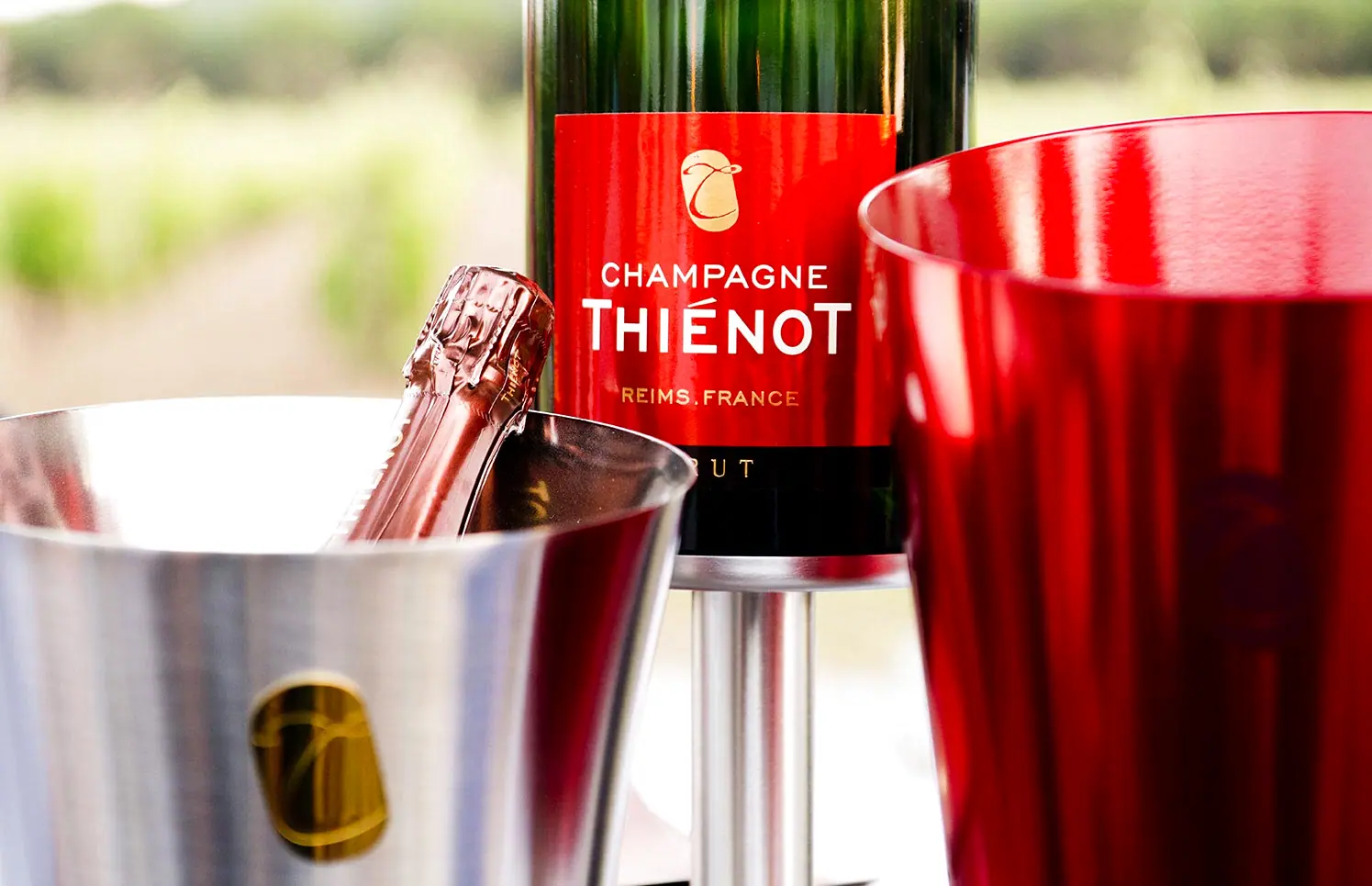
Dosage and the second fermentation
The second fermentation in the bottle begins once a mixture of sugar and yeast, known as the “liqueur de tirage”, has been added to the base wine. This mixture feeds the yeast cells and sets off the second fermentation inside the bottle. During this process, sugar is converted into carbon dioxide and alcohol. The carbon dioxide cannot escape from the sealed bottle and dissolves in the wine, which creates the fine bubbles that make champagne so distinctive.
Ageing and riddling
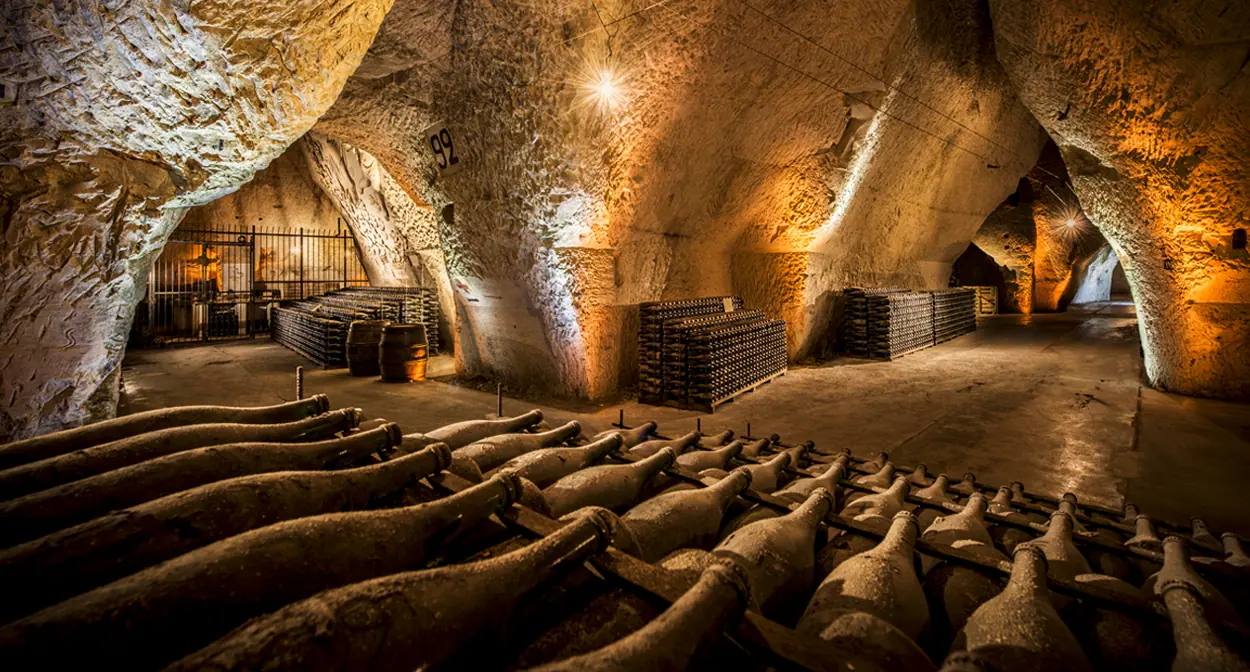
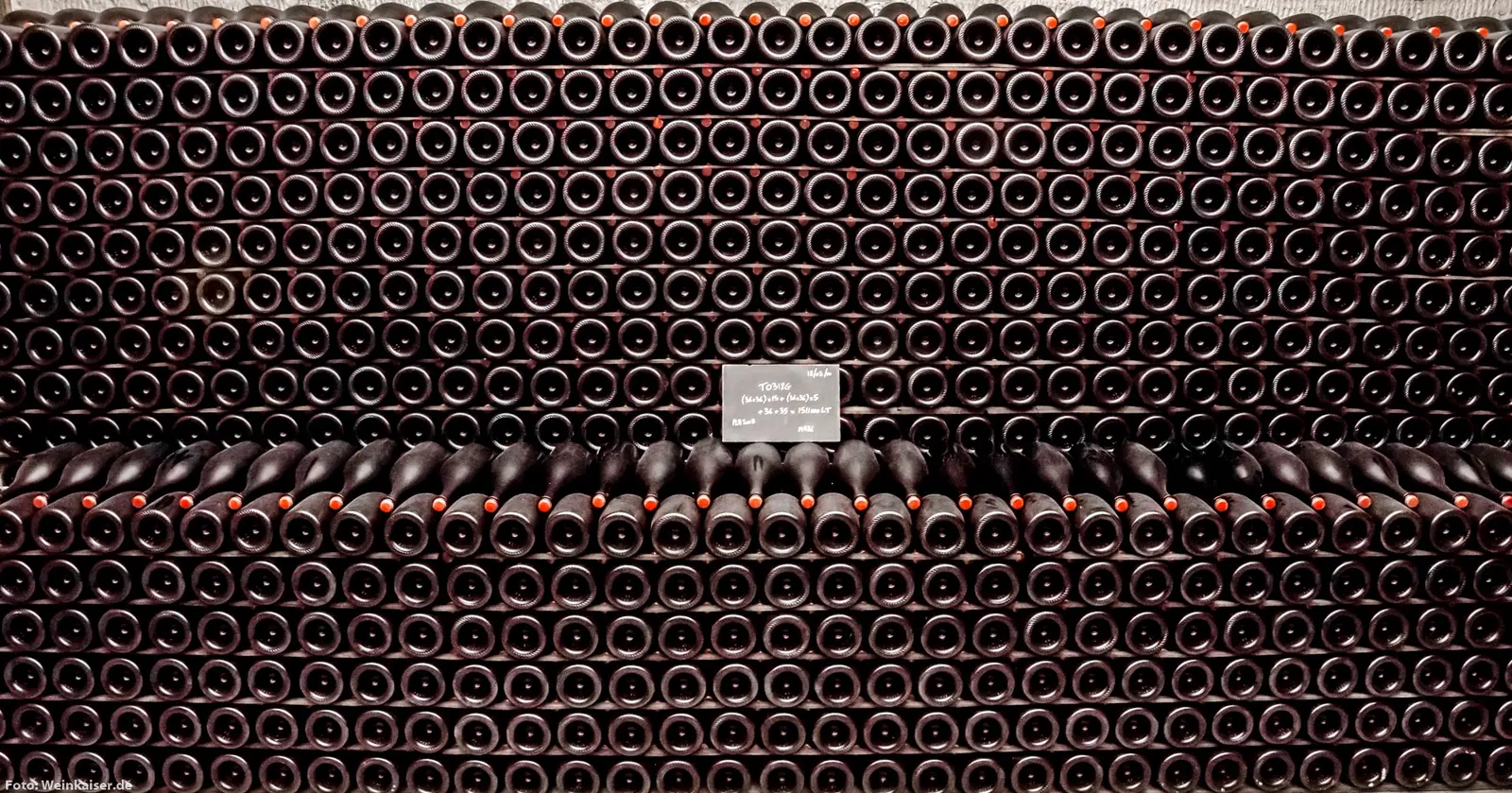
After the second fermentation, the champagne is left to rest on its yeast for a set period, to develop additional aromas and complexity. This ageing on the yeast, also known as “maturation sur lies”, lasts at least 15 months for non-vintage champagne, although many prestige cuvées age for considerably longer.
During ageing, the champagne has to be “riddled” (remuage) at regular intervals. In riddling, the bottles are gradually brought into an upright position and given a gentle turn, so that the yeast slides down into the neck of the bottle. This is done by hand or by machine and is a crucial step for keeping the champagne clear and for removing the yeast.
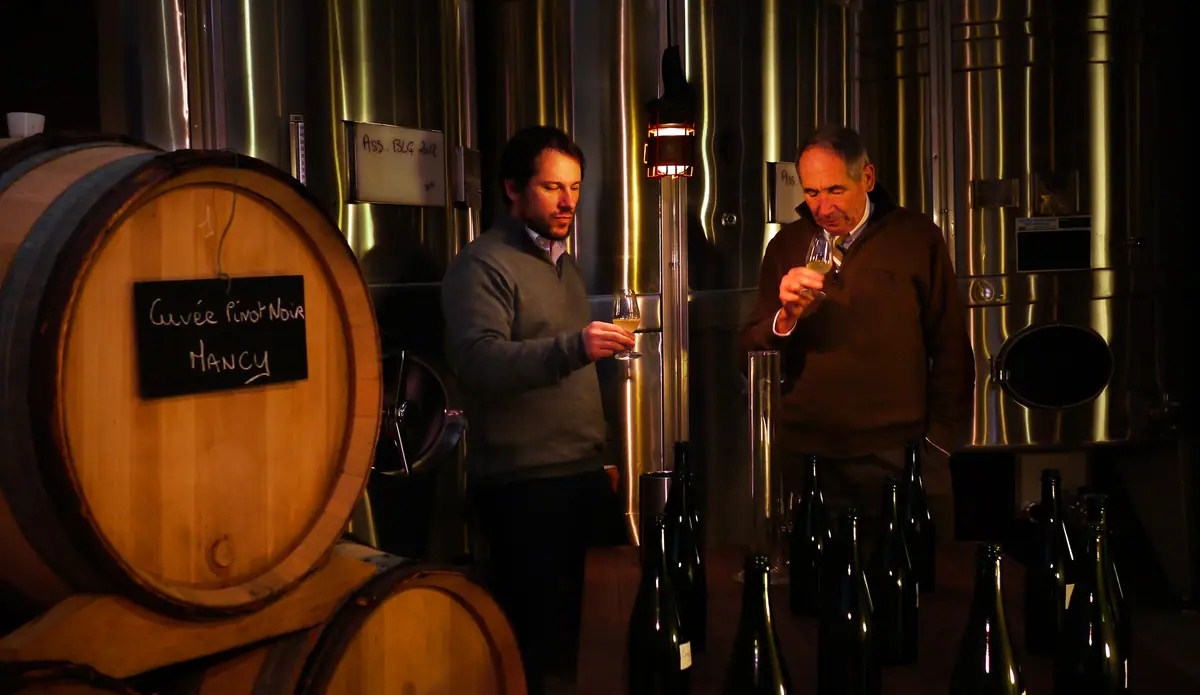 Bauget-Jouette Champagner
Disgorgement
Once the champagne has aged sufficiently and the yeast has collected completely in the neck of the bottle, the next step follows: disgorgement (dégorgement). In this process, the plug of yeast that has formed in the neck is removed. To do this, the neck of the bottle is dipped into a freezing bath, which freezes the yeast and allows it to be expelled easily from the bottle.
After disgorgement, the champagne is topped up with the dosage, a mixture of wine and sugar. This determines the sweetness of the champagne and can range from brut (very dry) to doux (very sweet). The bottle is then closed for good with its cork.
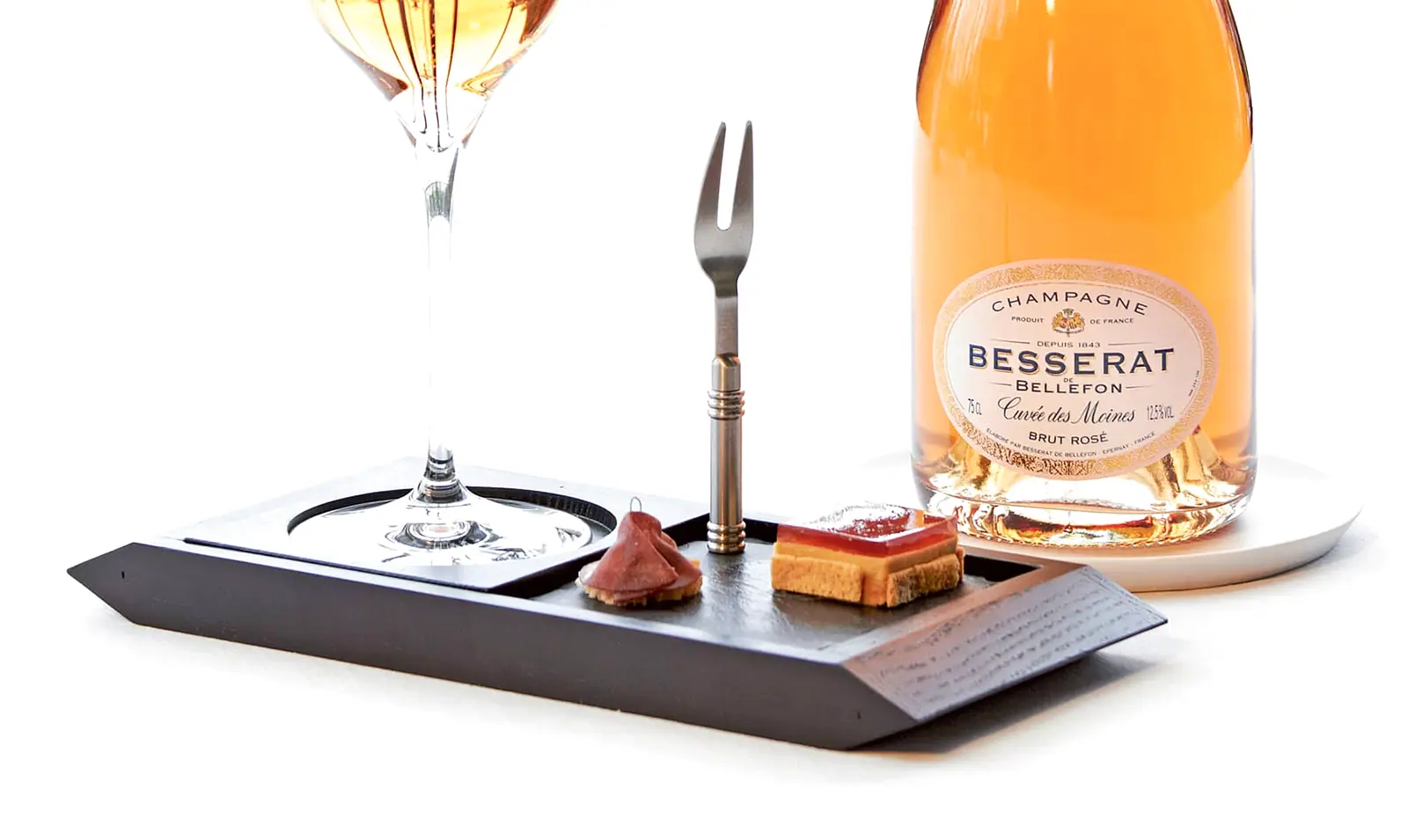
Quality and style
Bottle fermentation gives champagne not only its characteristic sparkle, but also complexity and depth of flavour. The long ageing on the yeast leads to a fine, creamy texture and a rich aroma profile, often with notes of toasted bread, yeast, nuts and fresh fruit.
An important feature of bottle fermentation is that it makes it possible to produce a vintage champagne, that is, a champagne made from the grapes of a single year. Vintage champagnes are often especially sought after, because they reflect the unique character of a particular year and usually offer an even more complex range of aromas.
Historical significance
Bottle fermentation has a long history and was first practised in the Champagne region of France in the 17th century. It became popular through the efforts of the Champagne houses, such as Maison Ruinart and Moët & Chandon, which perfected the technique and made it known around the world.
Over time, bottle fermentation became a symbol of quality and craftsmanship in sparkling wine. Today it is used by many winemakers worldwide to produce sparkling wines of the highest quality, and the traditional champagne approach is still regarded as the benchmark.
Conclusion
Bottle fermentation is a demanding and precise process that turns the making of champagne into an art. From the start of the second fermentation to the final dosage, every step is decisive for the finished wine. This traditional process gives champagne its fine bubbles, its complex aromas and its unmistakable elegance. The effort and dedication that go into bottle fermentation are a major reason why champagne is prized and celebrated all over the world.
Pictures

 0 %
