
The robe is the colour of a wine in the glass. With champagne, it offers the first clues about grape varieties, maturity and style, before you even reach the aroma and taste.
The robe is the wine's dress: its colour, together with its clarity and brilliance. With champagne, it is the first impression, before the aroma even rises from the glass. It gives you clues, but it never replaces the tasting itself.
The colour spectrum
White champagne begins at a pale green-tinged yellow and runs through straw and gold to amber in very mature bottles. With rosé, the range goes from onion skin and salmon through raspberry to a deep cherry red. With rosé champagne in particular, the colour is a question of style for the cellar master, not just a matter of chance.
What determines the colour
The grape varieties have the greatest influence. Chardonnay usually brings pale tones with greenish glints, while Pinot Noir and Pinot Meunier tend towards gold and more depth. The juice of the red grapes is light in colour, but even brief contact with the berry skins can leave a trace. A blanc de noirs therefore sometimes shows a golden or slightly coppery shimmer, while a blanc de blancs often stays clearer and paler.
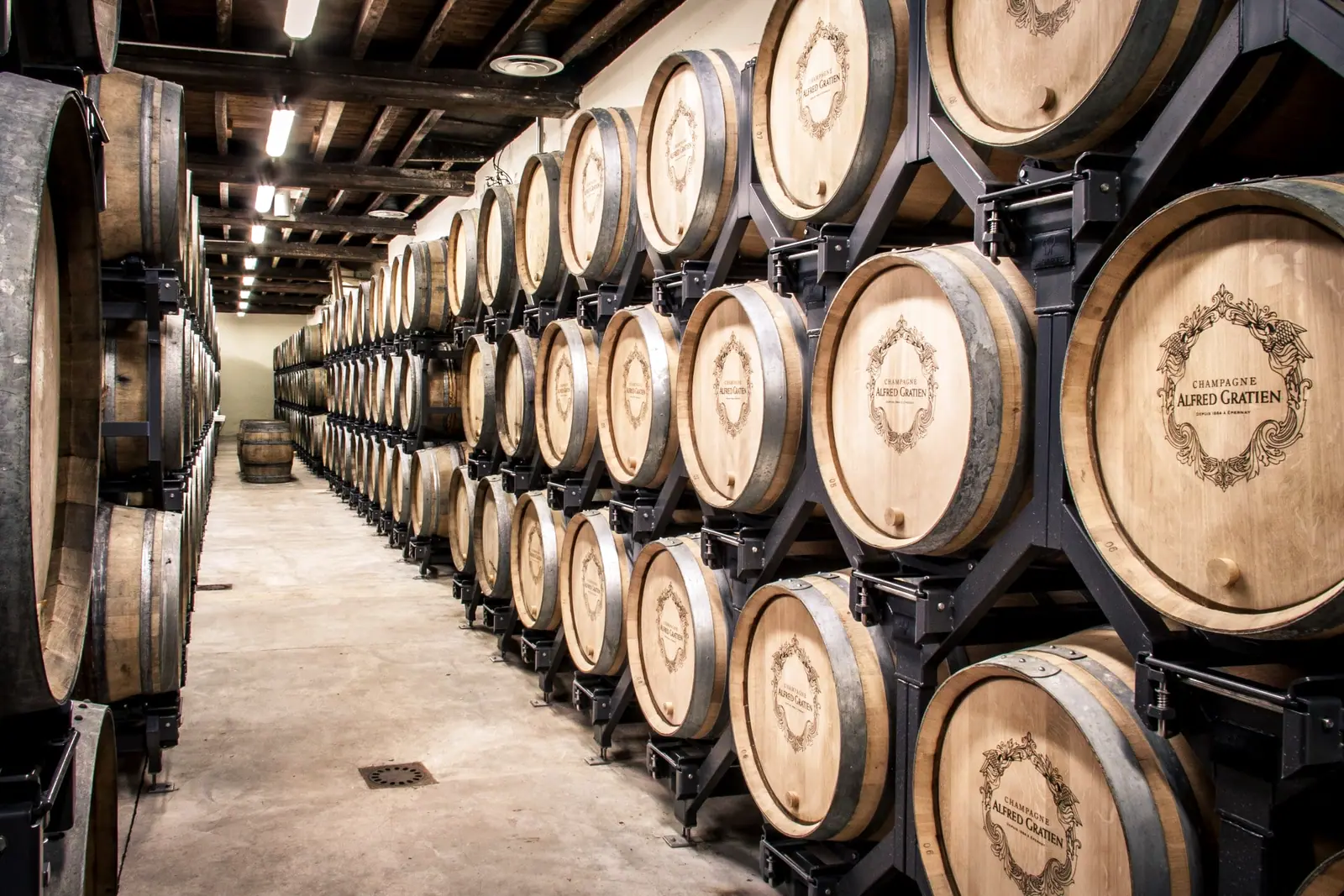
Then there are reserve wines, ageing in oak barrels and time on the lees. Over the years every champagne darkens: the yellow grows warmer and later takes on a honeyed or amber hue.
With rosé there are two routes. The more common is the rosé d'assemblage: the winemaker adds a little still red wine from Champagne to the base wine. Unlike in most wine regions, this method is expressly permitted here. With the rosé de saignée, by contrast, a short period of skin contact colours the wine, and the result is often deeper.
Assessing the robe
The best way is to hold the glass at a slight angle against a white background. Look at the centre of the liquid and at its rim. The rim often appears paler or shows fine gradations that point to age. The wine should be clear and brilliant. A distinctly brown tone in a young champagne, on the other hand, can point to oxidation or storage faults.
One important point: the colour tells you nothing about the dosage, that is, the sweetness, and only a limited amount about quality. A deep gold can come from maturity and oak, a pale green-tinged yellow from freshness and a lot of Chardonnay. The visual check also includes the bubbles, that is, the perlage and mousse, which are judged separately.
Pictures
 0 %
